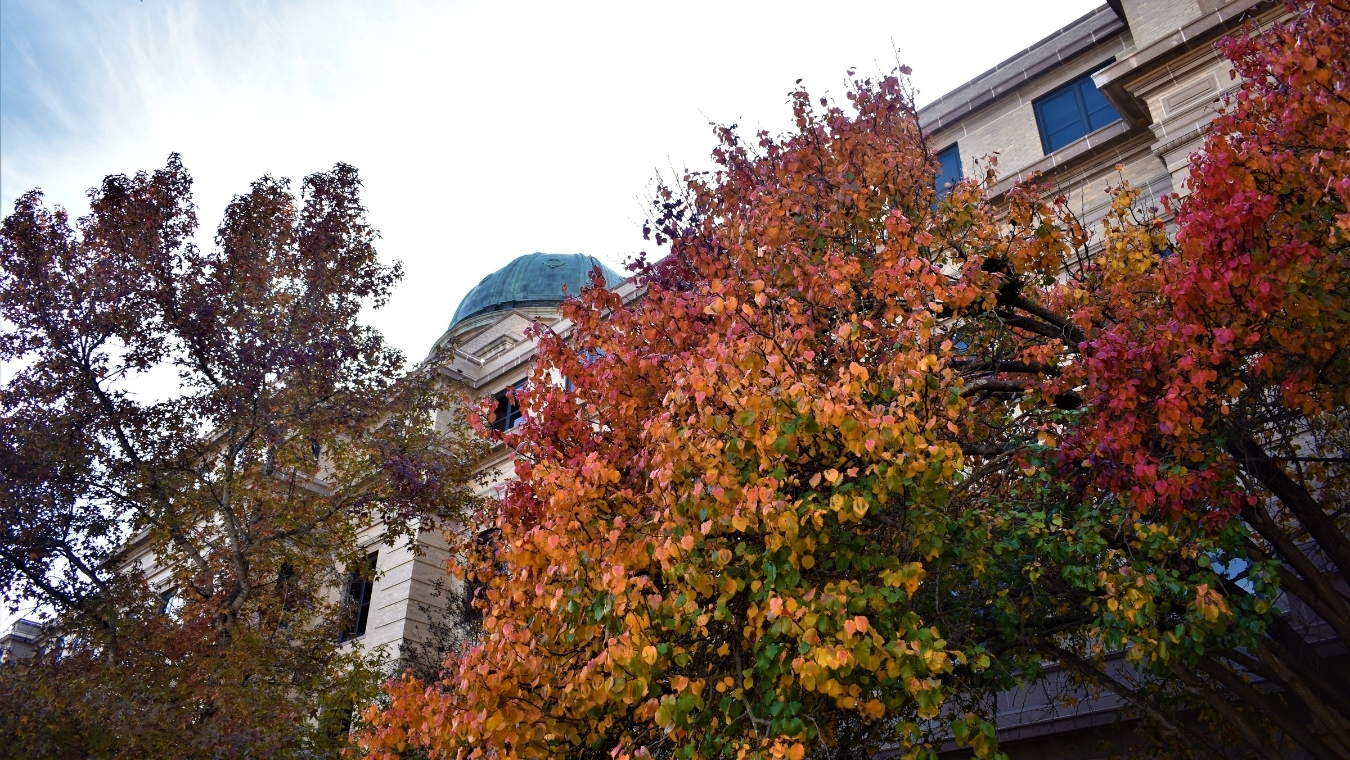
Texas A&M University has quietly benefited from over $100 million in research funding from Qatar through its Texas Engineering Experiment Station (TEES), without disclosing it as required under federal law. The university’s justification? That TEES is not technically an “educational institution” and therefore does not act on behalf of the university.
But the contracts tell a different story. Almost every project lists a Texas A&M faculty member as the principal investigator, and the research directly benefits both the university and Qatar. In some cases, university officials themselves signed TEES agreements. In fact, Neetu Arnold’s research shows that TEES contracts were often larger than those signed directly with Texas A&M, further blurring the lines between the university and its affiliate.
This isn’t the first time Texas A&M’s foreign funding has raised red flags. In 2017, the Trump administration launched an investigation into Qatar’s influence on U.S. campuses after A&M disclosed just $131 million in Qatari funds. The investigation revealed the true number was closer to $600 million—nearly five times what A&M had reported. Qatar remains the top foreign donor to American universities, sending billions of dollars across the country and raising concerns about foreign influence and national security.
These revelations came to light in 2022, but they have only grown more relevant with time. Texas A&M continues to operate in a gray area. What was troubling then is still troubling now.
The Biden administration, rather than tightening oversight, has loosened it. Following Arnold’s reporting on Texas A&M, the Department of Education issued updated guidance in June 2022 creating a “rebuttable presumption” that non-university entities, like TEES, may not have to report foreign funds. This effectively weakened Section 117’s disclosure requirements and left the public in the dark about who is paying American institutions and what they are getting in return.
“The public is not aware of the foreign entities vying for influence at universities,” Arnold told The Daily Signal. “This is especially a concern for countries we consider adversaries, such as China and Qatar. We become more unaware of the foreign actors spying or taking sensitive information. We also don’t know how American resources are used to help countries we consider our enemies.”
The case of TEES and Qatar illustrates a dangerous gray area. While lawmakers are considering new legislation, such as the DETERRENT Act, to close these loopholes, the reality is that Texas A&M—and many other universities—continue to quietly partner with foreign governments. And in Qatar’s case, the risks are particularly stark.
According to a June 2025 Foundation for Defense of Democracies report based on internal Hamas documents, Hamas leadership described Qatar as its “main artery.” Qatar has funneled $1.8 billion to Hamas since 2007, pledged $360 million annually to Gaza, and openly hosts Hamas’s political operations in Doha. After the October 7 massacre, Qatari leaders even claimed that “Israel alone is responsible” for the attack.
Until full transparency is required, Americans will remain in the dark about how hostile nations like Qatar use their money not just to buy influence at our universities, but to advance agendas that undermine U.S. allies and fuel terrorism.