Election security has lately been associated with conservatives. Nevertheless, there are progressives who share concerns about election integrity. One of those is Free Speech for People, a left-wing organization that has expressed concerns about the integrity of our voting systems.
Hand-marked paper ballots make audits more reliable
The organization issued a report on post-election audits in North Carolina and other battleground states. Part of their motivation for the review is their concern about the security of electronic voting systems:
Widespread myths, overstatements, and exaggerations about voting machine security and procedural safeguards have resulted in misplaced faith in computerized election systems. Election officials and other stakeholders, motivated to boost voter confidence have overestimated and overstated the security of the voting systems, while underestimating their vulnerabilities.
They further reported that the only way that audits can be reliable measures of voter intent is if voters use hand-marked paper ballots:
It is imperative that paper ballots be used to provide an indelible, tangible record of voter intent in order to perform a meaningful post-election audit, and the only practical way to assure that virtually all ballots are in fact voter-verified is if they are hand-marked by voters. Ballots recorded electronically by DRE or BMD do not provide strong evidence of voter intent.
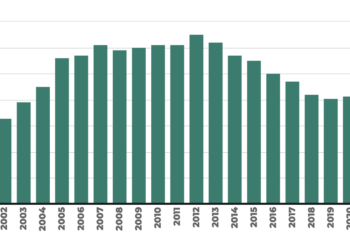
See the report for details. About a dozen North Carolina counties use ballot marking devices (BMDs), in which voters mark their votes on a computer, which then prints a ballot. That is a decline from about twenty a decade ago, but all North Carolina counties should use hand-marked paper ballots to improve election security.
Report: North Carolina’s election audits “could be improved
The report found that North Carolina had stronger post-election audits than some other battleground states, but they can be improved. The section on North Carolina opens with some of what they see as bright spots in the state’s election audits:
The audit is conducted by hand, the audit batches are selected at random, and the audit is conducted publicly. In years with a presidential contest, the presidential race is audited. The audit results can be binding on the outcome if a full hand count is required.
(The John Locke Foundation noted the sampling method used by the State Board of Elections (SBE) makes the selection of ballots to be included in the audit not truly random, making the audit “a less effective tool for detecting problems with the count.”)
The report then noted several times that North Carolina’s use of BMDs weakens the validity of election audits: “North Carolina’s audit offered evidence that the computerized results are correct, but these audits can be strengthened to provide stronger evidence of election outcomes.”
North Carolina should have independent performance election audits
North Carolina’s audits should go beyond simply verifying that numbers match when they are counted twice. We should join the growing number of states implementing performance election audits. A performance audit would help election officials improve their practices by reviewing every step of the process:
It would be more than recounting ballots to see that they match the original count and the number of voters (although that is a necessary step). It would also verify ballot and equipment chains of custody and that officials followed election law so that voters could have confidence that the entire process, from voter registration to the final ballot count, produced a “trustworthy record of voter intent.”
The audit should include several elements to ensure that it is robust, independent, and responsive:
- It would cover procedures during a two-year period, not just for individual primaries or elections.
- An outside entity would conduct it. For North Carolina, that would be the Office of the Auditor.
- It would include responses from the state’s chief elections officer, the Executive Director of the State Board of Elections.
Those audits could serve as the basis for legislation every two years to adjust election policy. It would be part of a continuous improvement process in North Carolina elections.
North Carolina has an opportunity to ensure that our elections are a “trustworthy record of voter intent.” We should take advantage of that opportunity by implementing election performance audits for the 2026 election.