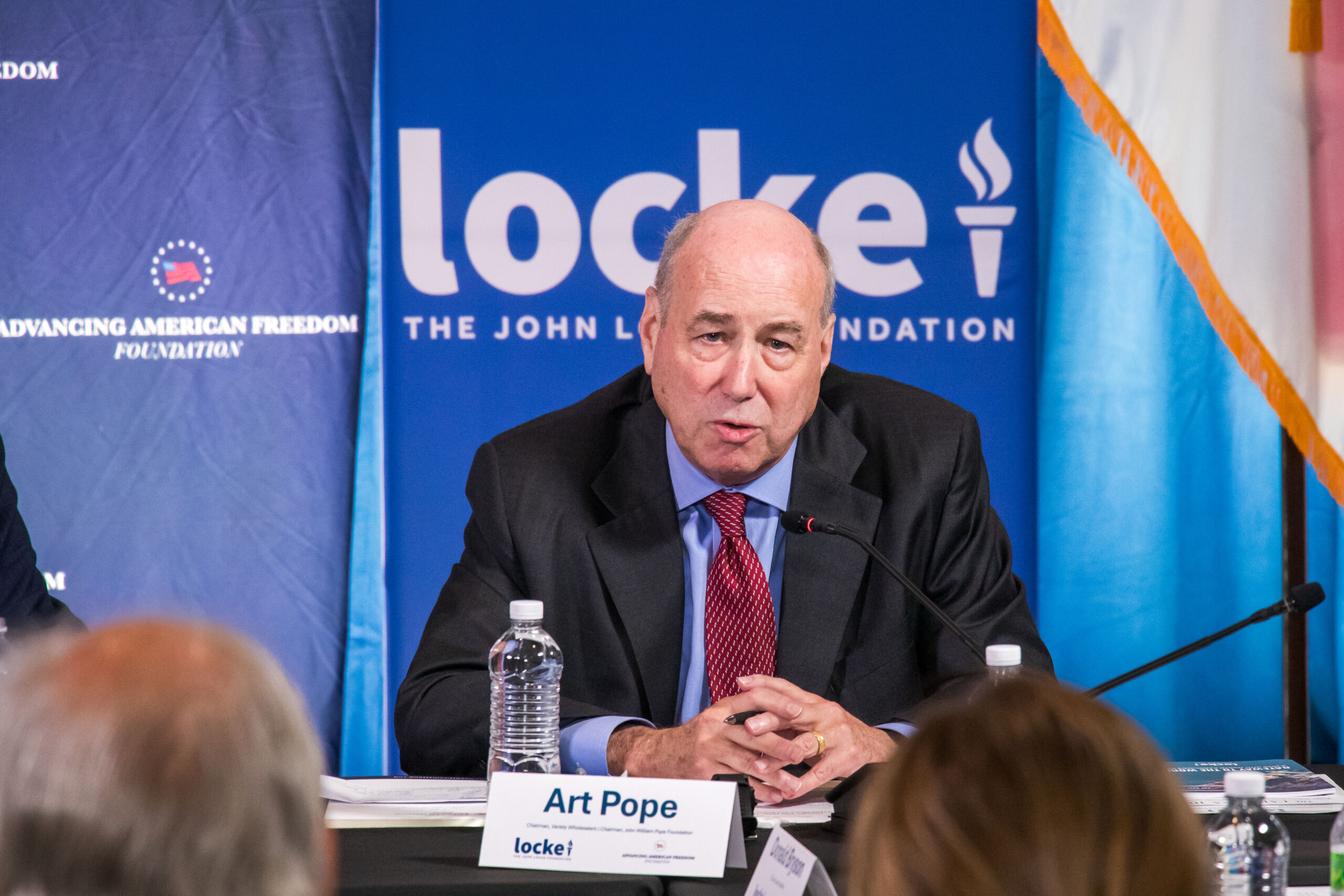
National Review Online highlights a recent speech from North Carolina’s Art Pope, founding chairman of the John Locke Foundation.
One of the oldest sayings about philanthropy is: “Give a man a fish, and you feed him for a day. Teach a man to fish, and you feed him for a lifetime.” The second part is self-evident. Education and training.
But there are additional versions of that wisdom that go further. One is to enable the man to sell his fish at the marketplace. With his earnings, he can buy a better boat, catch more fish, buy a truck, and deliver his catch directly to customers. Through hard work and investment, he can earn money to feed, clothe, and shelter his family — and even send his children to college, breaking the cycle of poverty.
Yet all three of these versions — give a man a fish, teach a man to fish, help the man take the fish to market — presume something fundamental: that the man has the right to fish. That what he catches, he owns. That there is a market where he can sell his fish. That the rule of law ensures contracts are honored and he will be paid — if necessary, in courts. That he has the right to keep most of his hard-earned money and to choose how best to provide for himself and his family.
This is why our philanthropy focuses not only on humanitarian aid and education — which are very important — but also on advancing the principles and policies of a free society to provide both justice and prosperity.
The Pope Foundation — and the many other philanthropists I have worked with, including the Bradley Foundation, the Koch Foundations, and last year’s honoree, Kim Dennis of the Searle Freedom Trust — are helping people by fostering voluntary exchange within a free-market economy governed by the rule of law under limited, constitutional government. In fact, center-right policy nonprofits — along with academic institutions, civic engagement groups, and yes, grassroots advocacy — must be supported by philanthropy if we are going to preserve liberty in order to ensure prosperity and human flourishing for future generations.