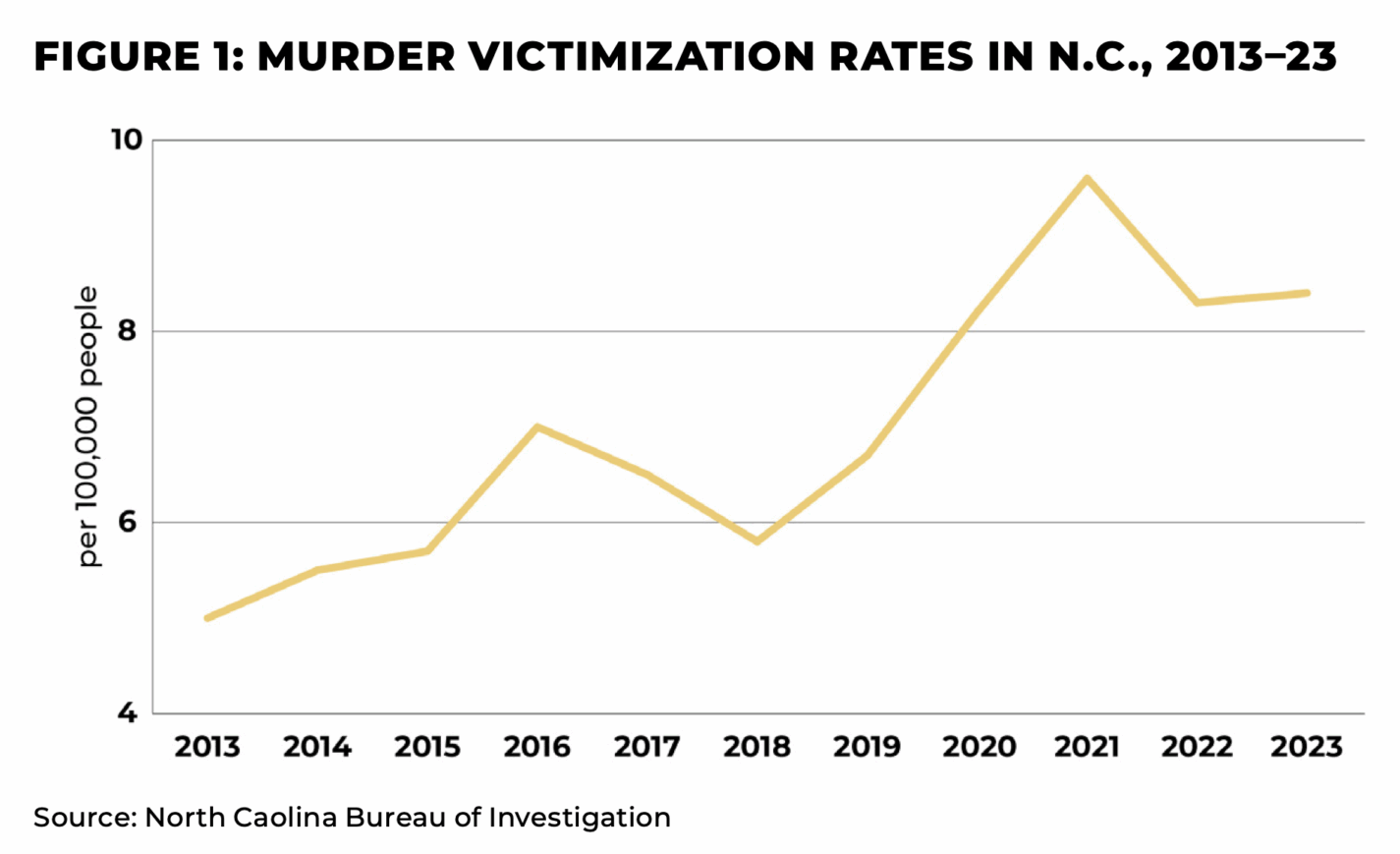
The report is called “More cops, less crime: how intensive community policing can solve North Carolina’s crime problem.” It makes four points. First, crime continues to be a problem in North Carolina.
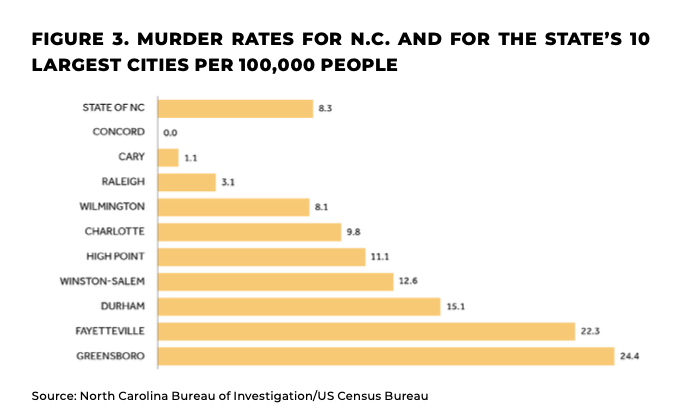
Second, the burden of crime isn’t evenly distributed. Instead, it falls most heavily on poor and black communities.
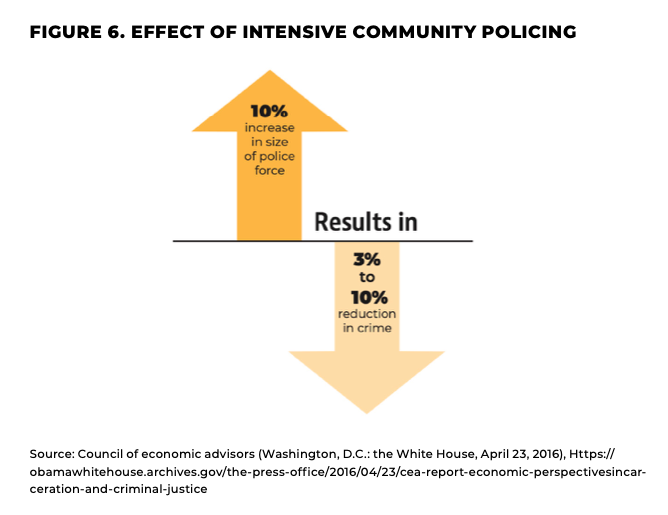
Third, the best way to reduce that burden would be to implement what we at Locke call intensive community policing, i.e., deploy more police to act as peacekeepers in high-crime, high-disorder neighborhoods.
Fourth, because the communities that need intensive community policing the most are generally the ones that can least afford it, implementing a program of intensive community policing in those communities will probably require supplemental police funding from the state.
For more information about crime and policing see:
Intensive Community Policing Can Save the Lives of Black Children
Black Lives Matter – Which Is Why We Need More Police Funding, Not Less
The Late 20th Century Crime Wave Was a Disaster for Blacks and the Poor
How America Ended Up Underpoliced and Overincarcerated
“Broken Windows Policing”: Good Policy, Bad Name
What Does Intensive Community Policing Entail?
Despite the Timing, Intensive Community Policing Should Have Wide Appeal
Prominent leftist suddenly sees that violence is bad, but for the wrong reason