According to national media reports, Pennsylvania’s 2025 budget deal caused the state to “exit” RGGI. Media coverage also used the words “leave,” “quit” and “pull out” to describe Pennsylvania’s abandonment of RGGI.
Pennsylvania, though, wasn’t actually a member of RGGI.
In 2019, then-Gov. Tom Wolf issued an executive order for his administration to adopt regulations consistent with RGGI.
The order has been tied up in legal challenges ever since, with particular emphasis on separation of powers issues. (If RGGI’s carbon pricing scheme is a tax, the governor can’t impose it via executive order.)
Pennsylvania’s widely reported “exit” was really an end to an executive branch attempt to impose a statewide RGGI scheme by via executive order. The state had never officially joined the compact. That’s critically important because states in the compact share in its revenue.
Raising electricity costs
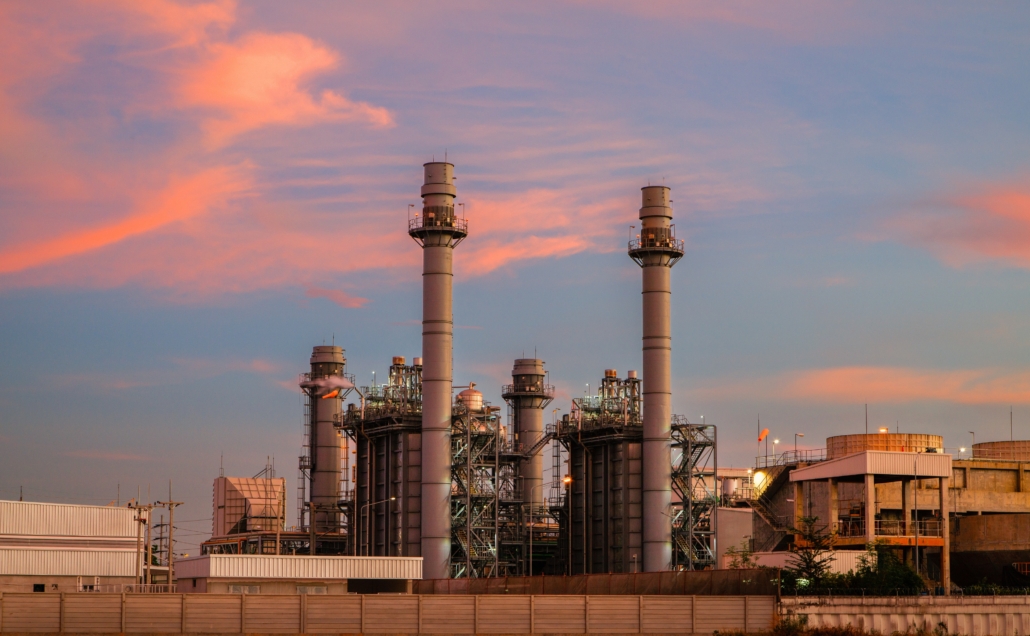
RGGI is supposed to reduce regional carbon emissions by first capping those emissions, then requiring certain power plant operators to buy one credit for each short ton of carbon dioxide emitted. States can use revenues from the sale of those credits to subsidize energy conservation projects or politically favored power generation.
But of course RGGI applies in only 11 Northeastern states, and those states, along with their neighbors, still need energy. In theory, power generation from gas or coal-fired power plants should increase in areas just outside the RGGI region as it decreases within the region.
That’s just what happened, as a 2021 paper in Energy Economics found.
“Specifically, the program decreased coal and natural gas consumption for electricity generation by 73% and 30%, respectively, within regulated states. However, in nearby, un-regulated states, I find an increase in natural-gas consumption of 237% and a decrease in coal consumption of 7%. As a result, the program reduced carbon dioxide emissions by 4.8 million tons annually in regulated states, but increased carbon dioxide emissions by 3.5 million tons in unregulated states.”
That’s a much smaller net emissions gain than program advocates claim. Whatever the precise level of carbon reduction achieved, it comes with a significant cost.
The Internal Market Monitor published by ISO-New England, the region’s energy grid operator, shows that RGGI increases power generation costs in New England.
“Real time energy prices increased by 11 percent in 2024, despite natural gas prices remaining relatively flat year-over-year,” the 2024 report concluded. “The increase was primarily driven by higher CO2 emission costs, increased load levels, and a decline in imports from Canada.
- “RGGI prices rose more than 50 percent year-over-year, adding approximately $4 per MWh to electricity prices.”
In 2023, the RGGI cost was even higher. “For an average combined cycle generator, carbon program prices added ~$6/Mwh (20%) for RGGI across New England, and ~$10/Mwh (29%) for RGGI + MA EGEL in Massachusetts,” the International Market Monitor found.
Revenue redistribution
Ending RGGI would lower energy costs and improve economic conditions in the Northeast. But one state can’t end RGGI for everyone, or even escape RGGI’s high costs by bailing out. Leaving means giving up the revenue, but still paying higher costs.
Proceeds from the allowance auctions are distributed among the states in the compact. Leaving the compact means waving that revenue goodbye.
In 2023, New Hampshire received $44.4 million from RGGI allowances, according to the compact’s 2023 proceeds report, published this past July. The state sent $41.1 million of that back to ratepayers and $2.59 million to the Energy Efficiency Fund.
In 2024, the state received $65.8 million in allowances proceeds and rebated $62.6 million to ratepayers, according to the state Department of Environmental Services (DES).
As DES sees it, New Hampshire accounts for 10% of retail electricity sales within the ISO-New England region, but receives 15.4% of the carbon allowances within the region. (ISO-New England is the regional energy grid operator.)
State energy officials see exiting RGGI as a net negative for the state and for ratepayers as long as the compact continues to exist.
Other states’ participation in RGGI will keep regional electricity rates high. As long as New Hampshire remains in the compact, it receives a distribution of the revenues that those higher prices generate. If it leaves, the price of electricity on the ISO-New England grid remains high, but New Hampshire no longer receives its distributed share of the revenues generated from those higher rates.
That’s the RGGI trap. And that’s why New Hampshire isn’t likely to leave RGGI anytime soon.
A scheme to increase government power
Reducing carbon emissions is a laudable goal. RGGI does this by making emissions more expensive and giving government more revenues to distribute to favored constituencies. The combination of higher prices and tighter emissions restrictions is intended to transition the region to lower-emissions sources power generation over time. Revenues from the sale of carbon credits could be used to subsidize additional reductions. (New Hampshire returns most of these revenues to ratepayers in an effort to offset RGGI’s effect on costs.)
The concept behind RGGI is that the market won’t shift energy production to lower-carbon sources without government intervention. But both market and cultural incentives can accelerate this transition, and they have.
The fracking boom reduced U.S. carbon emissions by creating strong financial incentives to shift from coal to natural gas. Reforming nuclear power regulation to facilitate greater innovation in small, modular reactor technology can be expected to speed the adoption of small-scale, zero-emissions nuclear power.
Whatever gains RGGI might produce come at a government-imposed cost borne by everyone in the region, from manufacturers to low-income households. Those small emissions reductions are largely offset by increases outside of the RGGI region, and they are swamped by the massive emissions increases from China and much of the developing world.
But because RGGI raises prices region-wide, and shares the spoils with all member states, it creates strong incentives for states to remain forever in the compact despite its negative effect on economic competitiveness.