
Recently, we exposed how the Texas Council for the Social Studies (TXCSS) and its parent, the National Council for the Social Studies (NCSS) have derailed past attempts to bring a high-quality History education to Texas students.
The TXCSS, however, is not the only organization meddling in Social Studies reform. The American Historical Association (AHA) holds a congressional charter, national reach, and a membership that includes many university professors and professional historians. Like many high prestige institutions, though, the AHA has been infiltrated by far-Left activists and seeks to remold how history is taught in higher education, secondary education, and public programs to reflect its ideology.
Evidence of the AHA’s ideological capture is all over their publications: At their annual Texas conference on Introductory History Courses in 2023, the AHA held a roundtable and breakout discussion on LGBTQ+ issues and history. In 2022, the conference recommended two articles, “Democracy and the Teaching of History in Our Perilous Moment” and “A Usable Past for a Post-American Nation,” that can only be described as anti-Trump pearl-clutching. Flashing back to 2021, their plenary session “Teaching Black History to White People” proves that the AHA fully indulged in the race-based Wokery running rampant at the time.
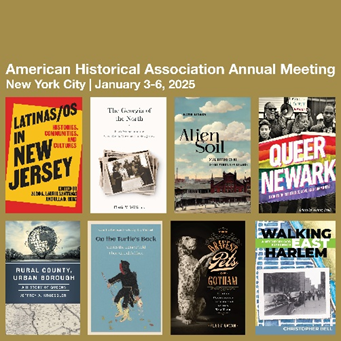

With the AHA as the preeminent organization representing teachers of history in higher education, it is no wonder that the history education is in such a sorry state.
The AHA has a long track record of inserting itself into any left-wing cause célèbre. Examples of issues that the AHA has weighed in on include:
- Signed an amicus in United States v. Skrmetti, the Supreme Court case considering Tennessee’s ban on gender-modification for minors.
- AHA members submitted an amicus in United States v. Rahimi, a gun control case.
- Protested against the dismissal of the Archivist of the United States.
- Condemned the 1776 Commission, a presidential advisory commission that sought to unify Americans through a shared identity based on the Constitution.
- OpposedP. Bryan’s attempt to reform the Texas State Historical Association.
But what else would you expect from an organization where 4 out of 6 of their presidents and vice-presidents specialize in race and sexuality? The AHA, like much of historical study in general, appears to have succumbed to the fashionable belief that race, sex, and oppression are not just important topics, but the only topics worthy of discussion.
The AHA does not merely confine itself to opinion pieces or letters of support; it actively seeks to influence policy. In fact, its current target is the Texas State Board of Education as it revises the Social Studies TEKS.
In worse news for patriotic Texans, the AHA has already proven that it can sabotage state efforts to root out Leftist history curriculums. Viriginia was well on its way to providing a high-quality historical education free of left-wing obsessions like Critical Race Theory until the AHA and NCSS got involved. These organizations blitzed the state with position statements, articles by complicit media, and a deluge of public comments. In the end, with a split government, the Virginia Board of Education compromised on a set of standards that were improved but less than ideal.
Throughout its dealings, the AHA employs a rhetorical strategy that present its positions as reasonable and moderate while framing its opposition as radical and irregular. As part of this strategy, the AHA accused the reformers of 1) being politically motivated; 2) lacking academic credentials; and 3) not conducting an open and inclusive process.
This criticism tells on itself, though: when the elected representatives of the people see that a racist, anti-American ideology has taken hold of history instruction, it is incumbent on them to take action. It would not benefit students to go back to the same overwhelmingly Leftist professors of history and the captured teachers’ associations that created this situation in the first place.
The AHA is now using these same strategies in Texas. The AHA recently stood in lock-step with their TXCSS brethren against the Social Studies framework reform that the State Board of Education approved in September. Their representative made negative but vague comments against the framework that were carefully constructed to not appear radical in front of the Texas public. Likewise, the local professor the AHA brought in tow made the incredible argument that a framework with world history crammed into one year and a “world cultures” course taught Texas students more about the world than five years of comprehensive history.
The AHA generously hosted TXCSS officers at this year’s conference to explain to the history educators of Texas that the failed model of Social Studies instruction currently in place must be defended at all costs. No doubt both organizations will be seeking to leverage their privileged position to message to teachers to oppose the new framework.

The AHA’s Texas Social Studies TEKS Revision Field Guide calls the approved framework “experimental,” as if teaching history in the order in which it occurred is some dangerous chemical students will be exposed to. The messaging guide, going back to the AHA playbook, encourages public commenters to demand that “the spirit and letter of the law” be followed. The AHA wants to muddy the process to circumvent the decisive action by Texas’ elected officials and allow its majorities in history departments and activist teachers to have maximum influence.
They also recommend attacking the viewpoints and credentials of non-Leftwing content advisors. Most egregiously, though, the AHA guide makes numerous assertions about the framework and state law that are either misleading or simply incorrect. For example, it says that the framework contains “no courses in US history, world history, Texas history, geography, civics, or government,” ignoring that these areas have been reorganized and will be approached chronologically. The AHA’s these apparently neutral statements allow them to sow confusion while maintaining plausible deniability. What we should remember, though, is that the AHA has proven that it is in favor of a maximally biased leftwing perspective of history.
Organizations like AHA and TXCSS have been the established thought leaders in a system that has presided over a devastating decline in historical knowledge and civic literacy, choosing instead to use schools and universities to spread divisive, anti-American narratives. It is well past time to stop giving them the benefit of the doubt or assume good faith, or they will be allowed to sabotage Social Studies reform for the second time in three years.