“the 2,300 men of the Devil’s Brigade bade goodbye to Montana in an April 6, 1943, parade. Helena residents ‘looked as if they were watching their own sons march away.’”
Neighbors may quarrel from time to time, even over silly things, but at the end of the day they still live next to each other. It’s in everybody’s interests to prioritize shared values over petty differences.
But for an occasional minor dispute, Americans and Canadians have been friendly neighbors since the War of 1812. We have fought alongside each other in major wars that started thousands of miles away in Europe. One of the most notable examples of our collaboration goes back more than eight decades and occurred on Montana soil.
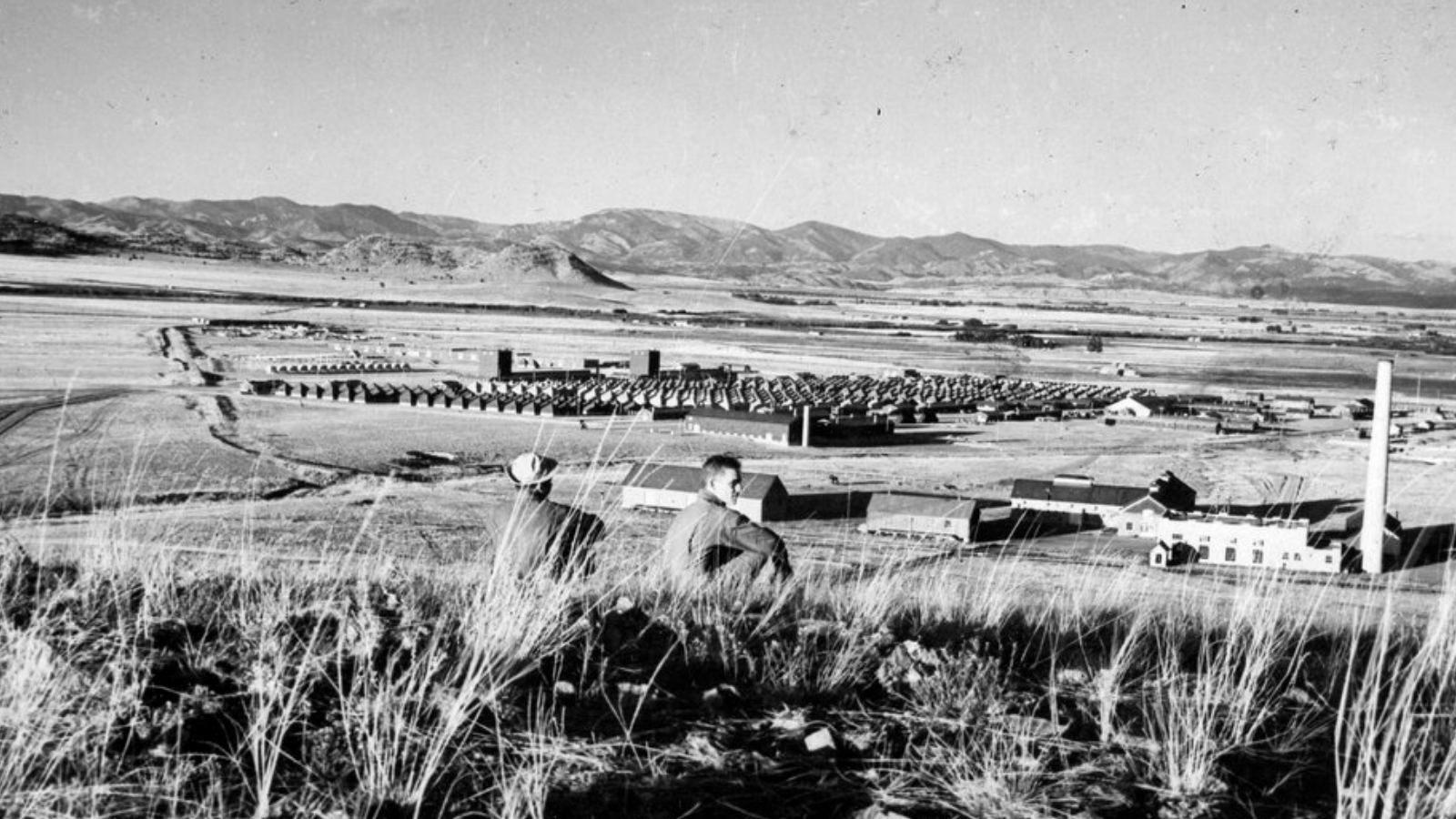
Situated a stone’s throw northwest of Helena in Montana’s Lewis and Clark County is Fort William Henry Harrison, named for America’s ninth President. First authorized by act of Congress in 1892, the site now houses the Montana National Guard’s training installation as well as a veterans’ medical center and cemetery, but its most celebrated contribution straddles the years 1942 and 1943. It was there and then that the facility trained an elite American-Canadian unit famously known as “The Devil’s Brigade.”
The original plan was to train commandos for action in occupied Norway, to knock out Nazi Germany’s nascent atomic bomb research and production facilities. That required extensive preparations for wintry and mountainous conditions, and we all know that Montana offers plenty of both. Because Norwegian resistance fighters eventually accomplished the objective on their own, the brigade that trained in Montana was later sent instead to fight the Japanese in the Aleutian Islands, and then to Italy and France to battle the Germans. Today, the “special operations” forces of both Canada and America trace their origins to this joint endeavor that began in the Treasure State.
The story is commemorated in a famous book that appeared in 1966, The Devil’s Brigade, by Robert H. Adleman and George Walton. It became the primary source for a well-received film of the same title that appeared two years later. The authors’ account of the brigade’s time in Montana—its members known then as the “forcemen”—offers a fascinating glimpse into the bond between Americans and Canadians.
“The open-hearted Westerners of Helena,” write Adleman and Walton, “adopted the Force as their own” in part because most of the recruits came from small towns in the U.S. and Canada just like Helena:
The rapport that was immediately established was also based on the fact that a majority of the city’s population were descendants of miners, trappers and guides…The townspeople took the Forcemen to their homes for Sunday suppers, and, despite gasoline rationing, waited in line in their cars outside the camp’s gates on weekends to act as voluntary chauffeurs. Most of the people of Helena were as proud of the Forcemen as they were of their own sons.
The Canadians, reported Adleman and Walton, felt as welcomed in Helena as the Americans, though at first, “some of them expected that the townspeople would be wearing six-guns slung low and were quite surprised to find a high order of civic accomplishment.”
Using abandoned mines and old infrastructure in the Helena area for target practice, the trainees sometimes got a little too exuberant with explosives:
Occasionally they would blow up the wrong mine or even the wrong house. Once they loaded an old bridge with so much dynamite that they knocked over most of the chimneys in a nearby town.
The people of Helena were immensely forgiving, for they knew that these men would soon fight on the front lines against mortal enemies. Word in the spring of 1943 that the men would be shipped out “swept over Helena like an unwelcome storm, leaving a train of hasty marriages and choked farewells in its wake.”
With Governor Sam C. Ford present, the 2,300 men of the Devil’s Brigade bade goodbye to Montana in an April 6, 1943, parade. Helena residents “looked as if they were watching their own sons march away.”
It was a moment to remember, a testament to a friendship we hope will endure forever.
Lawrence W. Reed writes a monthly column for the Frontier Institute in Helena, on whose board he serves. He is president emeritus of the Foundation for Economic Education and blogs at www.lawrencewreed.com.