Introduction
The importance of oral health is often overlooked in the broader health care discussion. Sustaining proper oral health at a young age and into one’s elderly years is an essential factor in maintaining one’s overall health. Accessing or affording a dental professional can be difficult, however, especially for those who live in more remote areas or have modest incomes. Dental therapy is a relatively new occupation in the United States that can help alleviate some of the accessibility and affordability problems that burden so many North Carolinians.
Dental therapists are highly trained, mid-level dental professionals who are analogous to nurse practitioners or physician’s assistants. Generally, dental therapists have many of the same duties as dental hygienists, plus they are allowed to perform common restorative procedures such as drilling and filling cavities, handling simple extractions, and fitting stainless-steel crowns. Dental therapists complete an educational program that usually lasts two to four years, and they work under the supervision of a dentist.
As of late 2022, 14 states allow dental therapists to practice in one capacity or another, but North Carolina is not one of them. Permitting dental therapists to work in North Carolina would likely help many people who struggle to access or afford proper dental care. Dental therapists specialize in preventive care, so patients will benefit from having oral problems addressed before they become painful and expensive. With the appropriate regulatory framework in place, dental therapists will receive supervision from a dentist, but they will still have the flexibility to practice outside the traditional dental office. This is key. One of the easiest ways to provide patients in rural areas with access to oral care is to allow dental therapists to travel to schools, community centers, or nursing homes to serve them.
Incorporating dental therapists into North Carolina’s dental profession would be a multistep, multiyear process. First, lawmakers would need to approve licensure. Next, an academic institution would need to adopt a curriculum and enroll students. Once students have completed the requirements and receive a license, patients could then begin receiving care.
Key Facts
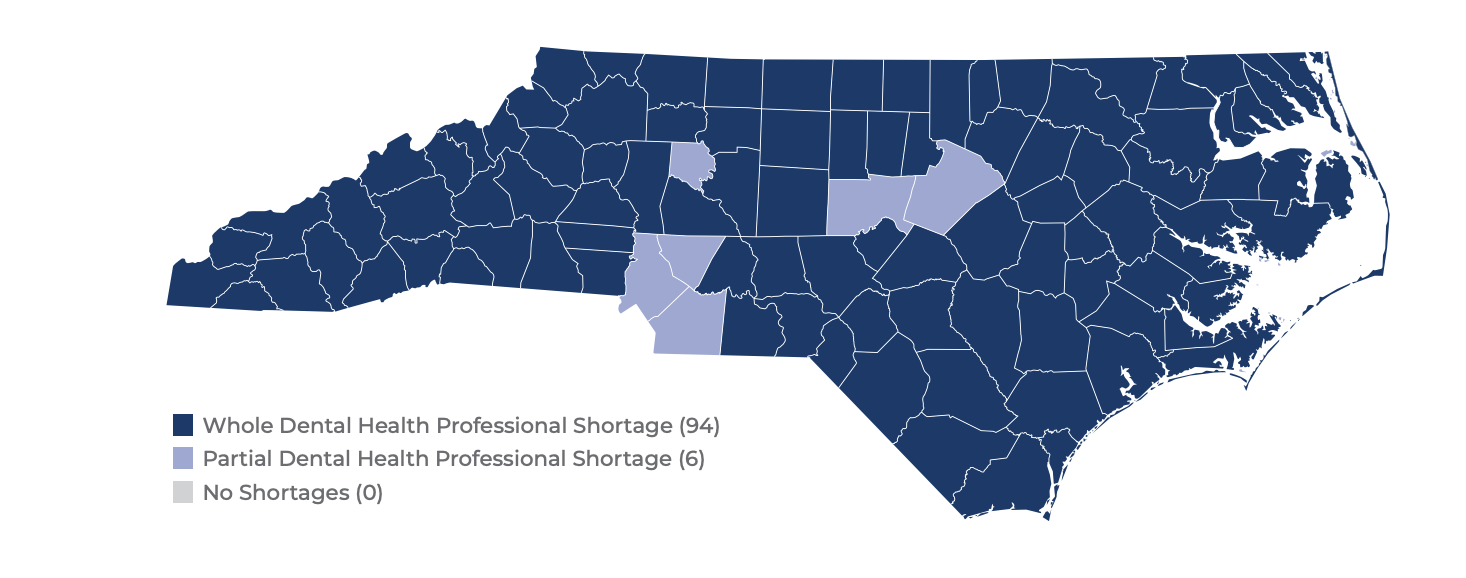
- Health professional shortage areas (HPSAs) are geographic areas, populations, or facilities where there are not enough dental-care providers to meet the needs of the nearby population. North Carolina has 208 dental HPSAs where over 3.7 million individuals live, and as of January 2022, all 100 counties in North Carolina have been partially or fully designated as areas that are affected by shortages of dental professionals.
- North Carolina could lead the southeastern United States in the dental field by allowing dental therapists to practice. As of late 2022, 14 states allow dental therapists to practice in some capacity. Arizona, Maine, Michigan, Minnesota, New Mexico, Connecticut, Nevada, Oregon, Colorado, and Vermont have authorized dental therapists to practice statewide. In Alaska, Idaho, Montana, and Washington, dental therapists are allowed to practice only in tribal communities.
- After Alaska approved the practice of dental therapy, more children and adults received preventive care in areas where dental therapists practiced. These communities also had fewer children with front-tooth extractions and fewer adults with permanent-tooth extractions. In total, the introduction of dental therapy in Alaska expanded access to preventative dental care to over 40,000 individuals in 80 rural communities.
- In 2011, Minnesota licensed the state’s first dental therapists, and the state continues to be a leader in fostering this profession. Over 40% of these dental therapists practice in non-metropolitan areas. A 2014 report by the Department of Health and the Minnesota Board of Dentistry on the early impacts of dental therapy observed 14 clinics where dental therapists treated over 6,000 patients, 84% of whom had public insurance.
Recommendations
1. North Carolina should amend Chapter 90 of the North Carolina General Statutes to establish, recognize, and appropriately regulate the practice of dental therapy.
Furthermore, the North Carolina Board of Dental Examiners should be granted the power to oversee licensure.
N.C. Dental Health Professional Shortage Areas
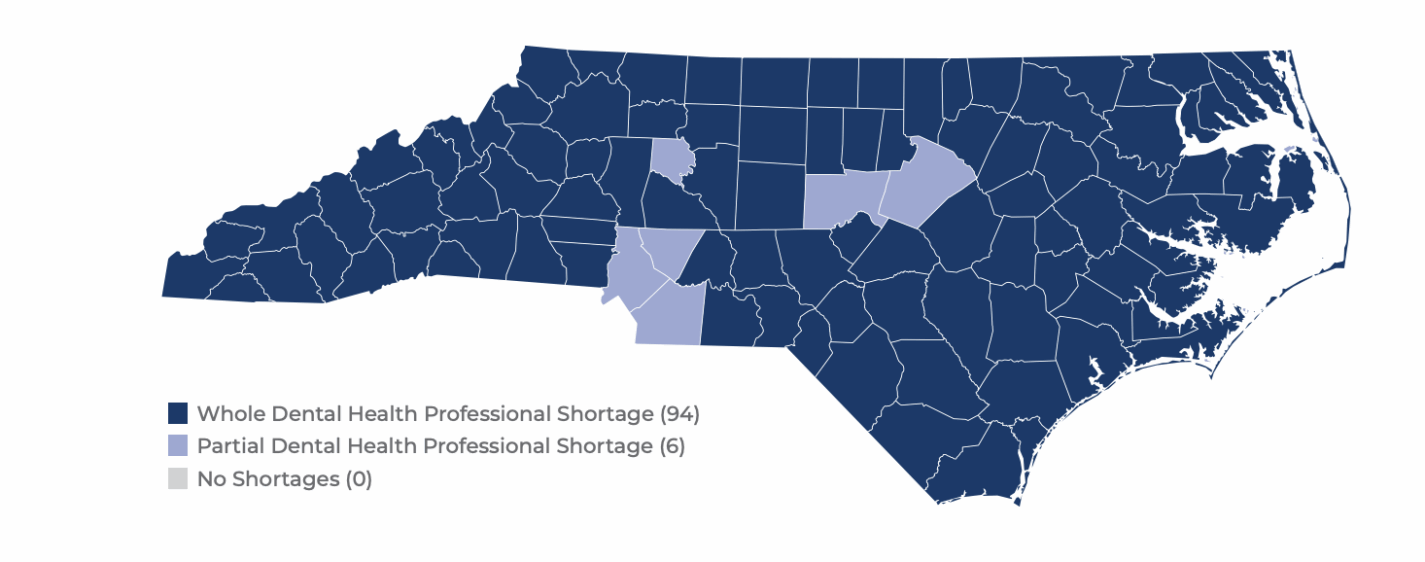
Source: Rural Health Information Hub, Health Professional Shortage Areas, Dental Care, by County