Introduction
Medicaid is a program funded jointly by the state and federal governments. Its core functions include paying medical providers for services rendered to low-income parents, children, pregnant women, the elderly, the blind, and the disabled.
After resisting for more than a decade, North Carolina passed a bill to expand its Medicaid program in 2023. The bill tied expansion to the passage of a state budget bill, which finally became law months after the beginning of the fiscal year. Federal dollars will cover 90% of the costs of the expansion population, while the state share is expected to be covered by a tax on the state’s hospitals. As part of the 2021 American Rescue Plan Act, North Carolina is also expected to receive a $1.8 billion “signing bonus” in the form of enhanced federal reimbursements for the traditional Medicaid population to be paid out over the first two years of expansion.
While advocates emphasize how expansion will provide “coverage” to nearly 600,000 more North Carolinians, significant reasons to oppose expansion remain.
For starters, coverage does not mean access to care. Fifteen years ago, enrollment in Medicaid was 1.8 million. In 2023, prior to expansion, 2.9 million North Carolinians were enrolled in Medicaid, which marks an increase of 61%. Adding 600,000 more would bring total enrollment to 3.5 million, nearly doubling the number of enrollees since 2008. As a result, roughly one in three North Carolinians would be enrolled in the government program. During the same time that North Carolina has witnessed this massive swelling of the Medicaid rolls, the number of hospitals accepting Medicaid patients has fallen by 15%, while the number of physicians enrolled as Medicaid providers has risen by only 11%. Additionally, the number of dentists accepting Medicaid has fallen by 35%. Expansion may provide people with a Medicaid card, but that card does not guarantee timely access to care.
Second, the federal dollars are not “free.” The federal government is already more than $33 trillion in debt, and the billion in additional costs to fund North Carolina’s Medicaid expansion will add to that debt. Mounting debt will be paid either through newly created Federal Reserve dollars, which will add to the price inflation crushing working households, or through increased taxes, which reduce the take-home pay of workers while discouraging job creation and investment.
The experiences of states that have expanded Medicaid should temper the enthusiasm of those who are celebrating North Carolina’s expansion.
For example, Medicaid expansion costs have exceeded most cost projections in expansion states by about 50%. Ohio underestimated costs by $1.5 billion in the first few months of expansion. Illinois miscalculated costs by $800 million and Kentucky by $1.8 billion. Washington State increased its biennial budget by $2.3 billion just to deal with expansion costs.
A 2023 report by the Foundation for Government Accountability found that expansion states saw Medicaid enrollment explode at a rate roughly three times their original estimates (6.5 million estimated vs. 19 million total). Why should North Carolina expect conditions to be different?
Moreover, what can North Carolina do about Medicaid’s rampant fraud problem? The federal Centers for Medicare and Medicaid Services estimated that in 2020 more than one in five dollars expended in Medicaid claims were improper payments (21.3%), which cost taxpayers $86 billion nationally.
While the cost overruns and fraud associated with Medicaid are a significant concern, studies suggest that the program may not improve health outcomes either. The 2008 Oregon Health Insurance Experiment is known as the “gold standard” of studies because it randomly assigned eligible patients to the state’s Medicaid program. Two years later, the authors concluded that Medicaid had no statistically significant effect on major measures of health outcomes between those who had been chosen to participate and those who had not.
Most importantly, Medicaid expansion is even harder to justify knowing that North Carolina’s current Medicaid population is not served adequately. A 2019 study published in the Annals of Health Law and Life Sciences suggests that Medicaid is not meeting the specific needs of North Carolinians. Duke University scholars found that the state’s Medicaid program is plagued with serious issues that harm those who need help the most. These issues are a function of a low supply of health professionals in marginalized areas and inefficiencies in the delivery of care for the Medicaid program as a whole.
Adding up to 600,000 adults who are mostly childless, healthy, and of working-age would further overwhelm this already strained system.
Key Facts
- Federal funding of Medicaid expansion and other health care entitlements will necessitate either higher levels of deficit spending, which adds to the multitrillion-dollar federal debt and causes price inflation when financed through Federal Reserve money printing, or substantial increases in taxes, which impede economic growth.
- Costs imposed on state taxpayers under Medicaid expansion continue to be a key point of debate. Medicaid expansion proponents like Gov. Roy Cooper have repeatedly said that no state funds would be needed to finance the 10% state share. However, a 2020 John Locke Foundation study found that even with a proposed tax on providers and health insurers, the state could face a funding gap between $119 and $171 million in the first year that would need to be paid for by new appropriations or taxes.
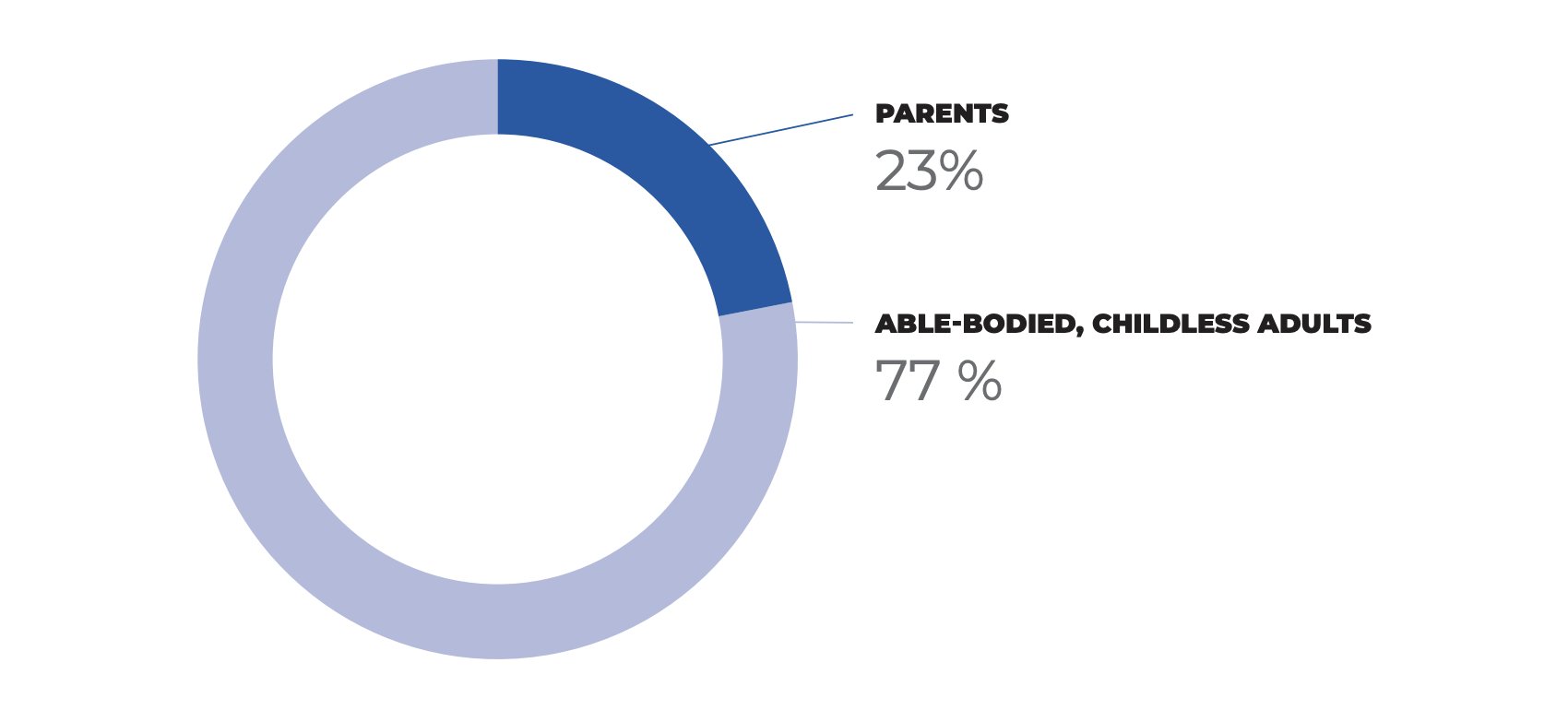
- Expanding Medicaid eligibility puts traditional program enrollees at risk. Low-income parents, children, pregnant women, the elderly, the blind, and the disabled will have to compete for access to health care with an estimated 600,000 people who would be added to Medicaid, 77% of whom are able-bodied, childless adults.
- With less access to physicians that accept new Medicaid patients, new enrollees will likely turn to hospital emergency rooms for service. Studies show that Medicaid expansion is unlikely to reduce visits to the emergency room, one of the most expensive ways to receive care. In some cases, Medicaid expansion actually raises emergency room utilization.
- Expanding the eligibility pool for government health insurance programs crowds out access to private insurance coverage. Studies indicate the crowd-out effect can lead to up to 50% of new Medicaid enrollees leaving private health insurance coverage for the public program.
Recommendations
1. North Carolina should reverse course on Medicaid expansion.
Policymakers should find a path to unwind Medicaid expansion. They should focus on free-market solutions that would reduce costs associated with health care and health insurance and find ways to create a more sustainable health care market, rather than shifting the costs to the taxpayers who fund government budgets.
2. Congress should restructure Medicaid to grant states more budgetary flexibility, including the use of block grants to distribute federal funding.
Converting the federal portion of North Carolina’s Medicaid program into an annual block grant would go a long way toward limiting Medicaid’s unpredictable annual cost overruns.
3. Congress and North Carolina lawmakers should relax Medicaid rules and regulations.
Regulatory relief would stimulate competition in the insurance market and allow individuals to purchase affordable plans that best meet their needs.
Medicaid Expansion Population
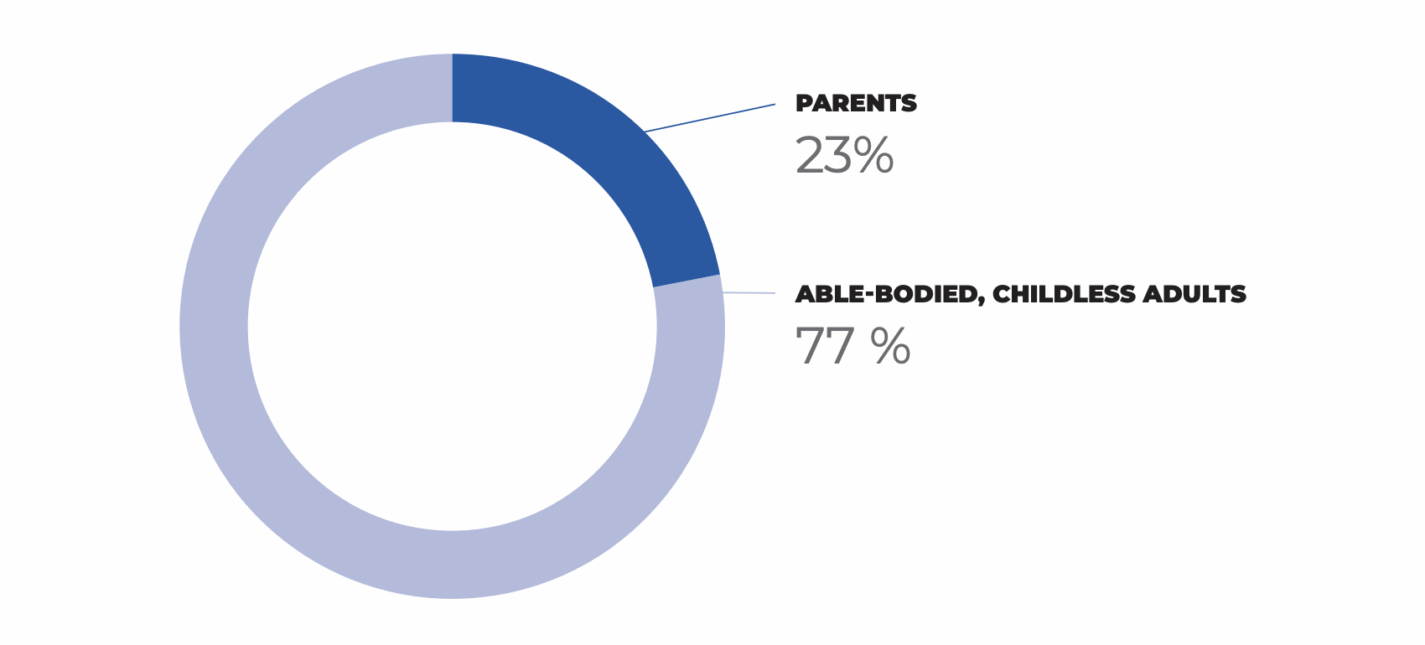
Source: Kaiser Family Foundation
Medicaid Income Eligibility Categories in North Carolina
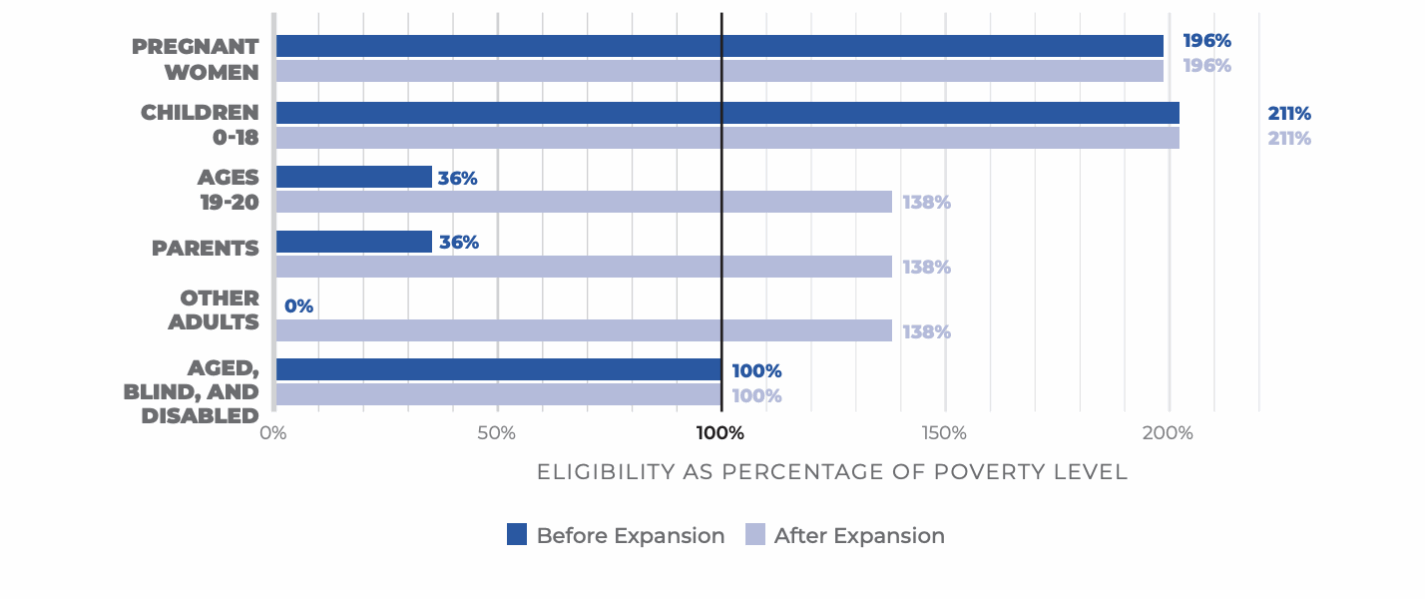
Source: North Carolina Department of Health and Human Services