By John A. Charles, Jr.
At TriMet’s December 10 board meeting, director Tyler Frisbee lectured attendees on the need for 82nd Avenue business owners and motorists to embrace the reduction of roadway capacity by 50 percent so that TriMet can take over two of the four lanes for exclusive busways.
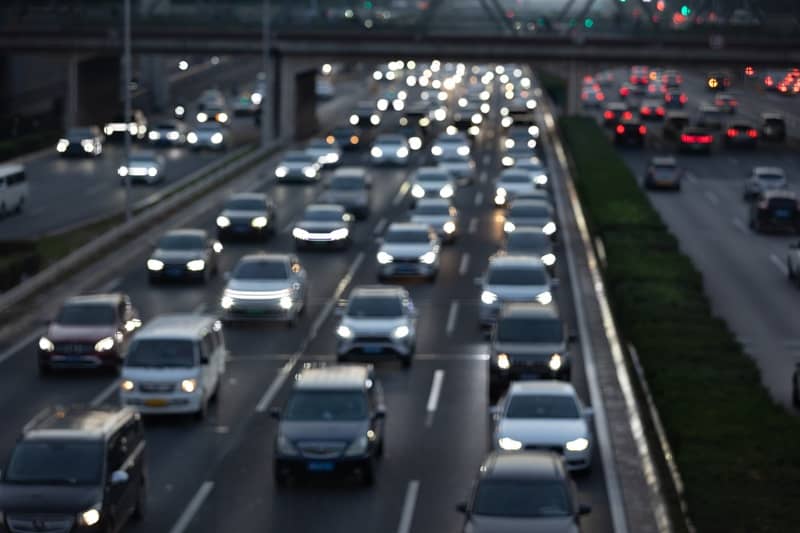
TriMet refers to these as Business Access and Transit (BAT) lanes, although they will reduce access to businesses. The curb lanes in each direction will be re-striped as “bus-only,” with all other vehicles forced to turn right every two blocks. Traffic modeling indicates this will increase peak-hour travel times by 50 percent, diverting traffic to other roads, primarily I-205.
TriMet’s #72 bus line will be the only beneficiary of this change. That bus runs every 10-12 minutes during peak hours with less frequency the rest of the day, meaning the BAT lanes will be unused most of the time.
As TriMet and the Portland Bureau of Transportation (PBOT) move towards a likely February decision on the BAT lanes, multiple business owners have threatened legal action for loss of access to their operations.
Director Frisbee, a strong proponent of BAT lanes, decided she’d heard enough complaints from opponents. In her extended lecture, she made several assertions that deserve a response.
Director Frisbee: “82nd Avenue within the city limits is no longer a state highway. It was turned over to Portland three years ago to be converted into a main street.”
John Charles: Retitling 82nd a “main street” is a meaningless distinction. In functional terms, 82nd Avenue ceased being a “state highway” in 1982 when I-205 opened. Since then, 82nd Avenue has been a major arterial providing essential access to businesses, residential units, and neighborhoods. Creating traffic gridlock by reducing lane capacity by 50 percent is a bad idea regardless of what designation we give to the road.
Director Frisbee: “We need to change the road to reflect today’s users.”
John Charles: The road already reflects today’s users, who are mostly drivers. Travel patterns along 82nd Avenue have not changed in decades. If anything, car use has increased because TriMet’s ridership dropped by 28 percent between 2015 and 2024. There is no reason to think ridership will recover regardless of what TriMet does.
Director Frisbee: “We’re not building a project for the next five years. We’re building for the next 25-40 years.”
John Charles: The last thing transit agencies should do is plan for consumer demand in 40 years, because it’s impossible. TriMet should know this because the Portland light rail system will turn 40 in 2026 and has never performed as expected. Yet we’re stuck with expensive tracks, wires, and funding contracts that make it impossible to eliminate or reform the system.
Anything TriMet does on 82nd Avenue should be based on recent trends and short-term forecasts of financial capacity.
Director Frisbee: “When we look at BAT lane experience from around the world, what we see, almost uniformly, is that after implementation foot traffic increases, even to businesses who believe they are auto dependent.”
John Charles: This generalization is of little value to three carwash proprietors threatening legal action. They don’t wash people; they wash cars driven by people. The unsubstantiated assertion is also irrelevant to thousands of people in cars who will be forced to divert from 82nd Avenue or stop doing business there due to the massive congestion BAT lanes will impose under TriMet’s plan.
If Ms. Frisbee’s goal is to improve travel speeds for bus riders, adding express bus service on 82nd Avenue would accomplish the goal much better than a BAT lane, without requiring large capital investments. In past years TriMet ran the 57X bus from Forest Grove to Portland and the 33X from Oregon City to Portland. Both lines used standard buses with no special amenities, operating in general purpose travel lanes. They were successful because they made limited stops, making them an attractive option for time-sensitive riders.
Unfortunately, both lines were cancelled when TriMet opened parallel light rail lines (Hillsboro MAX in 1998; Orange Line in 2015) because they provided faster service than light rail. The contrast was politically unacceptable. TriMet has always cancelled or rerouted buses to become feeder lines for light rail for the purpose of inflating rail ridership. In many cases riders refused to switch to the slower MAX service and simply abandoned TriMet.
Nonetheless, adding express bus service on 82nd Avenue, in addition to current local service, would be a low-cost way to improve the transit experience, without locking the agency into long-term commitments.
Like an evangelist, Tyler Frisbee made her plea for Portlanders to repent from their car-centric ways and embrace the narrow vision of PBOT’s 2035 Transportation System Plan (see video or two-pager), whose Vision Zero tenets include: stop designing roads around people in cars, increase ride-share trips to 70 percent, and prioritize moving people (but not people in cars) through walking, bicycling, and transit.
Reducing lane capacity on 82nd Avenue is not the way to promote transit or pedestrian use and the TriMet Board should withdraw the idea as soon as possible.
John A. Charles, Jr. is President and CEO of Cascade Policy Institute, Oregon’s free market public policy research organization. He researches, writes, and presents testimony and analysis on state and local issues important to the freedom and opportunity of all Oregonians.