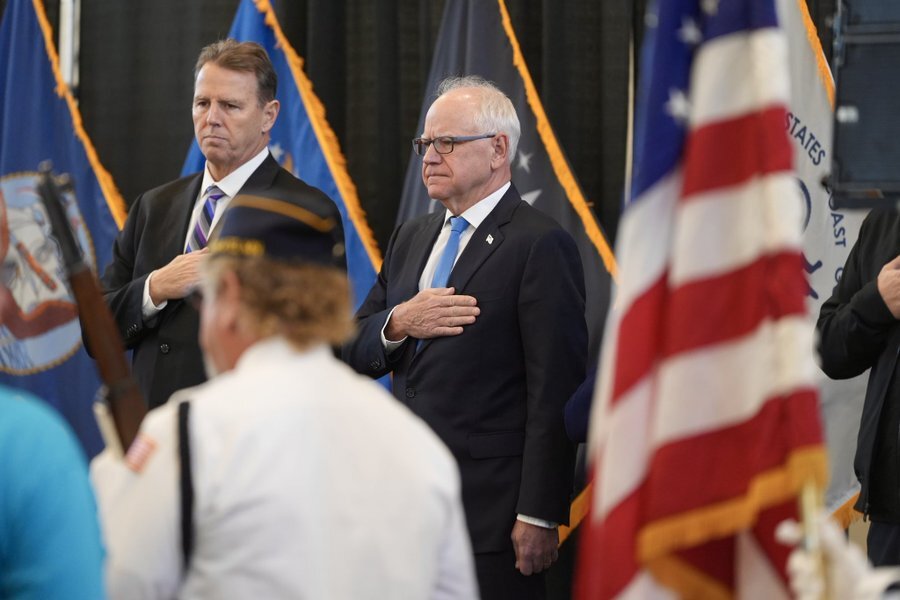
Fraud investigations are engulfing Minnesota Gov. Tim Walz, but that isn’t the only issue demanding attention in that state.
The state’s election system is being exposed for vulnerabilities that undermine transparency and confidence in democracy.
Recent reporting has brought renewed attention to just how permissive Minnesota’s election framework has become. The state allows voters to “vouch” for up to eight other individuals at the polls — a practice that requires no voter identification and relies entirely on personal attestation. In isolation, that policy would raise red flags. In combination with broader governance failures and ongoing fraud investigations, it becomes a serious liability.
Compounding the problem is Minnesota’s approach to illegal immigration and identification. In 2023, Gov. Walz signed legislation allowing illegal aliens to obtain driver’s licenses.
In most states, such a policy would demand heightened election safeguards to prevent misuse. Minnesota, however, has no voter ID requirement — creating a vulnerable gap between immigration policy and election administration.
Those who support these policies often frame them as efforts to expand access and remove barriers to voting. However, access without accountability leads to disorder. For voters to have confidence in our elections, we need clear rules of eligibility, verification, and identification. With those guardrails gone, so goes public trust.
Minnesota’s vulnerabilities were on full display during an October hearing of the Minnesota House Fraud Prevention and State Agency Oversight Policy Committee. On a recent episode of my Election Protection Podcast, I sat down with Minnesota state Rep. Patti Anderson, vice chair of that committee, to discuss her back-and-forth exchange with the state Elections Director Paul Linnell. Anderson repeatedly asked whether illegal aliens could use driver’s licenses — issued under the Walz-signed law — to vote. Linnell avoided giving a clear answer.
The exchange captures a significant issue facing Minnesota voters. If election officials cannot clearly explain how the system prevents ineligible voting, the public has every reason to question it. A state’s election system that is lacking basic safeguards is not one to trust.
When someone calls voter ID “unnecessary,” moments like this prove the opposite. In 2023, for example, Maine Secretary of State Shenna Bellows argued against a bill requiring photo identification at the polls, saying it was unnecessary because identity is already verified during registration and could reduce voter participation. Minnesota’s experience shows why that argument is weak. When election systems rely on loose rules, the confidence of voters erodes. Safeguards such as voter ID keep trust intact.
Americans overwhelmingly support common-sense election safeguards like voter ID because they are simple and effective. A 2024 Pew Research Center survey found that 81% of U.S. adults support requiring voters to show government-issued photo identification to vote, demonstrating broad bipartisan backing for these protections. These policies ensure the election outcomes are credible.
Minnesota’s lack of safeguards is troubling especially as we head into a critical election next year. Without a doubt, Minnesotans deserve assurance that their state is prepared to administer an election that allows only eligible citizens to vote.
Election integrity should not be treated as a partisan issue. It is foundational. Without clear rules, accountability, and transparency, the democratic process itself is put at risk. Minnesota can choose to strengthen its safeguards by implementing voter ID and ensuring only citizens vote, reinforcing trust in elections as voters head to the ballot box.