Share this Story on Facebook, X, Text, LinkedIn, Gmail, Yahoo Mail, or Outlook
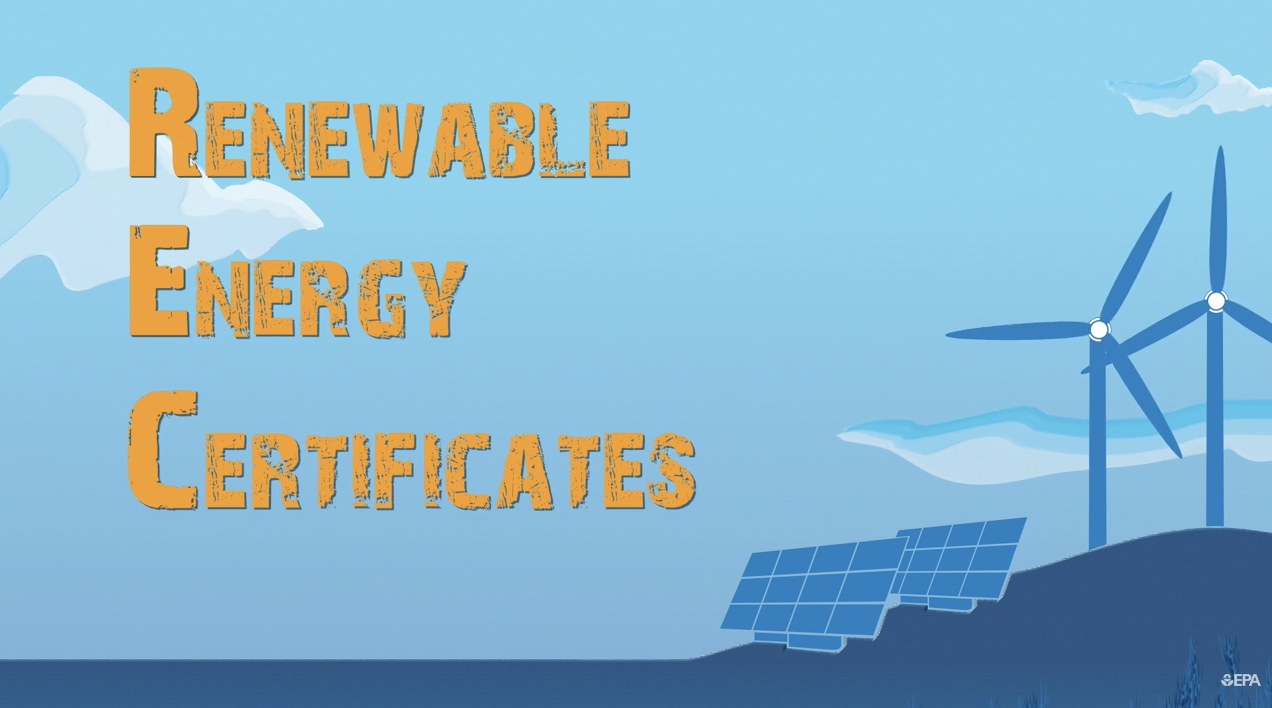
A key, but poorly understood, provision of the Virginia Clean Economy Act (VCEA) is a requirement that Virginia’s two largest electric utilities must either generate or purchase a growing number of renewable energy certificates (RECs). Eventually their RECs must equal 100% of their non-nuclear generation. What are RECs and why do they matter to you?
Put simply, a REC is an electronic record that proves a generator produced one megawatt of electricity from an approved “renewable” source, usually solar or wind. It can be a utility, an independent energy generator, a business with solar on its roof or even a shared community solar system that is granted a REC. A small portion of RECs are awarded for hydro or geothermal generation.
The certificate is issued and tracked by a third party, and – here is the point – can be sold. Recording and tracking RECs is one of the jobs done by the PJM Interconnection regional grid operator. There are several marketplaces compiling and transferring them.
The buyer then “retires” the REC, in effect cashing in the environmental virtue of that “green” energy. It can be retired only once. The entity that earns the REC can also be the one to retire it, but usually they are traded.
One website that reports on the REC industry put the total world REC market at more than $20 billion in 2024, predicting it will exceed $40 billion by 2030. The annual compound growth rate is higher than 10%. The same website was quite open about what is going on:
“By buying RECs, companies can effectively offset their carbon emissions and achieve 100% renewable energy consumption without significant investment in renewable energy infrastructure.”
Buying a REC substitutes for going “green.” RECs are often compared by critics to the medieval Catholic practice of selling people dispensations to get out of Purgatory (called indulgences), a scandal that helped spark the Protestant Reformation.
The VCEA’s REC mandate, also referred to as the renewable portfolio standard, is the enforcement mechanism, pushing utilities to stop burning hydrocarbons. Failure to generate or purchase enough RECs can trigger a fine, known in the statute as a deficiency payment.
Since the VCEA went into effect in 2020, Dominion Energy and Appalachian Power have been required to buy a growing number of RECs each year. Dominion ratepayers were charged $609 million for just this year. In Dominion’s application to the Virginia State Corporation Commission (SCC) to update the amount we’re charged for RECs in 2026, testimony stated it would need $500 million for RECs in 2026, $770 million by 2030, and the annual cost would reach $2 billion when the VCEA deadline for full compliance hits in 2045.
That is all money simply for renewable “attributes,” with not one kilowatt of real electrons provided to customers. And those cost projections all assumed Dominion would begin satisfying much its REC requirement with its wind facility off Virginia Beach later this year, an outcome now very much in doubt as the Donald Trump Administration is trying to kill it. If that is cancelled, the future bill for outside RECs gets much higher.
In the energy industry, the concept of a REC is quite new, dating back to the final years of the 20th Century. The federal Environmental Protection Agency has posted a useful timeline of REC history. The first REC tracking system to make this market possible was established in Texas in 2001. Initially people or companies were buying them voluntarily, but by 2010 most RECs were purchased to comply with some legal mandate (such as Virginia’s VCEA and similar laws elsewhere).
The additional revenue from RECs lowers the net cost of producing electricity from solar and wind when compared to the cost of producing electricity from natural gas or nuclear power, which generates no RECs. That cost differential is even higher when the law mandates that a utility purchases a REC to compensate for any use of hydrocarbons (as the Virginia law does).
RECs and their extra revenue are carrots. There is also a stick in this game, in Virginia’s case the carbon tax imposed by the Regional Greenhouse Gas Initiative. If the utility must pay a $26 carbon tax to burn natural gas but is rewarded with a $26 REC for generating from a solar facility, it is obvious that pushes the utility to choose wind and solar.
The financial deck is stacked hard against hydrocarbons. This is not a level playing field.
If (and we should probably admit the word now is when) the offshore wind project is cancelled, Dominion Energy Virginia will likely need to buy massive amounts of additional RECs. Dominion told the federal court hearing its appeal of the federal pause order that the project, once fully operational, would generate 9.5 million RECs per year, which would cost $250 million at the price mentioned in Dominion’s recent application.
To make this much more complicated, a portion of the money Dominion collects to pay for RECs is simply internal, paying itself for the RECs generated by its own plants. The revenue is credited against the capital cost of those plants, so this doesn’t ultimately increase overall bills, they claim.
Doing that does not help consumers, however. Requiring Dominion and Appalachian Power Company to keep and retire all the RECs they generate themselves could cost ratepayers money. Without that requirement, the utilities could sell the RECs to others for top dollar. Then the REC revenue really would reduce the net cost of the solar and wind facilities, which right now it does not.
The VCEA could be amended to capture on behalf of ratepayers the financial value of the RECs generated by our utilities, which will likely grow as the demand for RECs increases. It would be better to simply repeal the VCEA and allow the market and the SCC to determine what is the most reliable and efficient energy mix going forward.

Steve Haner is a Senior Fellow for Environment and Energy Policy. Steve Haner can be reached at Steve@thomasjeffersoninst.org.
Share this Story on Facebook, X, Text, LinkedIn, Gmail, Yahoo Mail, or Outlook