So, now we know what happened — or do we?
Last week, on the streets of suburban Minneapolis, an Immigration and Customs Enforcement (ICE) agent shot and killed, a 37-year-old woman. What was planned as the “largest immigration operation ever” was derailed in mere seconds.
Renee Nicole Good was driving a dark grey Honda Pilot, blocking ICE personnel, while ICE Agent Jonathan Ross walked toward the front‑left of her vehicle. Good began to reverse and then sped forward. Ross drew his firearm. He first fired a shot through the front windshield. Finally, two more. Seconds after, the car continues a slow move down the street before crashing into a parked car, rolling slightly off the one‑way street into snow near a tree.
While the blur of a life-or-death situation collapsed in an instant, stripping judgment down to instinct, others took the opportunity to record, clip, caption, and disseminate their preferred angle of the encounter across social media.
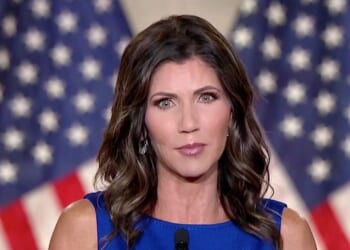
Homeland Security Secretary Kristi Noem called Good’s actions an “act of domestic terrorism” while Minneapolis Mayor Jacob Frey condemned ICE, telling agents to “get the f*** out of Minneapolis” and calling their self-defense narrative “bulls**t.”
But the widely divergent stories about what happened had already been written.
America’s raw confrontation with the clips posted online overwhelmed many. Rather than waiting for context and suspending judgment, viewers were pulled through a wormhole of images that demanded immediate moral resolution. There was no watching, waiting, and then reacting. In our fractured information landscape, a loss in our shared understanding of justice has been exposed.
And this isn’t the first.
So many times, there are competing moral claims embedded within ambiguous situations, some louder, some more sympathetic, some more legible to prevailing sensibilities than others, all demanding priority before justice has earned the right to settle.
These “rush to judgment” moments don’t go unnoticed — as the Wall Street Journal noted. But the split became more clear even after a 47-second first-person clip of the incident was released, as the divide in interpretation only widened.
“I’m not happy that this woman lost her life,” Vice President JD Vance said of Good’s death as he spoke with reporters. “I’m not happy that this woman was there at a protest violating the law by interfering with the law enforcement action.”
“I think that we can all recognize that the best way to turn down the temperature is to tell people to take their concerns about immigration policy to the ballot box,” Vance added. “Stop assaulting and stop inciting violence against our law enforcement officers. That’s the best way to take down the temperature … We’re not going to give in to terrorism on this and that’s exactly what’s happened.”
However confident Vance sounded, our notions of restraint and in-the-moment fear were quickly swallowed by the polarized demands of the moment.
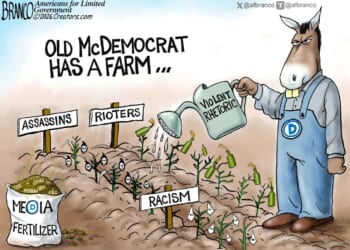
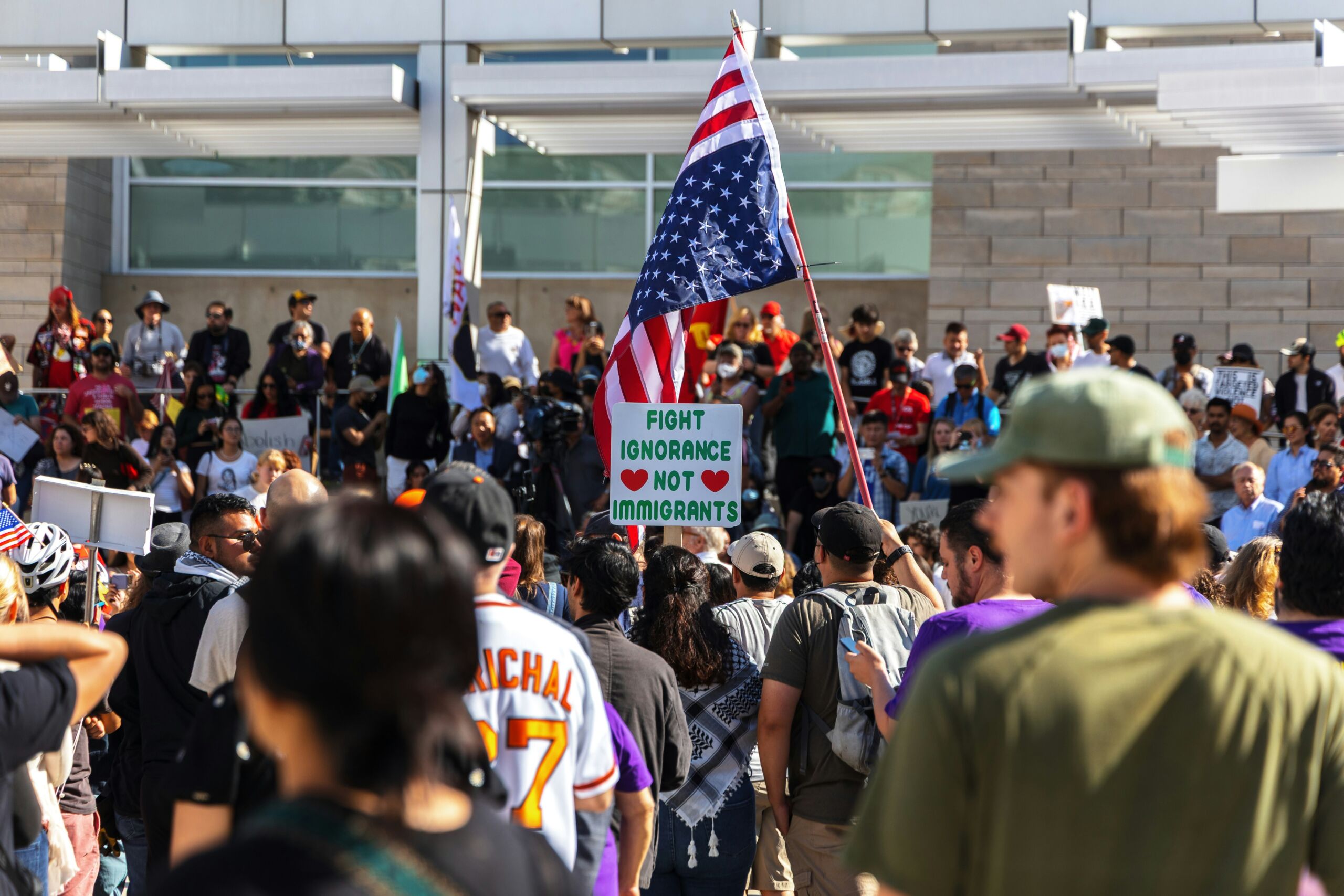
The avatars of the “resistance” would not concede. Thousands marched in Minneapolis on Saturday and Sunday with parallel demonstrations erupting in cities from Texas to Ohio to Florida as part of the nationwide “ICE Out For Good” weekend of action. The choreographed dissent is not new. Whether it be “No Kings” rallies, BLM riots, pro-Palestine protests, or ANTIFA street violence — the modern progressive has an entire patchwork of ideologies to raise a banner for.
“We live in a world where there is more and more information, and less and less meaning,” as philosopher Jean Baudrillard described. Our politics now exists within this labyrinth of social media, where selective information is given preference through promotion from massive accounts or algorithms. And the map of interpretation becomes blurred and individuals then begin to operate according to artificial narratives.
Concerning the Minneapolis ICE shooting — there is the reality, and there is the totality.
Let’s not forget, not long ago, a U.S. Border Patrol agent was murdered by a cult-like group in Vermont. There was “targeted violence” at a Dallas ICE facility in October last year. Agent Ross himself was dragged over 300 feet only months earlier as he and other officers attempted to enforce immigration law.
Second-hand perspectives, partial information, and ideological incentives now take the place of reality. Even when a fuller picture of events unfolds over time, justice is subsumed into the preferential narrative where truth no longer matters.
Some argue that many on the left are not interested in facts, process, or democratic outcomes at all, but in moral victory. But elections have consequences. Americans voted decisively for immigration enforcement, handing Republicans control of the presidency, Congress, and an already conservative Supreme Court.
Here again, judgment is reflexive. To obstruct enforcement through violence, intimidation, or threats pushes our notions of justice to its limit.
The refusal of reconciliation abounds. A refusal to bend judgment to mobs, algorithms, or moral intimidation. A refusal to deny democratic outcomes because they offend moral taste. And a refusal to accept violence as a legitimate tool of political obstruction. For those on “the right,” it would be wise to heed the words of Margaret Thatcher: “now is no time to go wobbly.”