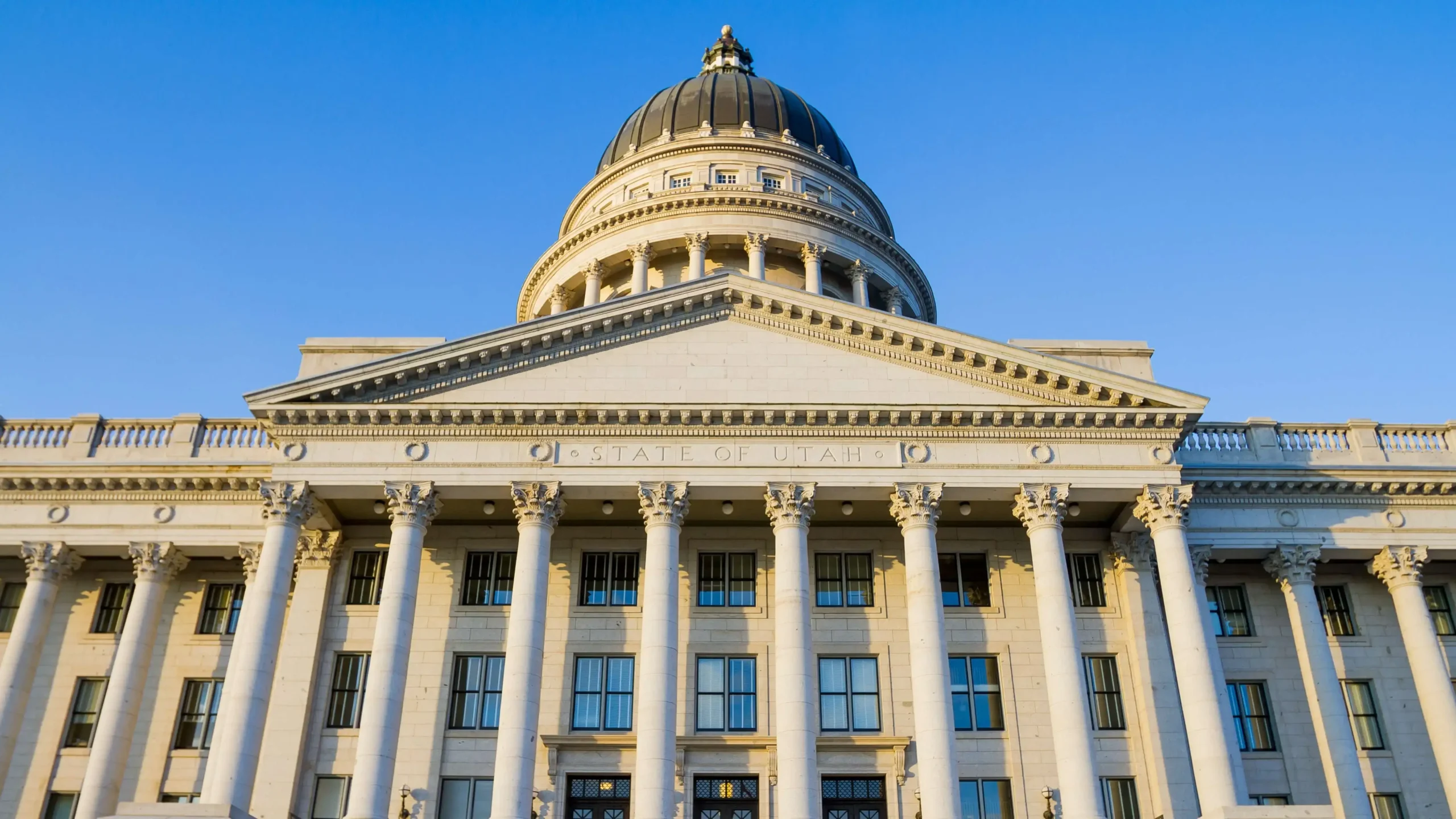

The Utah Education Association is challenging a state program that allows families in need to receive scholarships so their children can access educational resources outside the public school system. The Utah Supreme Court is now considering an appeal of a lower court decision that found the program unconstitutional – a mistaken conclusion that a faithful reading of the state constitution can correct.
The district court made two major assumptions. First, that because the Utah Constitution requires the Legislature to create and maintain a public school system, the Legislature lacks the authority to provide for any educational programs outside of that system. Second, that a provision of the Utah Constitution allowing the Legislature to use income tax funds to “support children” was not really intended to allow the Legislature to do that if the support is provided outside of programs in existence in 2020, when the constitutional amendment was passed.
Both assumptions demonstrate a serious misunderstanding of the nature of our constitutional system, which gives the elected representatives of the people of Utah wide latitude to act in the public interest except where the Constitution clearly prohibits a law.
Sutherland Institute has filed an amicus brief, pointing out some of the problems with the lower court’s analysis.
It notes that the Utah Legislature has “plenary power” to make policy for all governmental purposes. This means that unless the U.S. Constitution assigns a task to the federal government, the state legislature can address it, absent a specific prohibition in the Utah Constitution.
There is nothing in the Utah Constitution that prevents the Legislature from creating programs that assist families and students who could benefit from opportunities not provided by the public school system. How do we know this?
First, the relevant part of the Utah Constitution says the public education system “shall include all public elementary and secondary schools and such other schools and programs as the Legislature may designate.” That word “may” is significant. It means that there are other programs the legislature could create but designate as not part of the public school system.
The Constitution’s wording is the most important factor in determining its meaning, but other indications also support this understanding. For instance, the voter information pamphlet distributed to help voters understand this part of the Constitution when they were asked to ratify it, says that the language would make clear that state and local governments had the power “to offer certain kinds of indirect support” to “a school or educational institution controlled by a religious organization.”
In addition, the legislature has already done just that. State scholarship programs can be used to attend private colleges and universities. The state provides other scholarships to parents whose children have special needs that could best be met by private educational opportunities. And the state can contract with private organizations to provide adult education and preschool preparation.
There is no constitutional justification for ending these types of programs, nor is there any indication that the existence of these programs means the state is failing to fulfill its responsibility to support a public education system. Therefore, the citizens’ representatives can find other ways to assist students and families who would benefit from alternative programs that have been helping many students.
Regarding a more recent amendment to the Utah Constitution that gave the Legislature authority to appropriate funds “to support children,” the lower court in this case suggested the subjective intent of the legislative drafters and the voters who ratified it was to only freeze in place programs that existed at the time. Surely, if this is what they had meant, the drafters could have inserted such language in the amendment so that voters would have been aware of the limitation. It is impossible to know what every person voting on the amendment thought it might do, so in our system, we apply the words they actually approved, not what we guess (or wish) they might have thought. That protects the integrity of the Constitution and the ability of the people of the state to direct their government.
The bottom line is that it is not the role of the state courts to creatively interpret state constitutional laws in ways that are at odds with their clear meanings disclosed in the language adopted by Utahns. Some people will approve and appreciate the state’s efforts to provide additional educational opportunities. Some will not. These are good-faith positions that should be expressed to, and ultimately be decided by, representative bodies.
That is part of the foundational concept of popular sovereignty that underlies our constitutional system.