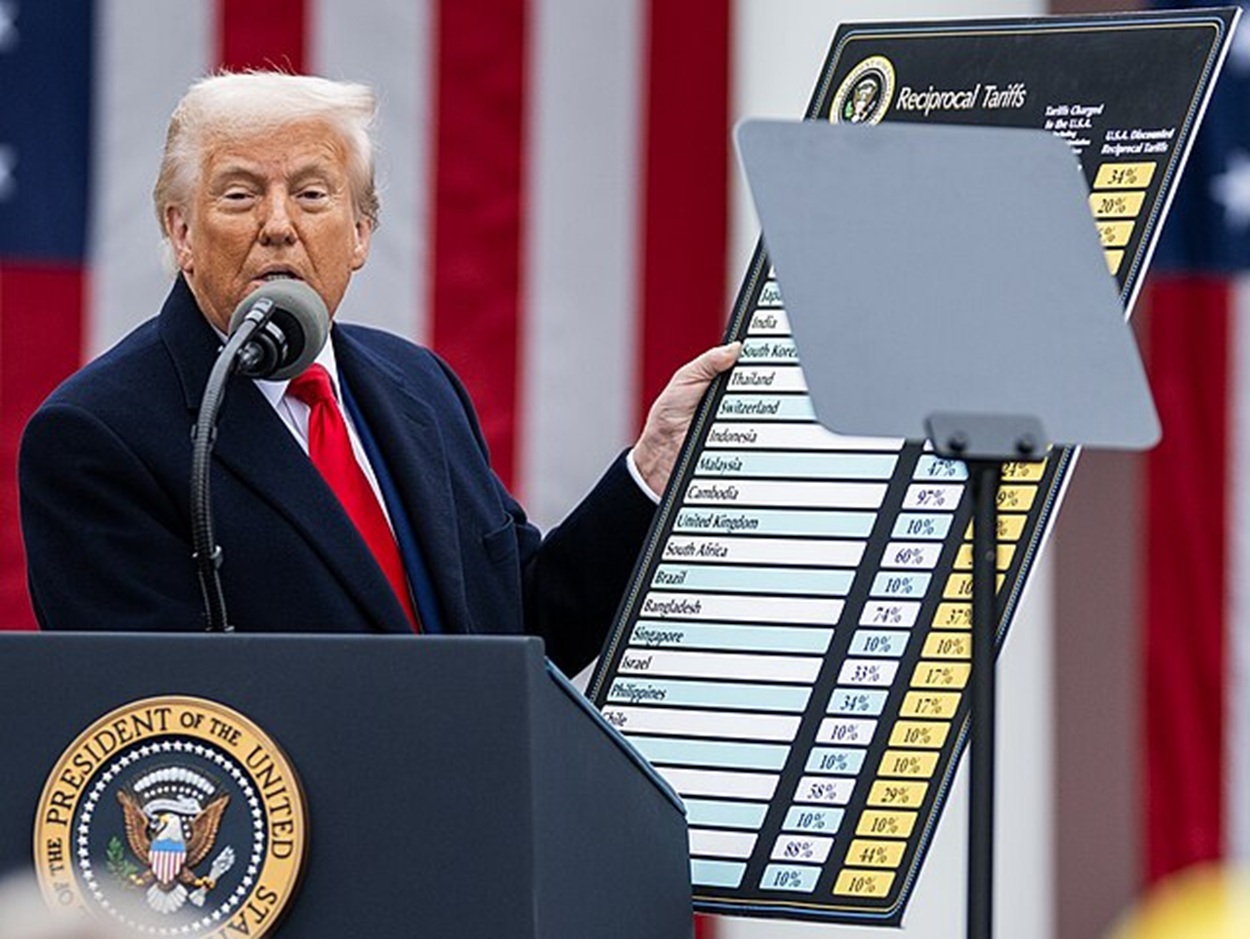
Pres. Trump’s on-again, off-again, on-again tariff regime dominated the economic news in 2025. It was kicked off on April 2, a date Trump called “Liberation Day,” when the president announced his executive order imposing baseline tariffs on nearly all U.S. trading partners, supposedly effective in April.
The following months saw a near endless stream of tariffs threatened, suspended, and applied to various nations, at various rates, and on various products.
The top selling point for these tariffs was that they would revitalize American manufacturing and boost domestic manufacturing jobs.
Nearly a year later, it may be fair to ask: how’s that working out?
The answer: not good.
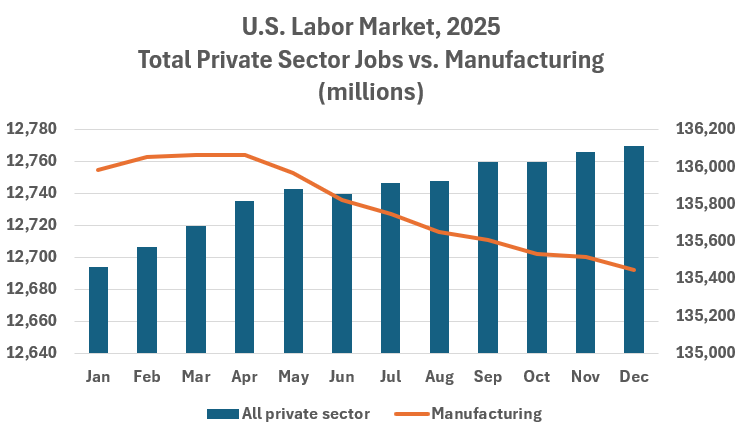
Nationally, December 2025 marked the eighth straight month of declining manufacturing jobs. From February (the last month before Liberation Day) through December, the U.S. saw a loss of 71,000 manufacturing jobs, a decrease of 0.56 percent. The decline of manufacturing jobs was not part of a broader labor market trend, either. During that time, total private jobs increased by 540,000.
Here in North Carolina, the trends are quite similar.
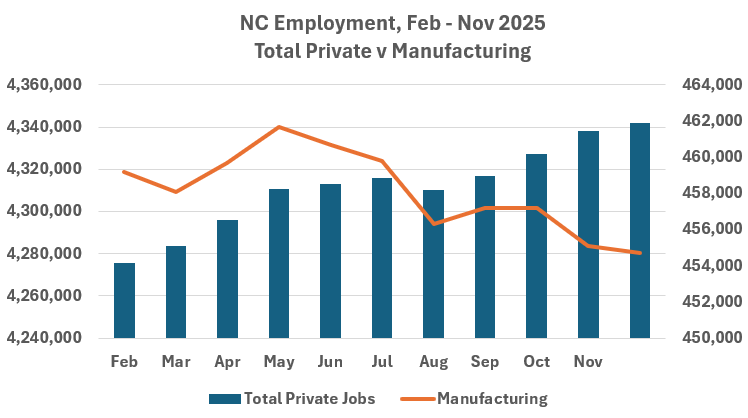
From February through November 2025 (latest available state-level data), North Carolina lost 3,400 manufacturing jobs, a decrease of 0.74 percent. During those same months total private sector jobs increased by 58,200 or 1.36 percent.
Indeed, manufacturing was one of only two job sectors that declined in North Carolina during this time. The only other is “information,” which lost 500 jobs, a decrease of just 0.59 percent.
The one thing, above all else, we were promised would come from Trump’s tariff regime was a boost in manufacturing jobs. Thus far, that’s been a failure.