Recent concerns surrounding a planned Grapevine-Colleyville Independent School District (GCISD) event have ignited a broader and long-overdue conversation about who—and what—local officials and leaders are allowing into Texas public schools.
The district recently acknowledged that Colleyville Heritage High School facilities were rented for the May 9–10 Dallas Islamic Games, an annual multi-age sports tournament organized by the Islamic Games of North America. Social media users quickly flagged promotional materials identifying CAIR–New Jersey as a sponsor. CAIR–NJ is part of the Council on American-Islamic Relations (CAIR) network, which Texas Gov. Greg Abbott rightfully designated a terrorist organization in November 2025.
GCISD Board President Shannon Braun stated that trustees were unaware the facility had been booked, citing district policy that allows staff-level approval of facility rentals. State lawmakers, including Reps. Cole Hefner, Jared Patterson and others, immediately urged cancellation, while the district investigates how the approval occurred. And as of the time of writing, GCISD cancelled use of the public facilities for the 2026 Islamic Games.
While some may attempt to frame this as a simple administrative oversight or an extracurricular facilities issue, doing so ignores a much larger and more troubling reality.
Terrorist-aligned organizations and hostile foreign actors are increasingly using soft power to embed themselves within American institutions—particularly public education—during what can only be described as a cultural revolution underway in the United States.
Soft power operates in our public schools through curriculum, language programs, media, and “cultural understanding” initiatives that shape what students see as normal and acceptable. Because it targets children, it functions as a long-term strategy to quietly reshape culture—rather than openly confront it.
And America’s adversaries have formed an unholy alliance, often referred to as the Red–Green Alliance. The “red” represents radical secular Marxists intent on undermining capitalism and America’s constitutional order. The “green” represents Islamist movements, with green long associated symbolically with Islam. Though ideologically distinct, these forces are united by a shared hostility toward Western values, such as freedom of speech, women’s rights, religious liberty, and our constitutional republic.
To be clear, soft power is not confined to just our classrooms or curriculum—it is in municipal government too, where local governments are using symbolism, recognition, and official endorsement to move the Overton window and precondition our institutions for ideological capture. For example, the Austin City Council’s recent approval of a resolution recognizing January as Muslim Heritage Month—formally launched for the first time in January 2026 with a City Hall proclamation and coordinated public events—is not an isolated act of inclusion; it is the next phase of the Red-Green Alliance’s proven strategy. Austin normalized the “Red”—Marxist and leftist revolutionary ideology years ago—through its formal recognition of César Chávez Day, elevated alongside activist organizations and branded with the rallying cry ¡Sí Se Puede!, later nationalized as “Yes We Can” by President Barack Obama, who has openly called for “fundamentally transforming the United States of America.” The progression is unmistakable: the city of Austin moved first in 2023, not far behind was Austin ISD, which eliminated Good Friday and replaced it with César Chávez and Dolores Huerta Day for the 2025–26 and 2026–27 school years, which absorbed and reinforced the shift in our public schools. Topping off the normalization, Austin ISD has not only eliminated Good Friday but it is still celebrating Eid al-Fitr—one of Islam’s two most significant religious holidays—scheduled for March 20, 2026. No Good Friday, but a major Islamic holiday promoted and celebrated to Texas students.
There is no denying Austin leaders are working to normalize the “Green”—Islamist ideology—using the same soft-power mechanisms of recognition, celebration, and institutional legitimacy as it has used to promote the “Red” Marxist ideology. This is not organic cultural change; it is managed normalization by our institutional leaders. Proclamations soften resistance, schools and universities adapt to remain funded and reputationally safe, and dissent is reframed as intolerance. The result is a closed ideological loop, in which the Red is entrenched, the Green is laundered into respectability, and Texas’s educational institutions become instruments of cultural transformation rather than guardians of American inheritance. Normalize. Move the Overton window. Radicalize. Destabilize.
To be clear, the Islamic Games situation is not simply about renting school facilities to organizations tied to designated terrorist groups—as inexcusable as this is. This is about weak and compromised education leadership at the local level—administrative leaders more fearful of being labeled intolerant, exclusive or even racist than of protecting students from indoctrination from our known enemies. Local leaders have not only allowed but are facilitating ideological adversaries to gaining access to our classrooms, curriculum, and teacher training.
Under the banner of cultural understanding and global awareness, Islamist-aligned organizations and Marxist regimes are injecting money, materials, and influence into Texas public schools. The result is not neutral education. It is ideological conditioning.
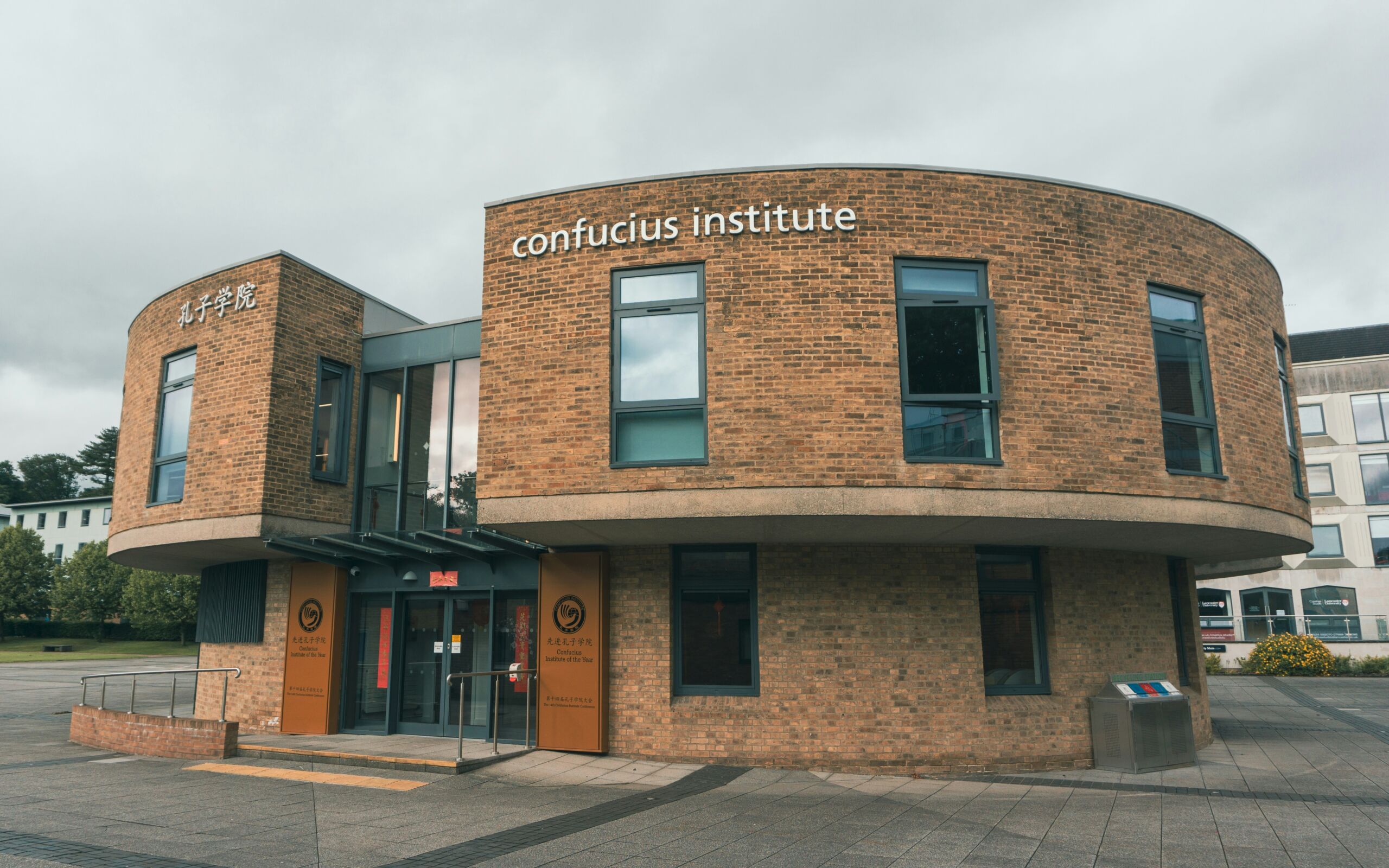
Americans should recognize these tactics. In recent years, the Chinese Communist Party has used Confucius Institutes to shape curriculum, suppress dissent, and cultivate sympathy for Marxist authoritarianism. Public backlash eventually led to many of these institutes being shut down.
But the CCP did not retreat. It adapted.
Houston ISD acknowledged in an interview that HISD exchanges curriculum information with multiple foreign-linked groups, including entities from China that helped shape the Mandarin Chinese Immersion Magnet School. District officials defended this arrangement by claiming funding and operations were comparable to other public schools.
Different methods, same objective: the indoctrination of Texas students.
Qatar has followed a similar soft-power strategy—one that remains active today. Hamas’ political chief Ismail Haniyeh reportedly told Qatar’s foreign minister that Qatar is “the main artery” of Hamas funding. Through its nonprofit arm, Qatar Foundation International (QFI), Qatar has funded Arabic language and cultural programs across the United States, including in Texas, for nearly a decade.
This is not a historical concern—it is ongoing.
The most recent documentation shows that in Summer 2025, QFI funded the Houston ISD Summer Immersion Institute, underscoring that Qatari-backed education initiatives remain active in Texas public schools. QFI publicly describes the program as advancing Arabic language and cultural instruction through teacher training and curriculum development.
An MOU between HISD and QFI states:
“The Parties have a common interest in the important role that Arabic language and culture education plays in the Americas; and the need to promote and strengthen the teaching and learning of Arabic.”
HISD currently operates a Qatar-supported Arabic Immersion Magnet School. In 2015, Qatar Foundation International granted Houston ISD $75,000 to start the AIMS School. District officials have insisted the funding model mirrors that of other public schools—but similarity in structure does not answer questions about content, sourcing, or ideological influence.
Beyond curriculum and direct funding, Qatar Foundation International also plays a role in training Texas public school teachers. The Arabic Teachers Council of the South, which supports the instruction of Arabic by attracting, training, and supporting professional teachers of Arabic, is funded by Qatar Foundation International.
According to publicly available materials, the Council offers professional development grants—$1,000 for in-person presentations and $500 for online presentations. One such in-person training was scheduled to be delivered at the Arabic Immersion Magnet School in Houston on Thursday, April 17, 2025.
This additional layer of influence—shaping not only what is taught, but how teachers are trained—raises further questions about oversight, transparency, and the long-term impact of foreign-funded programs embedded within Texas public schools.
Qatari influence is not limited to K–12 education. By 2017, Texas A&M had reported $131 million in Qatari funds. That might sound like a lot, but after the U.S. Department of Education (ED) investigated underreporting of foreign funds in 2020, the number of reported funds from Qatar to Texas A&M rose to over $600 million. And, crucially, reported funds from Qatar to Texas A&M prior to 2017 in the new data totaled $244 million—almost double what the university initially reported.” Qatar Foundation–affiliated entities have also made grants through the Qatar National Research Fund to Texas A&M University, raising additional concerns about the scope and scale of foreign influence in Texas institutions. Texas A&M University has quietly benefited from over $100 million in research funding from Qatar through its Texas Engineering Experiment Station (TEES) by hiding behind a reporting loophole. TEES research focuses on cybersecurity and nuclear proliferation, both important to our national security.
Likewise, the University of Texas at Austin has received grants from Qatar Foundation International to work in partnership with Pflugerville ISD to teach Arabic—demonstrating how QFI funding extends beyond K-12 and into higher education pipelines that influence curriculum and teacher training.
In 2016, as Texas school districts struggled with literacy and academic performance, QFI expanded its footprint.
Austin ISD received $100,000 from QFI to launch an Arabic language and culture program in the 2016–2017 school year. The grant funded two teachers assigned to three campuses: Burnet Middle School, Austin High School and International/Eastside Memorial High School.
The program began with Level 1 Arabic instruction and was designed to expand annually based on enrollment.
Yet at the time, Burnet Middle School had only 18% of students reading on grade level. Austin High School had only 25% of students reading on grade level. And International High School posted similarly troubling literacy outcomes.
Despite these failures, resources were directed toward a foreign-funded language initiative rather than core academic remediation.
To date, there is no public documentation answering basic questions:
- Have additional QFI grants been awarded since 2016?
- Where are these Arabic-language teachers being recruited from?
- What oversight exists regarding curriculum content and ideological framing?
Notably, in that same year, the Embassy of the State of Qatar hired lobbyists in Texas, raising legitimate concerns about whether these education grants are part of a broader coordinated influence strategy.
What do we know about Qatar-linked curriculum?
An American educator who worked at a Qatar Foundation educational institution in Doha told the Middle East Forum that faculty were prohibited from purchasing maps showing the state of Israel. The entire territory was labeled “Palestine.” Even mentioning Israel or the Holocaust could result in severe reprisals from the Qatari Ministry of Education. The official policy was simple: Israel does not exist.
This is not abstract.
We have confirmation that Qatar Foundation–provided curriculum was used at Manara Academy, a public charter school in Irving, Texas. Leaked classroom photos showed a large Middle East map—conspicuously missing Israel. “From the river to the sea” was not just a chant; it was embedded in instructional materials.
If this occurred in one Texas public charter school, parents and lawmakers should be asking a hard question: Where else is this curriculum being used—and why don’t we know about it?
We know the Chinese Communist Party despises America and our way of life.
We know Qatar has funded Hamas, an Islamist terrorist organization and has pledged to give billions to Hamas efforts, even hosting Hamas’s political headquarters in Doha.
So why are we accepting their money, their materials, and their influence in Texas classrooms?
The Grapevine-Colleyville ISD controversy should serve as a wake-up call. Soft power works precisely because it is quiet—operating through classrooms, courtrooms, and culture rather than violence.
As Judge Richard Posner famously warned, the Constitution is not a suicide pact. At a time of open cultural conflict, Texas must take seriously its obligation to protect the next generation from enemies—foreign and domestic—who seek to exploit our openness to dismantle our society from within.