- Senate Bill 382 reshaped North Carolina land-use law by prohibiting most local down-zoning without unanimous landowner consent
- While grounded in property-rights principles, the law has created legal confusion and stalled routine zoning updates
- A better reform path, such as proposed in Senate Bill 497, would expand housing options and market flexibility without freezing local governance
In North Carolina’s 132-page disaster relief bill of 2024, SB 382, page 131 included a sweeping prohibition on local government–initiated down-zoning, which involves the local governments changing their land-use rules to reduce the allowable density on a given piece of land. This change unexpectedly shifted the legal balance of land-use authority across the state.
For free market advocates, the promise of the provision seemed straightforward: Protect property owners from arbitrary regulatory cutbacks by requiring written consent from all affected landowners before density or down-zoning restrictions could be imposed. But while the underlying intuition resonates with broader principles about private property and limited government, the outcome has revealed deep practical and legal complexities. Understanding this controversy requires stepping back into the constitutional and statutory basis of zoning authority in the United States and in North Carolina and then assessing how that framework interacts with both SB 382 and more forward-looking proposals, such as the “middle housing” expansion proposed in a different bill, SB 497.
Under U.S. constitutional law, governments derive their authority to regulate land use from the police power, being the broad authority of states to enact laws that protect public health, safety, and welfare. The U.S. Constitution does not expressly grant zoning powers; instead, the Tenth Amendment reserves to the states or the people all powers not delegated to the federal government, including this regulatory authority. In practice, zoning and land-use regulation are exercises of state police power. It is this same power that allows cities and counties to adopt building codes, environmental protections, and public safety rules.
Nevertheless, the way this authority is exercised varies sharply by jurisdiction. Many states operate under Dillon’s Rule, a legal doctrine holding that local governments have only three types of powers: those expressly granted to them by the state legislature, those necessarily implied by those grants, and those indispensable to the declared purposes of the municipality. Under Dillon’s Rule, if there is any doubt whether a local government has a power, then it does not. This means zoning authority is not an inherent right of cities or counties, but rather a delegated statutory privilege that state legislatures can expand, limit, or condition.
North Carolina is traditionally considered a Dillon’s Rule state, meaning cities and counties act within the boundaries established by the state. This is done particularly through statutes like Chapter 160D of the North Carolina General Statutes, which serves as the primary statutory framework for land use and zoning. Municipal zoning powers exist because the legislature created and defined them, not because they are independently vested rights in local governments. In that context, SB 382’s down-zoning ban is legally permissible: The state legislature can dictate the contours of zoning authority without violating state law.
Two key constitutional concepts amplify this argument for free market advocates. First, the Takings Clause of the U.S. Constitution limits how far governments can regulate private property without compensation. The U.S. Supreme Court has ruled that when a regulation is so restrictive that it effectively deprives an owner of all economically viable use of land, it may constitute a regulatory taking requiring compensation. While zoning changes that restrict uses generally do not by themselves constitute takings, overly broad or arbitrary restrictions can raise constitutional problems when they deprive property owners of fundamental rights without due process. Second, due process principles require that laws not be so vague or unbounded that they leave affected owners uncertain about their rights.
Against this backdrop, SB 382’s down-zoning ban seems attractive at first glance. It seeks to guard against what many see as regulatory overreach — in this case, situations where local governments use zoning changes to restrict property use in ways that harm owners’ investment-backed expectations or that extract concessions by taking rights away from the homeowner. Blocking down-zoning without consent is, in theory, a way to ensure that landowners can rely on existing entitlements and avoid sudden regulatory losses.
The problem is that SB 382 does not just prevent abusive down-zoning, it imposes a near-absolute veto on any common regulatory adjustment that reduces allowable uses or density. This is the case even when such changes are non–controversial or aimed at addressing genuine concerns about public safety, infrastructure capacity, or environmental impacts. Because the bill’s definition of down-zoning includes any change that could create nonconformities, local governments are finding that even routine updates to zoning ordinances (i.e., modernizing text or correcting outdated use tables) trigger the unanimous consent requirement, effectively freezing land-use regulations in place. This unintended effect has led many planning departments to pause their work and has frustrated municipal officials who find themselves unable to respond to legitimate community challenges.
SB 382’s approach also threatens efficient governance. Local officials, elected and accountable to their constituents, are typically better positioned than are distant state legislators without direct knowledge of local conditions to balance local interests, such as protecting neighborhoods from incompatible uses while respecting property rights. When a state law shifts veto power from local councils and public hearings to individual landowners in a blanket way, it can impede the very regulatory responsiveness that effective land use requires.
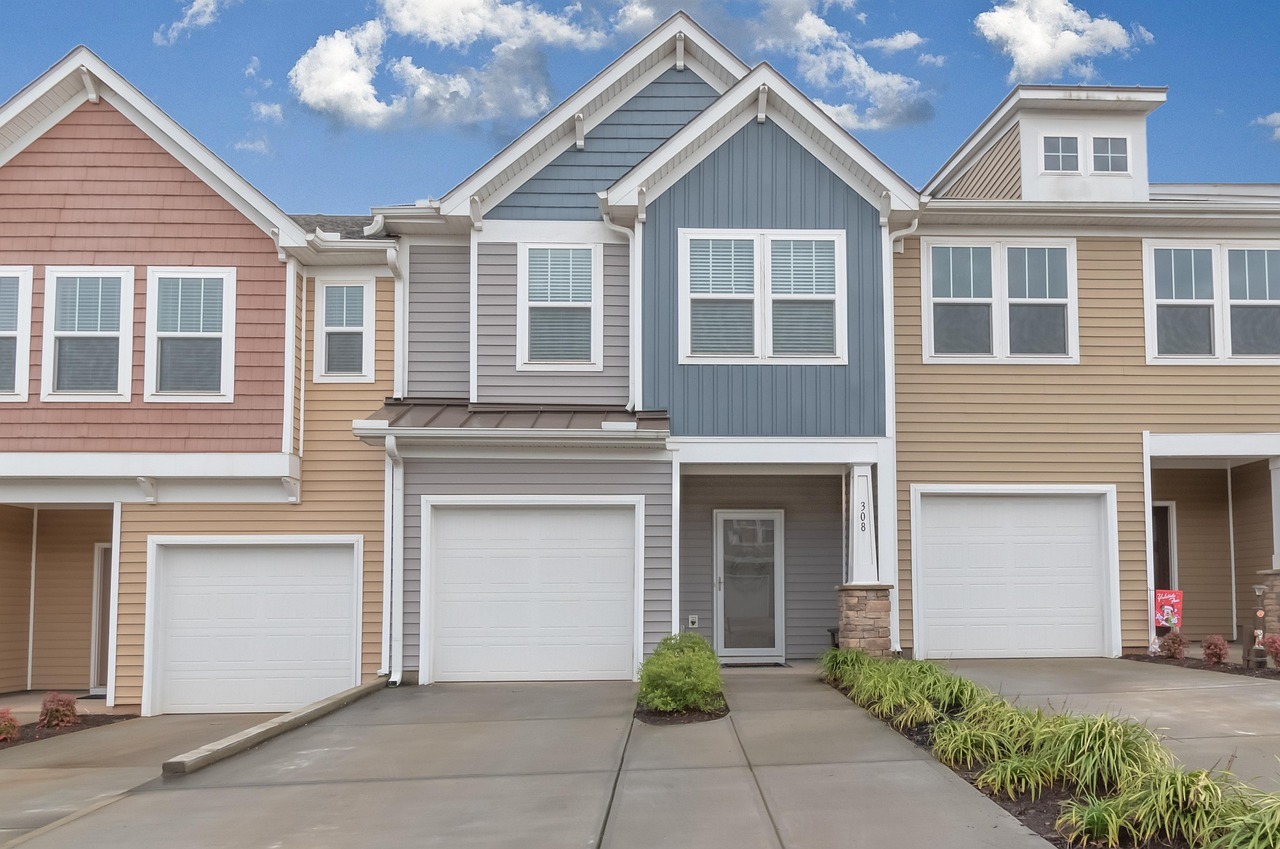
This is why alternative reforms like SB 497 have garnered attention. Introduced in 2025 with plans to be reintroduced this year, the bill would require local governments to allow “middle housing” types such as duplexes, triplexes, four- and five-plexes, and townhomes in any residential zone. It also would prevent local regulations that impose unreasonable costs or delays on these housing types. By doing so, SB 497 seeks to expand allowable uses across localities, increasing housing supply and flexibility in the market while preserving core local responsibilities to administer planning processes. Unlike a blanket restriction on down-zoning across all uses, this approach would advance free markets and property rights by broadening options for how property can be used.
In other words, the most sustainable path forward is not to swap one rigid rule for another, but to shift the default toward greater freedom of use while maintainingprocedural clarity and accountability in local planning. Expanding the baseline of what is permissible (as SB 497 aims to do) addresses the housing supply challenge and reduces exclusionary zoning barriers without eviscerating local capacity to address legitimate externalities. At the same time, clarifying the limits of local authority under Dillon’s Rule and ensuring that delegated powers are exercised transparently and consistently protect property owners as well as community interests.
Bills like SB 497 demonstrate that reformers can pursue meaningful deregulation without resorting to blunt instruments that freeze governance structures or create unanticipated barriers to necessary updates. The goal should be to empower people and markets, not to entrench outdated zoning codes or preemptively remove local mechanisms that serve the public welfare. In doing so, reform can honor both the constitutional foundations of property rights and the practical realities of dynamic communities.