Written by
- President Trump’s push to centralize election standards and protocols is counterintuitive to its stated goal of building trust.
- Whenever you volunteer at the local food pantry, coach a Little League team, or help an elderly neighbor, you are building trust through knowable accountability in the local community – building the endurable integrity envisioned by federalism.
- Local elections are more trustworthy and effective because they are run close to home by poll workers and county clerks we can know and trust.

President Trump has repeatedly voiced a desire to centralize American elections and increase the Federal government’s role in state election processes. This desire was recently codified in an executive order. The case for centralized elections rests on trust, but do Americans really believe that elections run from Washington are more trustworthy?
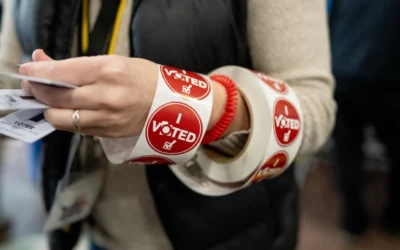
Elections have always been a local enterprise, and moving election operations away from the voters themselves is counterintuitive to the concept of trust. Studies show that Americans are far more likely to trust the local level than the national. A 2025 report by the Pew Research Center found that “69% of registered voters said the elections in their community were run and administered very well…[but] only 43% said the same about elections across the United States.”
Americans’ preference for the local is revealed when looking at volunteerism and civic culture. When Alexis de Tocqueville visited America in the 19th century, he commented on the unique culture of volunteerism absent from his homeland. America’s civic culture remains strong today. Whenever you volunteer at the local food pantry, coach a Little League team, or help an elderly neighbor, you are not only engaging in civic culture but also building trust through knowable accountability in the local community. Members of a local community understand their community’s needs more deeply than any national organization could.
Not only does our personal experience make this clear, but research also supports the idea that civic culture is more effective when localized. A 2021 study found that communities with higher nonprofit density had higher subjective well-being than those with lower nonprofit density. While every community in the US has access to national nonprofit organizations, the communities that benefit most are those with local branches. Studies have also shown that community organizations generate more trust among citizens than the government. A 2023 report found that citizens had increased trust in government programs when they were carried out by local community organizations.
Across the country, communities differ in culture, priorities, and traditions. That diversity is not a weakness to be managed; it is a strength to be protected. Just as our civic culture flourishes when decisions are made close to home, so too does our confidence in elections increas when they are administered locally. When neighbors serve as poll workers, when county clerks are familiar faces, and when processes reflect the community, elections feel trustworthy. Trust is built not in distant institutions, but in relationships shaped by proximity and shared experience. This is exactly what the concept of federalism is designed to protect.
By contrast, nationalized elections would drift farther from the people they are meant to serve. The larger and more centralized the process becomes, the harder it is for citizens to see themselves reflected in it and to hold it accountable. National systems are inevitably influenced by forces and figures unknown to most local voters, making it harder to maintain confidence. When elections become swept up in partisanship and nationalized agendas, the connection between citizens and the process begins to devolve. And when that connection weakens, so does the public trust that election integrity ultimately depends upon.
It is important to remember that the localized nature of American elections is not accidental but intentional. Federalism fosters greater electoral trust and allows Americans an intimate connection to the election process. Centralizing elections would only increase distrust and confusion and add to the growing conflict surrounding American elections.

Insights: analysis, research, and informed commentary from Sutherland experts. For elected officials and public policy professionals.

- President Trump’s push to centralize election standards and protocols is counterintuitive to its stated goal of building trust.
- Whenever you volunteer at the local food pantry, coach a Little League team, or help an elderly neighbor, you are building trust through knowable accountability in the local community – building the endurable integrity envisioned by federalism.
- Local elections are more trustworthy and effective because they are run close to home by poll workers and county clerks we can know and trust.
Read More
Gen Z to Gen Z: We need more election officials
Polling shows Gen Z is losing faith in voting. Expanding education and career paths in election administration could rebuild trust and strengthen American elections.
DOJ lawsuits undermine the Constitution, election integrity
Justice Department lawsuits seeking state voter data threaten federalism and could weaken election integrity by centralizing control over U.S. elections.

What should Utah be looking for in new judges?
As Utah adds two Supreme Court justices, leaders should prioritize judges committed to constitutional text, original meaning, and the proper limits of judicial power.
Connect with Sutherland Institute
Join Our Donor Network
Follow Us
The post Volunteerism and Federalism: What local civic culture can teach us about elections appeared first on Sutherland Institute.