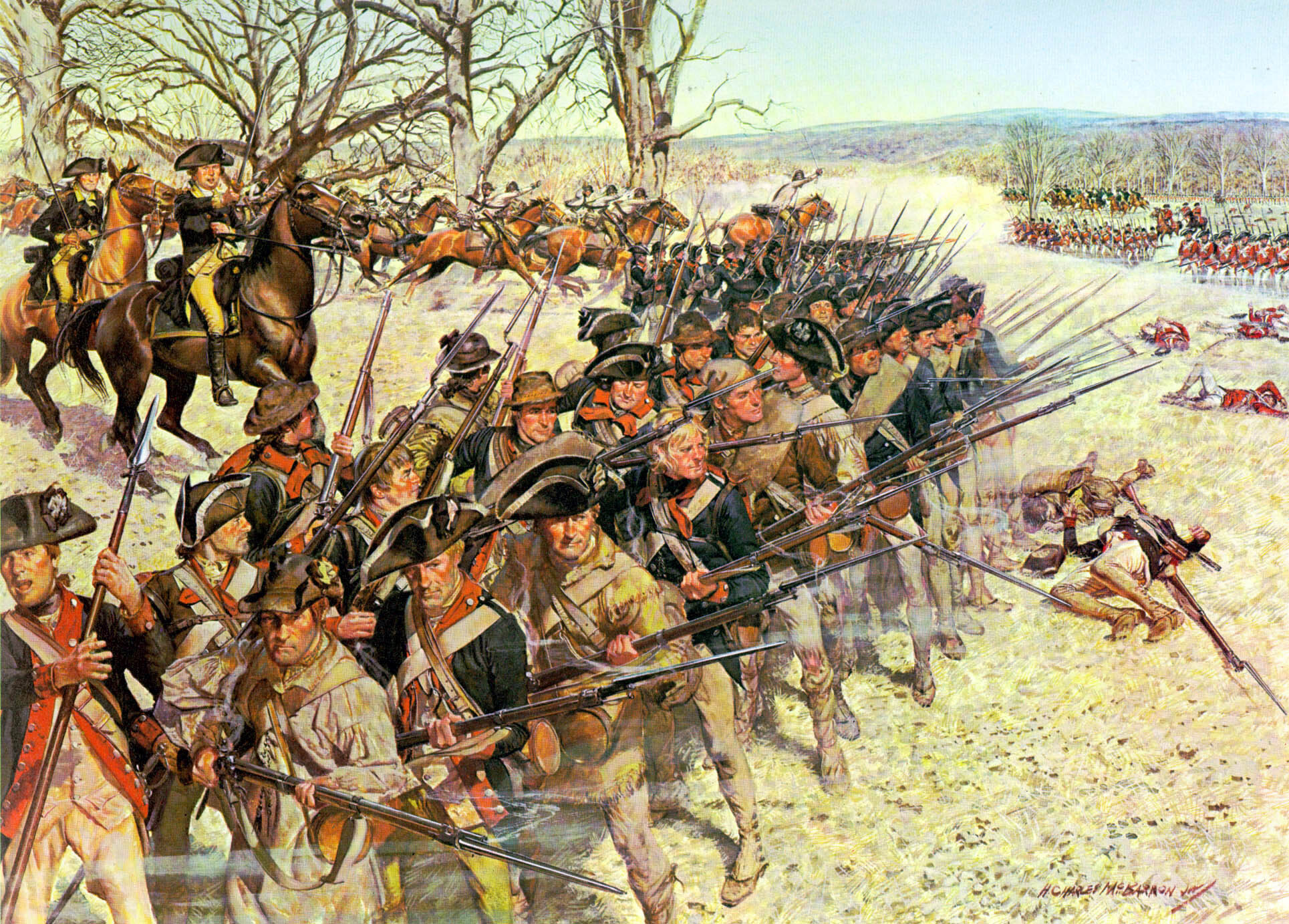
The anniversary of the American Revolution’s Battle of Guilford Courthouse is being honored this weekend in Greensboro. The battle was fought on March 15, 1781. After skirmishes and chases through central North Carolina between British Gen. Charles Cornwallis and Patriot Gen. Nathanael Greene, this was a major battle where the two forces caught up with each other and fought it out.
The battle is said to have been “‘the largest and most hotly contested action’ in the Revolution’s southern action.” Cornwallis’s army included about 2,000 men, while Greene had about 4,500 Continentals and militiamen under arms. According to the rules of war at that time, the result was a British victory because Cornwallis’s troops held the field of battle at the end of fighting. Nevertheless, the losses his forces suffered — reportedly 27 percent casualties — were so vast that his weakened army was left with little control over the southern colonies. This left Cornwallis with little choice but to try and regroup with other British forces in Virginia where he was ultimately defeated at Yorktown.
As for the Patriots, Greene followed the same strategy as his commander George Washington. Regardless of a battle’s outcome, he knew it was most important to avoid being trapped and to keep an army in the field. If Washington had ever allowed his army in the North to be trapped, the war would probably have been lost, and today we would be eating a lot of fish and chips and drinking warm beer.
The same was true with Greene’s force in the South. If his army had been captured, the few militia forces fighting other regional skirmishes would probably not have lasted against whatever united British force came against them. So, after ferocious fighting, Greene secured his forces and waited to fight another day.
After the smoke had cleared, the Battle of Guilford Courthouse — though declared a British victory by many — was actually a major step towards the Patriots’ ultimate victory because it depleted British forces and morale.
As Greene reportedly said, “We fight, get beat, rise, and fight again.” That was the battle cry of the American Revolution and provided a model for freedom fighters for ages to come. It is a reminder that the most important thing is to keep an army in the field.
The British had crushed opposition in South Carolina and Georgia before the battles of Kings Mountain (Oct. 1780) and Cowpens (Jan. 1781), with Cornwallis successfully recruiting local Loyalist factions to aid the Crown. In North Carolina, Patriot militia forces were able to quash Loyalist sentiment in what was essentially a bloody civil war during the five years between the Battle of Moores Creek Bridge (Feb. 1776) and the Battle of Guilford Courthouse (March 1781).
Before the latter, Cornwallis had once again appealed to North Carolina Loyalists to join him. His Pyrrhic victory at Guilford Courthouse appeared to take the spirit out of his cause; after the battle, few Loyalists joined him. North Carolinians have always been proud of the stand taken at Guilford Courthouse.
After the battle, Cornwallis made his way to Wilmington to heal up and resupply. From there he marched north through eastern North Carolina, fighting minor skirmishes all along the way and hoping to meet up with British Generals William Phillips and Benedict Arnold (yes, the traitor) in Virginia. Cornwallis ended up being trapped at Yorktown, Virginia. After a massive French fleet fended off the British fleet sent to rescue him, what became the last battle of the American Revolution was over.
It was said that after the Battle of Guilford Courthouse, more than a thousand militiamen were missing. In reality, however, it appears that after the fierce fighting, they simply went home.
The Battle of Guilford Courthouse was a significant step in the continued march to freedom by those courageous souls who took up arms and once again risked their lives and fortunes for freedom and the principles we fight for to this day. Celebrations are going on at the Guilford Courthouse both Saturday and Sunday. I encourage you to visit the site in this 250th year of our country’s birth.