Executive Summary
Technology is evolving like never before. Americans today benefit from rapid advancements in fields like artificial intelligence. These cloud-based advancements have a physical component: data centers. The data center industry has already generated trillions of dollars for the U.S. economy. And with companies projecting trillions of dollars more in investments to keep up with the rise in demand for computing power over the next few years, that number is set to grow. Data centers, like other innovations before them, have provoked intense debate. Some fear that data centers will lead to increased energy costs. Others, like the U.S. Department of Energy, assert that data centers help drive energy prices down. Some believe that the rise in data centers must be met with stiff regulations that limit or ban Americans from building them. Others propose free-market solutions rooted in property rights: individuals should be able to build data centers on their property as long as their use doesn’t interfere with the rights of others.
Hawkins County in East Tennessee is one place where the local government has decided to ban data centers, including those that mine for cryptocurrency. This doesn’t just prohibit data centers that suck energy from the existing grid; the blanket ban prohibits the use of all data centers, regardless of impact. Thus, even self-sufficient data centers that produce no discernible impact on others can’t operate in Hawkins County.
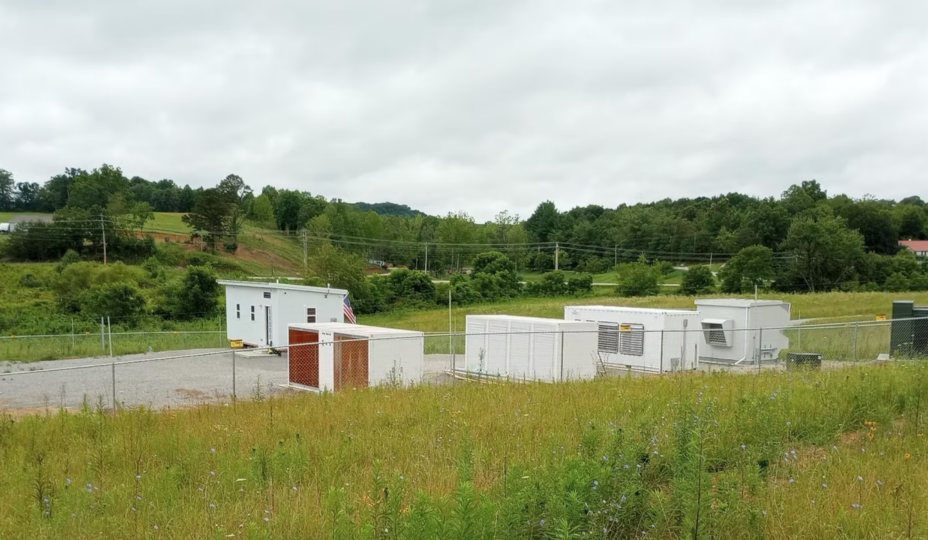
ExoticRidge Crypto Company LLC, a small company from just across the state line in Kentucky, is comprised of individuals who combine their expertise in energy production with cryptography to create innovative solutions for digital currency investors. ExoticRidge wants to operate a self-sufficient data center in Hawkins County to mine for cryptocurrency. ExoticRidge planned to use ethane, a byproduct from a natural gas liquids processing facility that is currently flared off, to generate all the electricity it needs. After applying for a permit from the Tennessee Department of Environment and Conservation, ExoticRidge was confronted with local public opposition over the project, which led the Hawkins County Commission to pass a blanket ban on all data centers.
The Problem
In Tennessee, local governments have no power to regulate land use unless the General Assembly gives them that power. Counties that choose to enact zoning ordinances must follow procedural safeguards for property owners, which include public notice, the opportunity for individuals to submit public comments, and a public hearing. Hawkins County has never enacted county-wide zoning, which means that property owners are typically not required to obtain a permit to use their own property. The County Powers Act provides a limited exception and allows counties without zoning laws to regulate land use without affording property owners with the procedural safeguards described earlier.
ExoticRidge runs two small data centers in Kentucky and intends to add a third in Hawkins County. The Hawkins County location currently operates a facility that separates natural gas into pure ethane, propane, and butane products, which are then sold to produce electricity for the local community. Because ethane is expensive and dangerous to transport, the ethane is constantly burned off through a 45-foot-high pipe on the property. ExoticRidge intends to use this excess ethane to generate all the electricity it needs for data mining on-site without relying on the existing power grid at all.
ExoticRidge obtained a permit from the Tennessee Department of Environment and Conservation. Because Hawkins County has no zoning code, ExoticRidge believed that it did not need county permission to build and operate its data center. ExoticRidge was shocked to learn of public sentiment accusing it of building a data center that would drain public utilities. In truth, ExoticRidge does not use outside energy and, by capturing the excess ethane, it will actually eliminate a continuous flame that currently causes an eyesore for residents. ExoticRidge never got to set the record straight, however, because it received only 10 minutes’ notice that a resolution banning all data centers would be proposed at the County Commission meeting in September 2025.
The county’s decision was riddled with procedural defects. In 2023, Hawkins County voted that it would never adopt the County Powers Act and would not regulate land use. Yet, unbeknownst to the county commissioners, the county had previously passed the County Powers Act in 2012. ExoticRidge was thus operating under the belief—based on the representations of the county commissioners, and through statements made on the county’s website— that the county could not regulate its business.
The problems here are threefold. First, property owners should be allowed to freely use their property. This is particularly important when their use does not harm their neighbors or the environment. Second, the government must treat all property owners equally. To only ban data centers while allowing any other kind of industry—even those with negative impacts—is discriminatory. Third, local governments are notorious for abusing property rights. To allow local governments to effectuate land use regulations and zoning powers without even the bare procedural protections of Tennessee’s zoning laws will subject property owners to even more arbitrary and unforeseen exercises of government power.
Legal Issues
We argue that a blanket ban on data centers, unsupported by any evidence of public harm, violates the right to use one’s property and to be treated equally under the law under both the federal and Tennessee constitutions. Banning ExoticRidge from data mining when the project does not harm the public is arbitrary and has no rational connection to public health and safety. Similarly, the decision not to regulate other industries—ones that produce a larger negative impact on the public—is discriminatory.
We also argue that the county’s enactment of the data center ban was tantamount to a zoning ordinance and that the county was required to comply with Tennessee zoning laws. Because the county did not provide proper notice, public comment, and other procedural safeguards, the resolution was illegally enacted. The Tennessee Supreme Court has been clear that local governments cannot “evade the protections thrown about the citizen’s use of his property by the legislative limitations imposed on the zoning power by the device of labeling a zoning act a mere exercise of police power.” Yet that is precisely what the county did when banning data centers under the County Powers Act.
Case Logistics
Beacon represents ExoticRidge in the United States District Court for the Eastern District of Tennessee.
The Legal Team
Wen Fa is the Vice President of Legal Affairs at the Beacon Center.
Ben Stormes is an attorney at the Beacon Center.
Case Documents