Written by
-
State legislatures and Congress have an essential role in protecting religious liberty by clarifying religious freedom protections to avoid costly litigation.
-
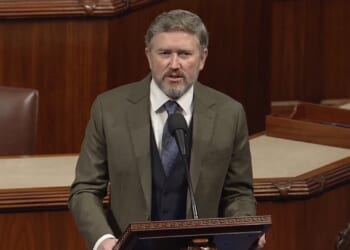
The recently introduced Fair Treatment of Religious Organizations Act by Rep. Blake Moore would do this at the federal level.
-
The Act ensures religious organizations can make decisions about hiring and operations based on their religious mission without interference from federal agencies.

Discussions of constitutional rights often focus on court decisions, but all branches of government have critical responsibilities in preserving constitutional rights. As important as court decisions are in providing a backstop when governments infringe constitutional rights, legislatures also play an important role. Lawmakers can establish protections that respect constitutional rights and provide parameters and processes for clear and straightforward vindication for those whose rights are threatened.
Utah’s legislature has been at the forefront of this approach to protecting religious freedom. A member of Utah’s federal delegation, Rep. Blake Moore, has now introduced important legislation that would do the same at the national level.
The Fair Treatment of Religious Organizations Act would add two important clarifications to federal law to ensure that religious organizations can do their work without interference.
The first portion clarifies federal law regarding tax-exempt status. Federal law includes organizations “operated exclusively for religious . . . purposes” in its determination of which charitable organizations are tax-exempt. Rep. Moore’s bill specifies that the determination of whether an organization’s purpose “is a religious purpose shall be made without regard to the organization’s religious beliefs or practices concerning marriage, sexuality, or gender identity, and without regard to whether such beliefs or practices are otherwise inconsistent with law or public policy.”
In other words, disagreement with religious teachings about marriage and sexuality by government agencies cannot be used to deny religious organizations their ability to receive or retain tax-exempt status.
The bill also clarifies that the protected “religious belief” need not be “compelled by or central to a system of religion.” This means that the government cannot second-guess an organization’s belief that its teachings about marriage and sexuality are important just because a regulator thinks differently.
The second portion provides protections for religious organizations that require their employees to “share the religious beliefs and comply with the religious standards of the employer.” Federal officials cannot deny them federal grants, financial assistance, or contracts, or otherwise discriminate against these organizations, because they expect their employees to promote and live consistently with the group’s religious mission.
These provisions respond to issues that have arisen in recent years. As Rep. Moore’s announcement mentions, a 2020 U.S. Supreme Court decision expressed concern that religious employers might be prevented from taking into consideration fidelity to a religious organization’s mission in their hiring decisions. This bill would codify that common-sense protection.
This type of national legislation is an important supplement to state efforts, which cannot address disparate treatment of religious organizations by federal agencies. Allowing churches and other religious organizations to do their important work without interference ensures their contributions to communities can continue. Congress should act to ensure religious groups get the fair treatment they need to do their critical work.

Insights: analysis, research, and informed commentary from Sutherland experts. For elected officials and public policy professionals.

-
State legislatures and Congress have an essential role in protecting religious liberty by clarifying religious freedom protections to avoid costly litigation.
-
The recently introduced Fair Treatment of Religious Organizations Act by Rep. Blake Moore would do this at the federal level.
-
The Act ensures religious organizations can make decisions about hiring and operations based on their religious mission without interference from federal agencies.
Read More

Sutherland Institute recognizes Utah school districts for excellence in open enrollment transparency
Sutherland Institute recognized a group of Utah school districts for transparent and parent-friendly online open enrollment information, as part of its new Open Enrollment Excellence Certificate.

2026 Status of Utah Open Enrollment Policy and Compliance
The following report announces districts that have earned an Open Enrollment Excellence Certificate, reviews the current state of open enrollment in Utah, and highlights opportunities for improvement.

The future of conservatism and a return to first principles | Donald Bryson
Conservatism is facing a defining moment. As debates over government power, political personalities, federalism, and first principles move to the center of public life, a fundamental question is emerging: what exactly should conservatism be trying to conserve?
Connect with Sutherland Institute
Join Our Donor Network
Follow Us
The post Fair Treatment of Religious Organizations Act: Protecting religious freedom at the national level appeared first on Sutherland Institute.