- The literacy test in the North Carolina State Constitution was a tool to disenfranchise black voters
- Despite that moral stain on the state constitution, previous attempts to remove it have failed
- The General Assembly should put repealing the literacy test to a vote of the people
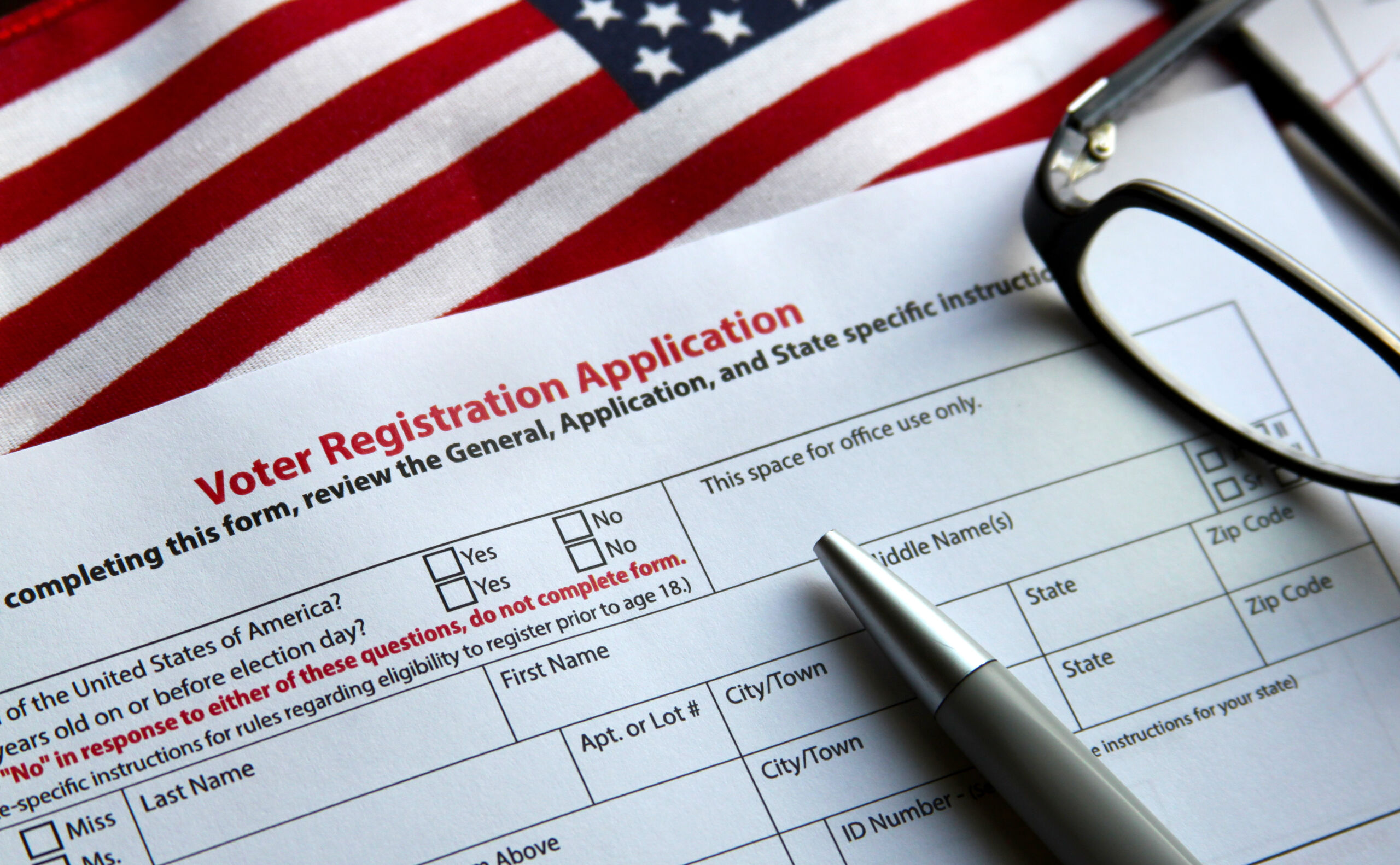
I recently spoke with a group in western North Carolina about election policy. One of them asked what policies I am pursuing for the upcoming short session of the General Assembly. One of the things I mentioned was removing the literacy test from the state constitution.
He seemed disturbed at my proposal, saying, “I think we should definitely require a literacy test.” After a little more talking, it became clear that he thought the literacy test was about education policy.
The exchange reminded me that advocates for removing the literacy test have our work cut out for us.
What is the literacy test, and why should it be removed from the North Carolina constitution?
Despite its name, the literacy test has nothing to do with education policy and everything to do with denying people the right to vote based on their race.
Article VI, Section 4 of the North Carolina State Constitution states, “Every person presenting himself for registration shall be able to read and write any section of the Constitution in the English language.”
That seemingly innocuous section was part of a larger set of constitutional amendments approved in 1900 designed to disenfranchise black voters. Part of the problem was how the amendment was enforced. Blacks seeking to vote were often confronted by “polling officials who would ask questions about the state constitution that even legal experts could not answer” to demonstrate that they understood what they had read.
Two other amendments passed in 1900 were the poll tax and a grandfather clause that allowed illiterate whites to continue voting. The grandfather clause expired in 1908, and the state repealed the poll tax requirement for voting in 1919, yet the literacy test is still in the state constitution.
In 1957, Louise Lassiter, a black woman in Northampton County, sued the county board of elections for enforcing the literacy test. The United States Supreme Court ruled in 1959 that the literacy test did not, “on its face,” violate the 15th Amendment to the U.S. Constitution, which protects a citizen’s right to vote from being “denied or abridged … on account of race, color, or previous condition of servitude.” Nevertheless, the court also made clear in its ruling that “a literacy test, fair on its face, may be employed to perpetuate that discrimination which the Fifteenth Amendment was designed to uproot.” That question was not part of Lassiter’s claim.
Previous attempts to repeal the literacy test have failed
Despite that ruling, the literacy test is not currently enforced. Section 4(a) of the federal Voting Rights Act of 1965 (VRA) prohibited its implementation in order “to assure that the right of citizens of the United States to vote is not denied or abridged on account of race or color.”
In response, the North Carolina General Assembly put a constitutional amendment to repeal the literacy test before voters in 1970. The amendment “failed spectacularly,” with voters rejecting it 56 to 44 percent.
There have been several attempts since 1970 to put repealing the literacy test before the voters again. The most recent was House Bill 44 in 2024, which passed in the North Carolina House on a 110-0 vote. It never came up for a vote in the Senate, however.
While Senate leader Phil Berger has said the literacy test “ought to be out of our Constitution,” he and others have expressed fear that the attempt could fail again. That fear is not unfounded. An August 2024 poll found that 40 percent of North Carolina voters supported repeal, while 38 percent opposed it, a “surprisingly tight margin” likely driven by the literacy test’s seemingly innocuous nature that had persuaded the Supreme Court to uphold it in 1959.
Despite those failures, we should try again to repeal the literacy test. It is a moral blight upon our state’s foundational document.
In addition, there is a small but nonzero chance that Section 4(a) of the VRA could be struck down by the U.S. Supreme Court, just as the Court struck down the VRA’s enforcement formula, Section 4(b), in Shelby County v. Holder (2013). If that were to happen, it would require the state to enforce the literacy test once again.
It is time for the General Assembly to act
The good news is that two versions of the literacy test repeal have been filed in the General Assembly this session.
The first is House Bill 93:
Constitutional amendment to remove the literacy test requirement for voting from the North Carolina Constitution. The federal Voting Rights Act of 1965 prohibits implementation of this requirement.
That is the same language that passed the House unanimously in 2024.
The other is Senate Bill 14:
Constitutional amendment to repeal the requirement that every person presenting himself for registration shall be able to read and write any section of the Constitution in the English language.
The House language is superior. It provides voters with the context for removal without editorializing on the ballot. The Senate version lacks that context.
There are two impediments to making the removal of the literacy test a reality.
The first is the lack of willingness among legislative leaders, particularly in the Senate, to bring repeal to a vote. As we saw in 2024, when legislators have a chance to vote to repeal the literacy test, it passes with ease.
The second is the real possibility that voters would again vote against removing the literacy test. As demonstrated in my recent conversation in western North Carolina, it would take a bipartisan voter education campaign to ensure the removal amendment passes. Relatedly, supporters must not “succumb to the temptation to use the literacy test as a political bludgeon against our opponents,” thereby inadvertently driving down support for removal by trying to make it a partisan issue.
Despite those concerns, the legacy of this General Assembly session should be that it started the removal of the literacy test from the North Carolina Constitution. Let the voters decide.