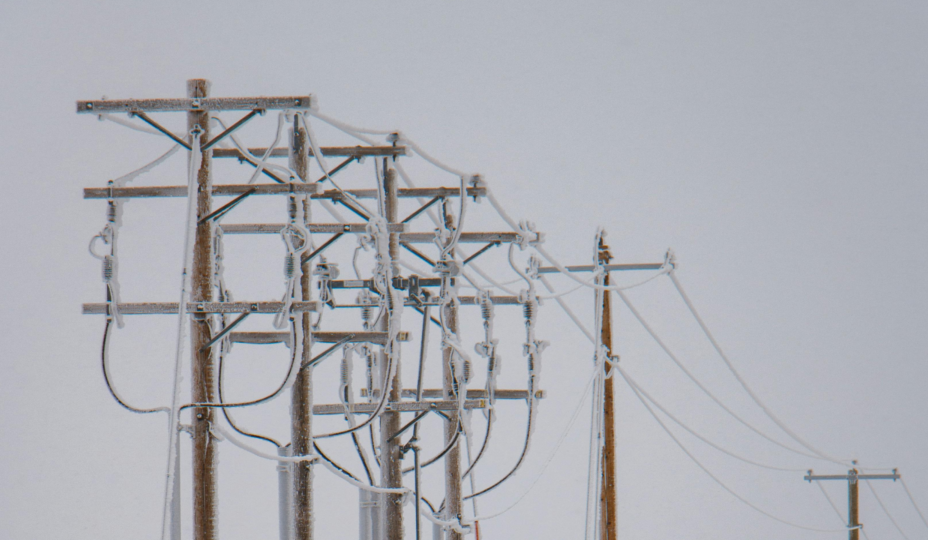
This past January, Tennesseans received a chilling reminder of how electrical power actually works…and where it fails. Winter Storm Fern blanketed Middle Tennessee with heavy ice, tree branches buckled, power lines snapped, and a peak of 230,000 households were left without power in freezing temperatures. Statewide, 23 Tennesseans lost their lives due to the storm, and for many families, power didn’t return for nearly two weeks. While power plants were operating during the storm, the “distribution grid,” the network of poles, wires, and equipment to move the power from plants to homes, was the failure point that led to the outages.
Before the storm even hit, Nashville Electric Service (NES) had cut its tree-trimming budget by one-third — even though its own internal auditors had warned that untrimmed branches hanging over power lines would make outages significantly worse. Trees were the culprit on nearly every street. Despite operational power plants, Tennessee being home to the first small modular nuclear reactor breaking ground in Oak Ridge, and TVA partnerships to bring additional alternative energy capacity to communities across the state, none of that matters if the last mile of energy transmission fails, and this is what we experienced with Winter Storm Fern. A single-family home, a data center, a manufacturer, a hospital — they don’t care where the power comes from. They care whether it shows up reliably. As we stand, too much of Tennessee’s distribution grid is one bad ice storm away from the same crisis Nashville just experienced.
The good news is that there are well-known solutions to reduce the risks. Between new technologies that are already in use across neighboring states and more efficient maintenance and upgrade programs, Tennessee can right the ship by implementing a few tangible policy changes:
– Open the maintenance work to real competition. Much of the labor intensive maintenance work required to keep the grid in good shape, including burying vulnerable lines, clearing vegetation, and upgrading aging equipment, doesn’t require a utility monopoly to do it. Private contractors across Tennessee are ready, skilled, and capable. When utilities are required to competitively bid this work rather than self-perform or lock in preferred vendors, costs tend to come down, the work gets done faster, and ratepayers benefit.
– Let the market reward resilient technology. Modern grid systems can detect exactly where a problem is and reroute power around it, sometimes within seconds, without waiting for a crew to drive out and find the break. The U.S. Department of Energy has found these smart grid technologies can cut outage durations by nearly half.
– Capitalize on the recent momentum with changes to state law. Legislation filed in the wake of the storm would require utilities serving more than 10,000 customers to publish an annual grid reliability report, a 10-year resilience plan, and a vegetation management strategy with real trimming cycles and oversight standards. That’s a strong foundation, but reporting alone doesn’t harden a single line. By directing investment toward the highest-risk corridors first, prioritizing proven hardening technologies like automated switching and targeted undergrounding, and drawing down every available federal grid resilience dollar already allocated through the Tennessee Department of Environment and Conservation, the state will be better prepared for future storms.
The Volunteer State is building a serious energy future that will continue to anchor our leadership in the sector. But adding more generation capacity without hardening the last-mile delivery network leaves the cake half-baked. Allowing competition and technology to improve our state’s grid will not only make the state more attractive for investment but also keep more Tennesseans safe when it matters most.