By John A. Charles, Jr.
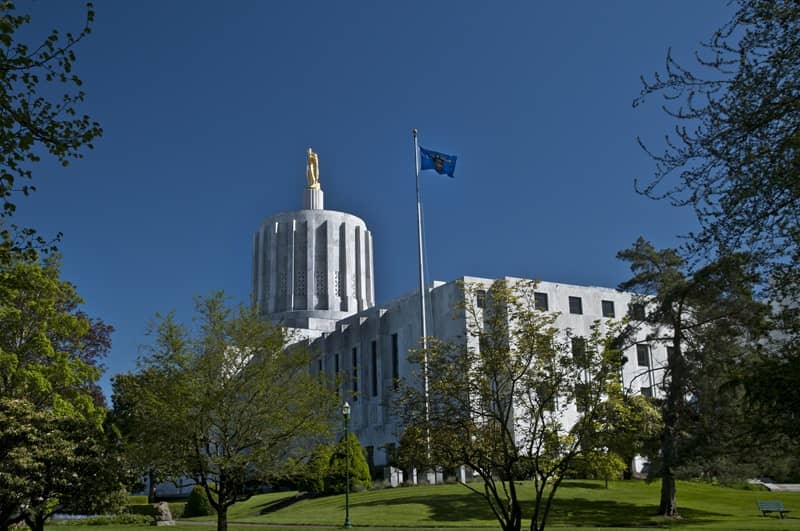
The Oregon Department of Energy and the Oregon Climate Action Commission published a report seeking public comment on the TIGHGER 2.0 Project (Transformational Integrated Greenhouse Gas Emissions Reduction), also known as the Oregon Climate Action Roadmap. The TIGHGER 2.0 report presents a list of 48 “greenhouse gas emissions” gap measures with ramifications for every sector of Oregon’s economy. Cascade Policy Institute’s President and CEO John A. Charles, Jr. submitted Public Comment on April 10, 2026 to OCAC@energy.oregon.gov.
—–
April 10, 2026
Submitted via email: OCAC@energy.oregon.gov
Janine Benner
Director
Oregon Department of Energy
650 Capitol Street NE
Salem, OR 97301
Re: Comments on TIGHGER 2.0 Draft Gap Measures
Dear Ms. Benner,
Cascade Policy Institute is a non-partisan public policy organization working to promote a dynamic market economy in Oregon. Cascade was incorporated in 1991 and has testified in many energy-related proceedings at the local, state and national levels.
We note that Gov. Tina Kotek shares our interest in economic opportunity, and towards that end created a Prosperity Road Map in December 2025. Unfortunately, the TIGHGER Gap Measures and Scenarios suggests policies that are in conflict with the Governor’s prosperity agenda. Abundant energy is the foundation for economic prosperity, and the TIGHGER measures are steps towards energy poverty.
Before addressing the 48 “gap measures” themselves, we wish to back up and discuss the original GHG reduction goals created by the state legislature, because there seems to be some confusion about whether those goals are still in effect. Oregon’s climate goals were first adopted in 2007 through HB 3543. That statute established the following goals:
- By 2010, arrest the growth of Oregon’s greenhouse gas emissions (including, but not limited to CO2) and begin to reduce them, making measurable progress toward meeting the existing benchmark for CO2 of not exceeding 1990 levels.
- By 2020, achieve a 10 percent reduction below 1990 greenhouse gas levels.
- By 2050, achieve a “climate stabilization” emissions level at least 75 percent below 1990 levels.
There are at least three ways to measure compliance: (1) emissions for the entire state; (2) emissions per capita; or (3) emissions per unit of GDP. Furthermore, Oregon DEQ measures GHGs as both consumption-based emissions and sector-based emissions, with wildly different results.
This complicates the process of measuring progress. The statute itself offers no guidance, so administrative agencies must use their own best judgement.
ODOE has chosen to measure emissions in the aggregate, ignoring both population and GDP. This is the least defensible interpretation. Both population and GDP tend to grow over time, so if state officials are not accounting for that growth, they will be missing long-term trends regarding carbon intensity.
If emissions per unit of economic growth and/or per capita are steadily going down, then eventually emissions in absolute terms will go down as well. That’s important for policy makers to understand.
ODOE’s reliance on total emissions as the measure of success is misleading and may result in unnecessary economic disruptions, such as the 48 “gap measures” under consideration.
Actual emissions trends since HB 3543 was enacted highlight this point. Oregon’s population in 1990 was 2.84 million, and by 2023 it had increased to 4.2 million, a 48% increase.
During that same period, DEQ’s emissions inventory shows that total GHG emissions went from 56 Million MTCO2e to 59 Million MTCO2e, a 5% increase. But after accounting for population growth, GHG emissions dropped by 29% per capita, far in excess of the 2020 goal of 10%.
ODOE claims that Oregon is failing to meet its GHG goals and therefore more restrictions must be adopted. We believe legislators should receive a more nuanced view, including emissions on a per-capita and per unit of GDP basis as well. If legislators have a preference about how to measure progress towards the 2007 goals, they should amend the statute.
ODOE also relies on Gov. Kate Brown’s Executive Order 20-04, which added an interim GHG emissions goal for 2035 and updated the 2050 goal:
- Achieve greenhouse gas levels that are 45 percent below 1990 levels by 2035.
- Achieve greenhouse gas levels that are at least 80 percent below 1990 levels by 2050.
These aspirational goals by Gov. Brown have no effect on the statutory goals enacted by the legislature and should be ignored by ODOE. As noted by Hon. Jack L. Landau and Nora Coon in Chapter 19 of the Oregon Constitutional Law (2022 ed.):
While the state legislature has plenary power, subject to constraints imposed by federal law or the state constitution, powers of the executive branch are limited to those enumerated in the constitution or granted by the legislature.
In Elkhorn Baptist Church v. Brown, 366 Or 506, 466 P3d 30 (2020), for example, the issue was the source of authority for the Governor’s executive orders imposing various restrictions on public activities in response to the COVID-19 pandemic. The Governor claimed authority to issue the orders under legislation authorizing her to take such action in the case of emergencies.
The plaintiffs argued that the authority granted under those statutes was limited, permitting the Governor to issue emergency orders only for limited periods of time. See Elkhorn Baptist Church, 366 Or at 522 (describing the circuit court’s ruling in the plaintiffs’ favor on that point).
The Oregon Supreme Court accepted the premise that the Governor’s powers were limited to those granted by the statutes and the constitution. Elkhorn Baptist Church, 366 Or at 525–26.
While some activists claim that Oregon is facing a “climate crisis”, there is no definition of that term, and it has no legal meaning. Even if there was a definition, Executive Order 20-04 is now almost six years old. It lacks plausibility to claim that whatever climate “emergency” Gov. Brown may have claimed in 2020 is still the basis of an executive order.
In 2023, the Legislature passed HB 3409, which renamed the Oregon Global Warming Commission the Oregon Climate Action Commission. As part of the commission’s subsequent Climate Action Roadmap to 2030, the commission recommended a package of GHG goal updates:
- Oregon will achieve at least a 45 percent reduction below 1990 levels by 2030.
- Oregon will achieve at least a 70 percent reduction below 1990 levels by 2040.
- Oregon will achieve at least a 95 percent reduction below 1990 levels by 2050.
- By 2050, or as soon as practicable, Oregon will also achieve net zero emissions and achieve and maintain net negative emissions thereafter.
The Department concedes in its “ODOE at 50: History of Oregon’s Climate Goals” report that these goals “have not been formally adopted” by any law-making body, which means they have no bearing on emissions reductions policies.
Comments on TIGHGER DRAFT GAP MEASURES
Virtually every measure on this list is both arbitrary and unenforceable, which makes it useless for regulatory purposes.
For example:
#2. “New large loads to be supplied with 100% clean energy resources.” This could only be achieved if large loads had exclusive access to electricity generated by new generation of nuclear power, which is illegal in Oregon. The politically favored sources of wind and solar generation are intermittent and thus wholly unsuited for data centers.
#7. “Reduce beef and pork consumption by 50% by 2050, and shift to seafood.” The 50% goal is arbitrary, includes no benefit-cost analysis, and is unenforceable.
#11. “Industrial electrification.” The multiple goals in this section are random, expensive, and unenforceable.
CONCLUSION
The only climate goals with legal significance are those adopted by the state legislature in 2007. When measured in terms of either per capita emissions or per unit of GDP, it appears that the 10% reduction goal for 2020 was met. Therefore, there is no “emergency” that would justify consideration of 48 additional control measures.
Sincerely
John A. Charles, Jr.
President & CEO, Cascade Policy Institute
Click here for the PDF version of John Charles’ Public Comment
—–
John A. Charles, Jr. is President and CEO of Cascade Policy Institute, Oregon’s free market public policy research organization. He researches, writes, and presents testimony and analysis on state and local issues important to the freedom and opportunity of all Oregonians.