This article originally appeared in The Detroit News March 24, 2026.
Lawmakers in Washington State just created a new “millionaire tax” — the first income tax in state history. Hours after the bill passed, former Starbucks CEO Howard Schultz announced that he and his wife had left Seattle after living there 44 years. While Schultz said the move gets them closer to their children, the timing was notable. Schultz follows other high earners leaving inhospitable states, including Jeff Bezos, Elon Musk and Larry Ellison.
Billionaires make headlines when they climb into a moving truck, but they’re not the only ones who move. California lost 200,000 people between 2020 and 2025. Texas gained 2.5 million.
Michigan lawmakers should note that public policy can attract people or drive them away.
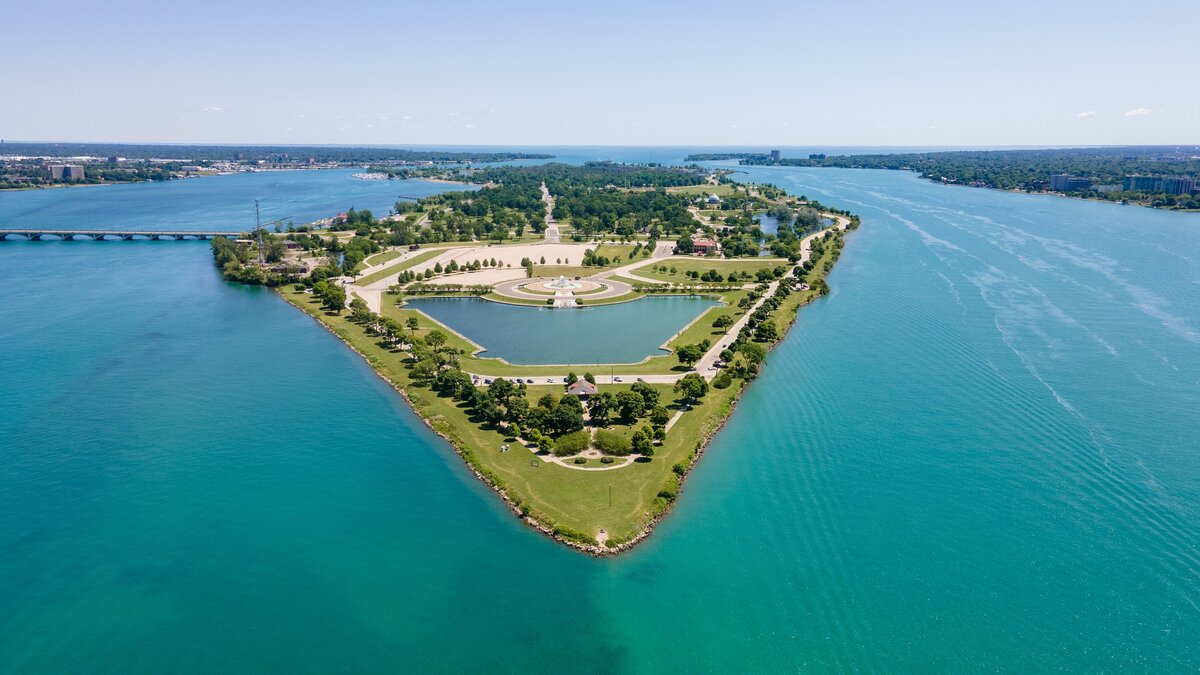
To that end, Rod Lockwood has a game-changing idea: Convert Detroit’s Belle Isle into a special economic zone to invite investment into Michigan. Lockwood, an entrepreneur, spent his career building affordable housing.
The idea started when Lockwood spoke to a Mackinac Center analyst about developing Belle Isle. (Lockwood is chairman of the Center’s board of directors.) The idea grew into his 2013 novel, “Belle Isle: Detroit’s Game Changer.” The book tells the story of an architect who transforms Belle Isle from faded glory to a booming city that rivals Singapore. Lockwood republished the book recently and is working to make it a reality.
The idea is straightforward: A group of investors would acquire development rights to Belle Isle from Detroit for $1 billion. The island would become a special economic zone — all privately funded. Still part of Detroit, still part of Michigan, still open to the public, but a new city with its own tax code, governance and services.
The low-tax, low-regulation city would attract up to 50,000 residents in a walkable, beautiful community. It would target industries such as finance, investment management and professional services. If tax revenue exceeds the city’s operating costs, it would be distributed back to Detroit and Michigan.
All this would require an act of Congress, enabling legislation from the state legislature and Detroit’s agreement.
The idea comes at a fascinating moment. President Trump proposed “freedom cities” during his campaign. Detroit has a new mayor, and Michigan will soon elect a new governor.
Detroit needs more game-changing ideas. Once the fifth largest city in America, Detroit is now the 27th-largest, having lost nearly two-thirds of its population over 70 years. It is the country’s poorest big city, and half the children live in poverty. The median household income was $39,209 in 2024, less than half the national median. Unemployment in Detroit was 9.7% in 2025, nearly twice the statewide rate. Detroit schools ranked dead last in an assessment of 26 large urban districts. Not even one in 10 students is proficient in reading or math in either fourth or eighth grade. Sixty-one percent of Detroit students were chronically absent in the 2024-25 school year.
There are signs of improvement, but they’re blips on a decades-long slump. Turning Belle Isle into a vibrant economic zone could jolt the city out of its lethargy.
When Lockwood first proposed his Belle Isle idea, he was met with outrage and insults. That was 2013. Now, support appears to be growing. In a poll of 600 likely voters conducted last November by Mitchell Research & Communications, 51% of Michigan voters supported making Belle Isle a special economic zone. Among likely Detroit voters, that number was 68%.
Bad policy decisions chase people away. Good ones bring them to our door. Rod Lockwood’s “Belle Isle” is a blueprint for growth. Maybe Howard Schultz can bring the coffee.