This article originally appeared in the March/April 2026 issue of IMPACT magazine.
A battle in Lansing over affordable housing is morphing into a debate over the wrong question. Unless lawmakers understand what the argument is really about, we may lose a rare opportunity to get ahead of a problem with bipartisan cooperation. Liberty, not locality, is the question.
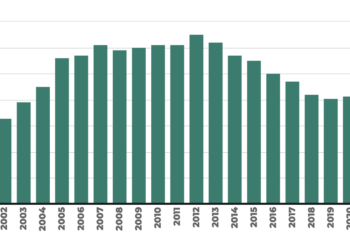
Michigan housing costs less overall than the national average, but we are losing our advantage. Michigan house prices roughly doubled over the last decade, a bigger increase than in most states and in most neighboring states. Michigan’s price surge was the nation’s fifth highest in the last quarter measured by the Federal Housing Finance Agency.
The Mackinac Center favors a package of state House bills intended to ease upward pressure on housing prices. The legislation would limit the mandates and prohibitions local governments can impose on property owners and homebuilders. Over decades, many municipalities, townships, and counties have increased minimum lot and dwelling sizes, raised setback requirements, expanded parking space mandates, outlawed “mother-in-law” cottages, required onerous reviews, and taken myriad other steps that raise the cost of building, buying, and owning a home.
Those who oppose the bills call them an attack on “local control.” But the heart of the matter isn’t local control at all.
“Local control” is a rhetorical distraction. Dressing up “control” with the friendly modifier “local” shouldn’t make us forget we are being controlled in the first place, or even feel better about it.
Choosing local control or state control does not by itself point us to pro-liberty policies.
The Revolutionary War-era farmer portrayed by Mel Gibson in the 2000 movie The Patriot referred to a classic observation about local officials when he said of King George, “Why should I trade one tyrant 3,000 miles away for 3,000 tyrants one mile away?”
The tyrannical monarch waged brutal war while our elected local officials operate mostly via peaceful public processes. But that doesn’t mean local control means immunity from abuse and overreach.
Michigan has 15,000 local elected officials in 1,800 separate units of government that spend about $60 billion in tax dollars while regulating and restricting what we do with our property, our paychecks, our professions, our pastimes and even our parking, issuing around 500,000 pages of legally binding text. That’s a lot of control, even if it is local.
The heart of the matter is liberty, not proximity to those who govern us. What may we do with our own property?
The state has every legal authority to override local governments to protect the people and their rights. This is different from the relationship between the federal government and the states. Local governments were created by the states while states are sovereign entities that created the federal government.
Chief Justice of the Michigan Supreme Court Thomas M. Cooley was one of America’s foremost authorities on state constitutions. He called our local units of government “mere auxiliaries of the State Government in the important business of Municipal rule.”
The state’s supremacy over local governments is well recognized. It is why your local city cannot restrict your rights to gun ownership, speech, and religion. Your village cannot discriminate against you because of race, sex, disability, or sexual orientation. Your township cannot tax your income or your purchases. Your county cannot take away your right to farm.
The Michigan Municipal League, Michigan Townships Association, and other tax-funded lobbying groups oppose the affordable housing bills. They would have us frame questions in terms of local control vs. state control. They prefer that local governments, not the state, decide whether you may exercise certain property rights.
Civic-minded local officials see themselves as part of the American tradition of self-government. They’re not wrong when they say zoning can contribute to property values. But they should remember the tradeoff. To the extent zoning protects your property value, it comes at the cost of having neighbors exert collective control of your property.
The Mackinac Center frames legislative questions in terms of liberty. We ask if a bill constrains government power, protects individual and property rights, promotes economic freedom, and creates consistent and predictable rules. Our analysts believe the housing bills championed by Reps. Kristian Grant, D-Grand Rapids, and Joe Aragona, R-Clinton Township, score well by those measures. Gov. Whitmer has suggested she is supportive.
Housing costs are a major driver of personal financial stability (especially for young people), employment markets, population migration, and overall state strength. We can make affordable housing a decisive competitive advantage for Michigan by remembering that liberty trumps locality.