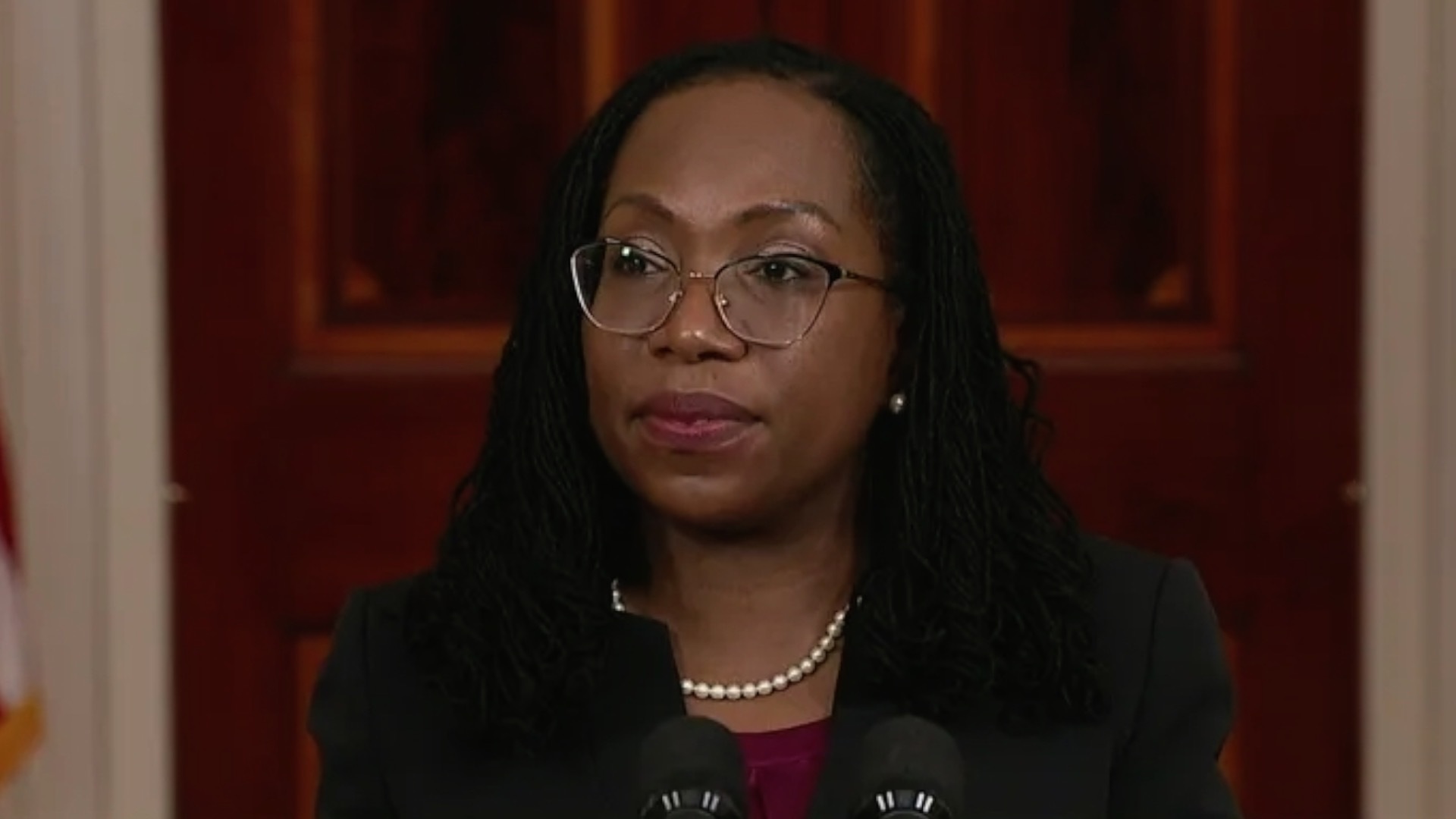
Shawn Fleetwood writes for the Federalist about an interesting speech from the US Supreme Court’s newest member.
Supreme Court Justice Ketanji Brown Jackson ran a not-so-subtle defense of leftists’ judicial coup against President Trump on Tuesday by downplaying the harms it poses to presidents’ executive power. The moment came during a lecture the junior justice gave at Yale Law School about the Supreme Court’s emergency (or “interim”) docket.
In her speech to attendees, Jackson openly criticized her colleagues for their handling of cases that come before the court’s emergency docket. She more specifically chastised SCOTUS for its granting of emergency applications that request a stay (“pause”) of lower court injunctions and for the lack of legal explanation that comes with such decisions.
Unlike the traditional merits docket, in which fully litigated cases are heard and decided by the justices on the merits of the issue(s), the emergency docket deals with cases that are still undergoing consideration in the lower judiciary. These interim decisions — which often come with little legal explanation to avoid a “lock-in effect” — are not final verdicts on the merits of the cases but are preliminary judgments that target specific lower court actions until these matters can be fully litigated.
Jackson’s criticism was clearly a jab at the court’s conservative majority, which has often approved applications filed by the Trump administration to stop overreaching injunctions by rogue lower court judges. And yet, such critiques were not even the most notable part of Jackson’s remarks.
During her post-speech interview, the Biden appointee was asked by Yale Law School Dean Cristina Rodríguez about the Trump administration’s arguments that there is a “concept of harm that the inability of the president to be able to utilize his power is itself a harm.” Put another way, the president will suffer irreparable harm to his constitutional authority if a given lower court injunction on one of his policies or orders is permitted to remain in place.