Tyler O’Neil writes for the Daily Signal about a significant pronouncement from a leading voice of conservative judicial thought.
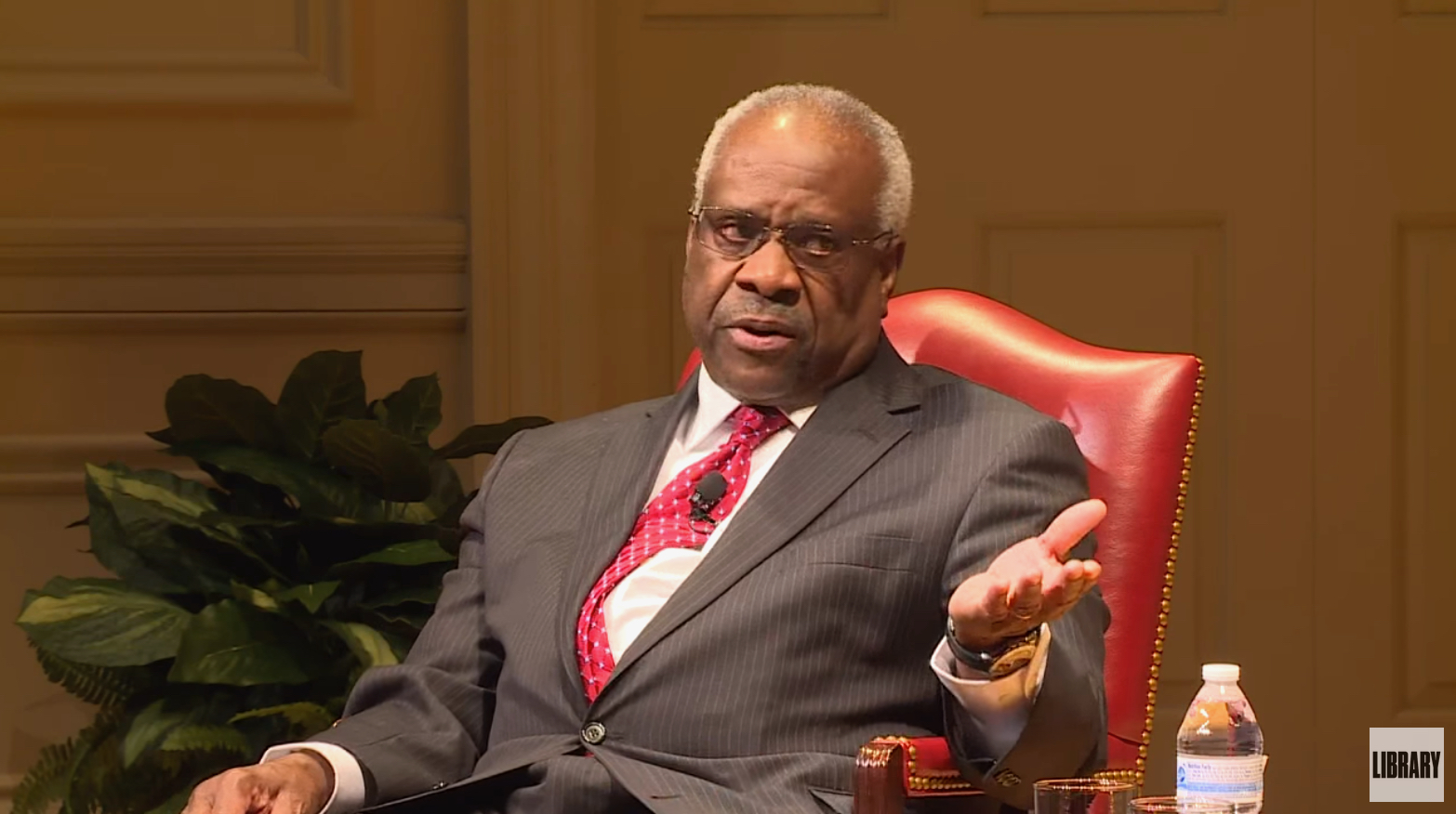
This week, Supreme Court Justice Clarence Thomas celebrated America’s 250th anniversary by exposing the greatest threat to the Declaration of Independence today—the ideology of Progressivism.
“Progressivism was the first mainstream American political movement—with the possible exception of the pro-slavery reactionaries on the eve of the Civil War—to openly oppose the principles of the declaration,” the justice said in a speech at the University of Texas at Austin Wednesday. “Progressives strove to undo the Declaration’s commitment to equality and natural rights, both of which they denied were self-evident.”
With his characteristic brilliance, Thomas cut through the Orwellian masquerade of Progressivism to reveal what it truly is—a fundamentally backward movement. By rejecting the solid footing of the declaration, Progressivism opened America to central planning and administrative rule.
While the declaration bases governmental authority on the consent of the governed and God creating human beings with inalienable rights, under Progressivism, “liberty no longer preceded the government as a gift from God but was to be enjoyed at the grace of the government.”
Thomas noted that President Woodrow “Wilson and the progressives candidly admitted that they took it from Otto von Bismarck’s Germany, whose state-centric society they admired. Progressives like Wilson argued that America need to leave behind the principles of the founding and catch up with the more advanced and sophisticated system of relatively unimpeded state power.”
Yet Thomas also quoted President Calvin Coolidge, who delivered a powerful address on the 150th anniversary of the declaration.
“If all men are created equal, that is final,” Coolidge said. “If they are endowed with unalienable rights, that is final. If governments derive their just powers from the consent of the governed, that is final. No advance, no progress, can be made beyond these propositions. If anyone wishes to deny their truth or their soundness, the only direction in which they can proceed historically is not forward but backward.”