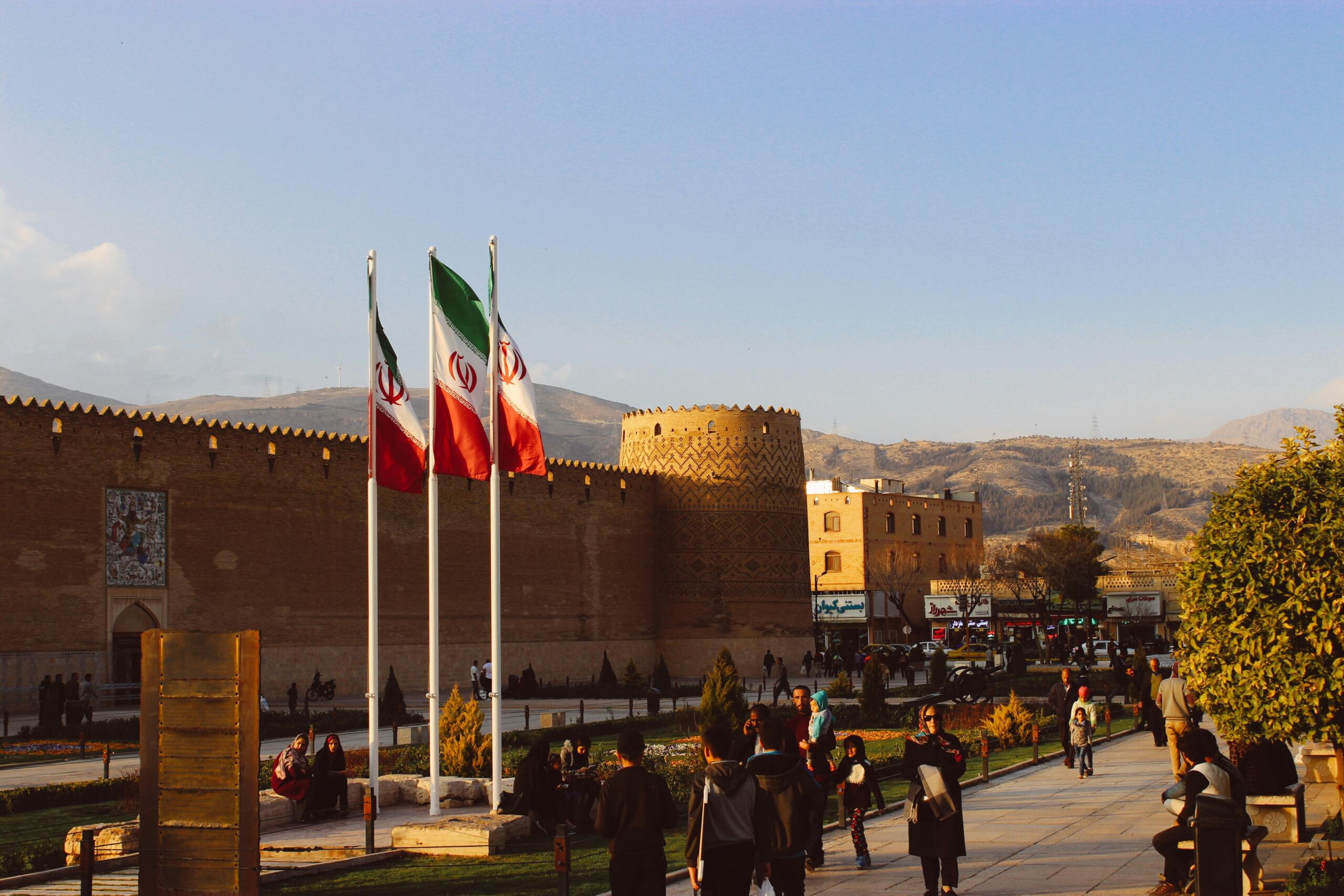
Every Friday at Tehran University, thousands gather on campus for prayer. When the sermon ends, the chants begin: “Death to America.”
And yet, Texas universities maintain active academic partnerships with that same institution and its affiliated network. The question Americans should be asking is not whether Iran wants nuclear weapons — it does — but whether our own universities are unwittingly helping them get there.
Iran’s nuclear ambitions have never been a secret. Former President Mahmoud Ahmadinejad declared in 2008 that “Iran’s nuclear issue is the most important political event in contemporary times.” Nearly two decades later, Supreme Leader Ayatollah Ali Khamenei has only sharpened the message. In a June 2025 speech, he declared: “Uranium enrichment is the key to our nuclear program… Abandoning uranium enrichment [is] 100% against the country’s interests.”
Iran dissident groups have been even more direct: “Tehran’s nuclear program has always been about building the nuclear bomb,” they have said plainly. Iran’s relentless pursuit of uranium enrichment shows it is racing toward a nuclear weapon. We should take it at its word.
What is happening inside Texas universities deserves urgent scrutiny.
The Pressure on Iranian Students Abroad
The Iranian government pursues Iranian students abroad, pressuring them to either transfer knowledge or face consequences. Take the case of Omid Kokabee.
Kokabee was a Ph.D. student at the University of Texas at Austin, conducting research in laser-plasma physics, an area with direct nuclear and defense applications. In 2011, during a family visit to Iran, he was arrested. He spent years imprisoned, reportedly because he refused to contribute his expertise to Iran’s military and nuclear programs. The American Physical Society and Science magazine both documented his case.
An IRGC University Collaborating With Texas
Perhaps the most alarming finding involves Imam Hossein University in Tehran. This institution is directly affiliated with the Islamic Revolutionary Guard Corps — the same IRGC that the United States designated as a foreign terrorist organization in 2019. Imam Hossein University has collaborated with University of Texas researchers in nuclear and quantum physics as recently as 2018 and 2019.
One such collaboration, published in the European Physical Journal C (2018), was co-authored by Mahdi Eshghi from Imam Hossein Comprehensive University and Majid Hamzavi, affiliated with both Zanjan University in Iran and the mathematics department at the University of Texas at El Paso. The research involved quantum mechanics — foundational to nuclear physics.
A second published collaboration involved nuclear physics research on critical point symmetries — research with direct implications for understanding nuclear structure — co-authored with Iranian institutions. Texas was a partner.
Let that sink in: a Texas public university contributed to scientific research alongside a university run by the IRGC.
Active Research Partnerships with Iranian Institutions
Consider the following:
Houshang Salimian Rizi, a Ph.D. candidate in electrical and computer engineering at UT Austin, has co-authored multiple peer-reviewed papers with Professor Hossein Iman-Eini of the University of Tehran’s School of Electrical and Computer Engineering. These papers — published in 2015, 2016, and 2022 — address fault-tolerant power converters and modular multilevel converters. Power electronics are critical enabling technology in a wide range of military and industrial applications, including those relevant to weapons systems. These were not historical collaborations from before he joined UT Austin; the 2022 paper suggests the partnership continued after he enrolled.
At Rice University in Houston, Dorsa Sattari-Khavas is a Ph.D. candidate in chemical and biomolecular engineering conducting research on synthetic biology — programmable RNA platforms, microbial engineering, and bioelectronic systems. She is the daughter of Iran’s former vice president. One of her published papers lists co-affiliations with Tehran’s Department of Medical Science, blending Iranian and American institutional research in ways that raise obvious questions about where discoveries ultimately travel. The paper also acknowledges the Iran Biotech Fund (BIF) and the Iran National Innovation Fund (INIF) as funders, and notes that most of the work was carried out at the Stem Cell and Regenerative Medicine Center of Excellence at Tehran University Medical Sciences (TUMS) and its Preclinical Core Facility.
The University of Houston has collaborated with Iranian universities on drone research, a field Iran has aggressively militarized. Iran now produces drones capable of carrying precision-strike missiles with a range of over 1,200 miles. The advancement, as Iranian officials have boasted, was achieved through domestic know-how developed in the face of international sanctions. Academic partnerships with Western universities have accelerated that know-how.
Texas Scholars Shaping Iran Nuclear Policy
Beyond the bench science, Texas is also home to scholars who shape Iran nuclear policy from within prestigious institutions. Mohammad Ayatollahi Tabaar, an Associate Professor at Texas A&M’s Bush School of Government and Public Service, holds a degree from the University of Tehran and conducts active research on “nuclear statecraft in hybrid regimes,” with Iran as his primary focus. He simultaneously holds fellowships at Rice University’s Baker Institute, Harvard Kennedy School’s Project on Managing the Atom, and Carnegie’s Middle East Program. From what we
There is nothing inherently improper about studying Iran’s nuclear politics — understanding the adversary is essential. But it is worth noting that the network of Iran-trained scholars at Texas universities is substantial. Multiple faculty members at UT Dallas, UT Arlington, and other institutions hold degrees from the University of Tehran, creating alumni networks that maintain informal ties to Iranian academic circles. A few examples of those faculty who hold degrees from the University of Tehran and have associations with Texas universities are as follows:
- Babak Fahimi — Distinguished Chair, Electrical Engineering, UT Dallas (BS & MS University of Tehran 1991/1993; PhD Texas A&M 1999). Works on electric machines and power electronics.
- Fatemeh Hassanipour — Professor, Mechanical Engineering, UT Dallas (BS University of Tehran 1997).
- Abdolhossein Haji-Sheikh — Professor Emeritus, Mechanical & Aerospace Engineering, UT Arlington (BS University of Tehran 1956).
- Ardeshir Anjomani — Professor, City and Regional Planning, UT Arlington (M.Arch University of Tehran 1968).
Texas Must Wake Up
None of this is to say that Iranian students or scholars are, as individuals, agents of the Iranian state. Many, like Omid Kokabee, are victims of it. However, institutions have a responsibility that transcends individual good faith. When an IRGC-affiliated university co-publishes with a Texas institution, the IRGC benefits, and when a student trained in American laboratories returns to Iran under pressure, the regime benefits.
Iran’s Supreme Leader says uranium enrichment is non-negotiable. Iranian crowds at Tehran University chant for America’s destruction every Friday. Iran’s drone program can now strike targets over 1,000 miles away, a capability built, in part, on Western scientific knowledge.
Texas lawmakers, university administrators, and federal research oversight bodies need to confront the fact that our open research system is being exploited.