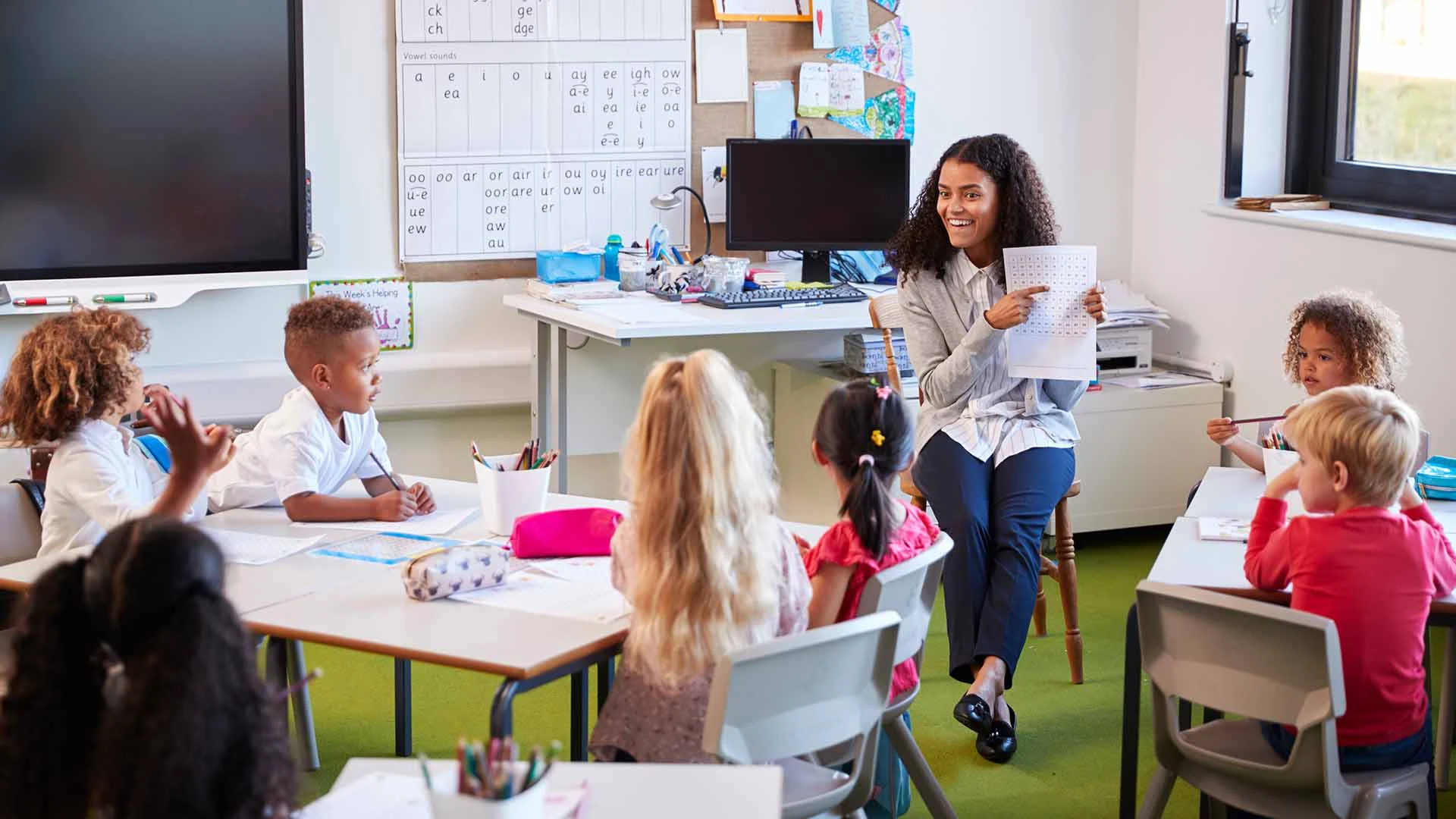

Microschools are basically what they sound like – really small schools. While the model is not entirely new in our nation’s history, it has seen a modern resurgence and renewed popularity.
Generally, microschools are defined as small learning communities of about 5 to 15 students in a multi-age environment. It’s often compared to the “one-room schoolhouse” of the past but with innovative features and funding models to support them.
Their existence is evidence of a changing culture and policy framework. Understanding what they are in the education choice landscape is important for both parents and policymakers.
For policymakers
In the world of public policy, microschools have been somewhat of a mystery regarding definitions and regulations.
For example, during school closures in the COVID-19 pandemic era, some families naturally formed “learning pods,” which, in effect, met the definition described above. Some people distinguish learning pods (family-run and more informal) from microschools (sometimes affiliated with a network and employing a hired teacher). Others say one is just an example of the other. Others might view learning pods as closer to homeschooling co-ops.
With this ambiguity, states have had to decide how to approach microschools in the law, whether they fit under existing statutory structures for homeschool, private schools, hybrid/co-op homeschool, day cares, or something else entirely. That said, most states either place them under their homeschool or private school statutes.
Utah is one of the very few states that have explicitly defined these innovations in code or passed statutes to protect their operation. In Utah, the legislature has not only defined these entities outside of homeschool and private school laws but also made the distinction even more precise by defining both a “micro-education entity” and a “home-based microschool.” The first model serves up to 100 students and is typically held in a nonresidential location; this is closer in features to a private school. The second serves up to only 16 students and can be held in someone’s home, which is closer in some ways to homeschooling. Either way, the entity must register as a business and comply with building and occupancy rules but otherwise has considerable flexibility.
Most states might not have a definition simply because the idea is new enough that legislation is not yet urgent. But not having a clear definition in most states might be an advantage. In fact, some education choice advocates might argue that the ambiguity of the microschool can be seen as one of its strengths because it makes it difficult to define and, therefore, to regulate.
At the same time, if they automatically fall into homeschool or private school statutes and that framework is an awkward fit, impinging on how a microschool would naturally function, carving out a unique definition could be useful.
Microschools meet a unique niche. They are the creation of those looking for options outside the most well-known education choice models. Making sure that microschools do not become heavily regulated is the work of the next generation of pro-education choice lawmakers.
For parents
Parents interested in microschools should know that many are already available (and probably nearby). They should also be aware that there are opportunities to create them and resources to help. In fact, several directories exist to help families find microschools, including those hosted by Micro Schools Network, KaiPod Learning, Prenda Microschools, and Meridian Learning. The value of navigator tools is rising as more options pop up and more parents look. A real marketplace exists and is becoming more visible over time.
For parents (or even seasoned educators) who want to create a microschool for their family or community, the number and sophistication of resources keep growing. Several organizations exist to help microschools launch, and some even offer a network with ongoing affiliation. For parents who want to start a microschool relatively quickly, with much of the operations and curriculum already in place, there are plenty of networks to join.
Organizations already mentioned, like Prenda Microschools and KaiPod Learning, provide this kind of help. Others include Acton Academy and Wildflower Schools.
Conclusion
Microschools can be hard to define, but so are a lot of unique learning environments. That’s not a bug; it’s a feature in the education choice landscape. Policymakers and parents ought to learn more about microschools so this innovative approach to education can grow and be protected as an important option.
Sutherland Institute policy intern Sydney Willis contributed research to this article.