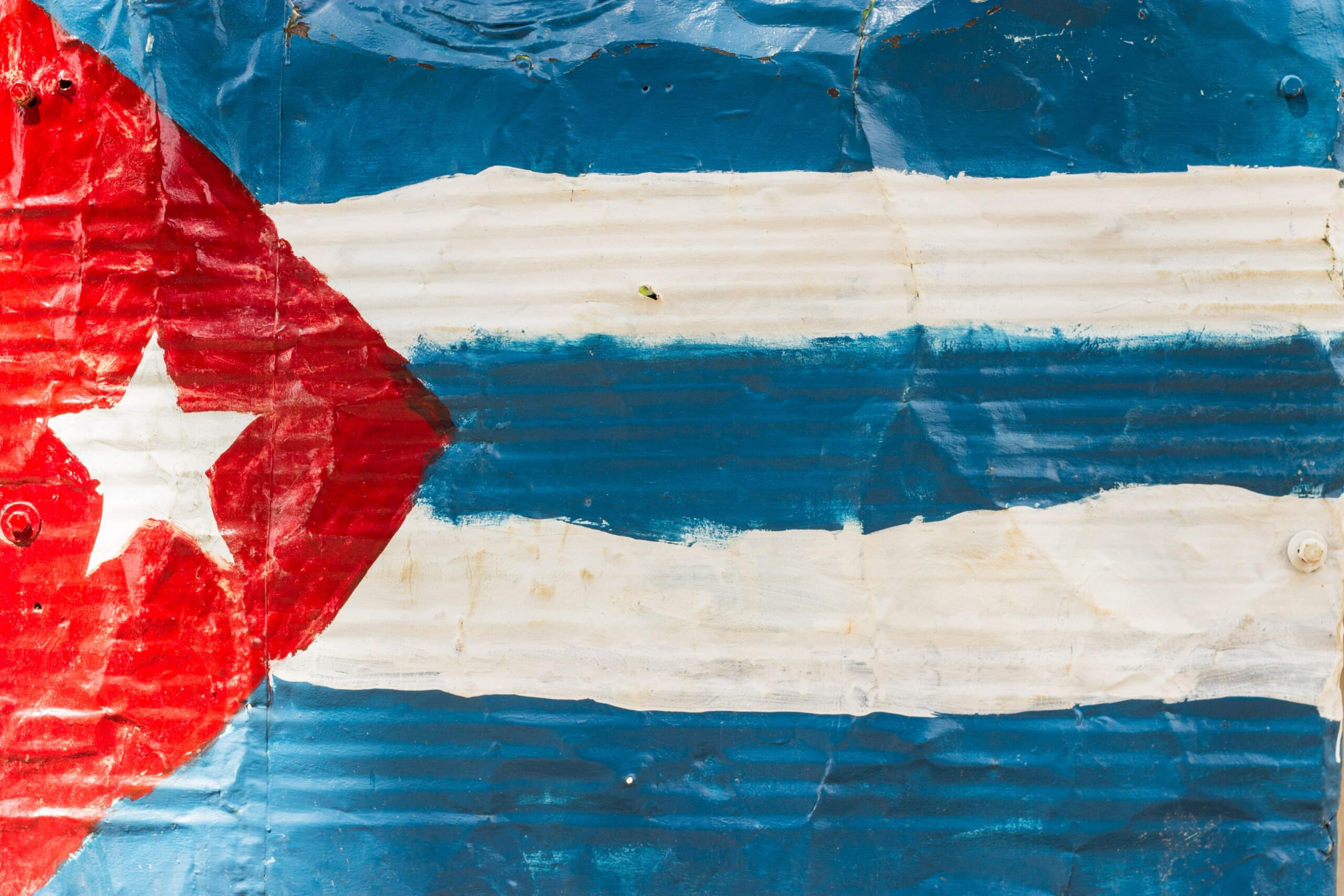
The relationship between Mexico and Cuba constitutes one of the most complex and singular in the Western Hemisphere. Unlike the rest of Latin America, Mexico is the only country that has maintained uninterrupted diplomatic relations with Cuba following the Cuban Revolution, which has made it a privileged space for political, diplomatic, and, importantly, intelligence interaction.
Over more than six decades, this relationship has been shaped by a combination of strategic cooperation, ideological affinity, and silent competition in the field of espionage. Mexico not only served as a bridge between Havana and the West, but also as fertile ground for covert operations during the Cold War. In recent years, under the government of Morena, the relationship has taken on new risks that have reignited debate regarding political influence, structural cooperation, and potential threats to democratic institutions.
Mexico During the Cold War
During the second half of the twentieth century, Mexico occupied a unique position in the geopolitical landscape. Its proximity to the United States, combined with an independent foreign policy, made it a meeting point for ideologically opposed actors.
The country’s capital functioned as a true intelligence hub. From there, Cuba developed networks for observation, recruitment, and contact with political and social actors throughout the region. The Cuban embassy was identified in various records as a coordination center for activities that went beyond traditional diplomacy.
Cuban activity did not imply structural control over the Mexican state. Rather, it was a strategy focused on intelligence gathering, the construction of influence networks, and ideological projection in Latin America. Mexico offered ideal conditions: institutional stability, relative openness, and a foreign policy that allowed it to maintain dialogue with both blocs.
Ideological Influence and the Formation of Political Networks
Beyond espionage operations, one of Cuba’s most enduring tools in the region has been ideological projection. Since the 1960s, Havana promoted the training of political cadres and the establishment of ties with social movements and political actors across Latin America.
In the Mexican case, this influence manifested in a more subtle manner. It did not initially translate into large-scale insurgent movements with direct Cuban backing, but it did contribute to the construction of political affinities, spaces for exchange, and intellectual networks.
Ideological influence largely operated through narratives such as sovereignty, anti-imperialism, social justice, and resistance to the United States. These ideas resonated within various political and academic sectors in Mexico, contributing to a relationship of closeness that went beyond mere diplomacy.
The Relationship in the 21st Century: Continuity and Strengthening
With the rise to power of Morena under the leadership of López Obrador in 2018, the relationship between Mexico and Cuba has undergone a reconfiguration that has drawn the attention of both national and international analysts.
One of the most visible aspects has been cooperation in the field of health. Mexico has contracted brigades of Cuban doctors, initially during the COVID-19 pandemic and later as part of broader bilateral agreements.
In recent years, the Mexican government has maintained a diplomatic posture favorable to Cuba in international forums, defending the principle of non-intervention and criticizing economic sanctions. The personal and political relationship with the government of Díaz-Canel has reinforced this closeness.
During the two Morena administrations, the relationship has strengthened through economic support to Cuba, mainly in two areas: the hiring of Cuban doctors and the export of oil.
During the López Obrador administration, political support for the government of Miguel Díaz-Canel included key moments such as:
- Mutual decorations: In 2023, Mexico awarded Díaz-Canel the Order of the Aztec Eagle. A year earlier, Cuba awarded López Obrador the Order of José Martí.
- Position against the embargo: The former president repeatedly criticized U.S. sanctions, describing them as unjust and harmful to the Cuban population.
- Health cooperation: During the COVID-19 pandemic, Cuba sent doctors to Mexico, while the Mexican government purchased vaccines and medications from the island, in addition to sending medical supplies and food.
- Visits and political support: Díaz-Canel was invited to López Obrador’s inauguration in 2018 and participated as guest of honor in the Bicentennial of Independence parade on September 16, 2021, which generated domestic criticism. In 2022, López Obrador visited Cuba as part of a regional tour.
- Migration: Both countries have also maintained agreements on migration.
Under the presidency of Claudia Sheinbaum, Mexico’s relationship with Cuba has not experienced a rupture, but rather a clear continuity and, in some aspects, an operational consolidation:
- Health cooperation: Sheinbaum publicly confirmed on March 25, 2026, that Mexico will maintain the bilateral agreement to host Cuban doctors, stating that it is a “very good” and “very beneficial” arrangement for Mexico, particularly due to its usefulness in regions where the Mexican health system faces shortages of specialized personnel.
- Energy sector: her administration has maintained the commercial contract between Pemex and Cuba, initiated in 2023. On February 4, 2026, it was reported that in 2025 Pemex supplied the island with 496 million dollars in crude oil and petroleum products, averaging 17,200 barrels per day of crude and 2,000 barrels per day of refined products. The Mexican government has defended this arrangement as stable, with an open line of credit and no outstanding debts from Cuba.
- Humanitarian Policy: on March 27, 2026, the Ministry of Foreign Affairs reported the arrival of a fourth official shipment sent by the Mexican government, bringing the total humanitarian aid delivered to the Cuban population to 3,125 tons, while the presidency had previously announced the shipment of food and other supplies through the Navy.
Taken together, these decisions demonstrate that Sheinbaum has not initiated a new relationship with Cuba but has chosen to preserve and politically legitimize an existing connection in strategic sectors—health, energy, and humanitarian assistance—thus transforming this closeness into a sustained policy of state rather than a temporary measure.
Conclusion
The relationship between Mexico and Cuba cannot be reduced to simplistic categories such as “infiltration” or “alliance.” It is a complex historical bond marked by the coexistence of cooperation, influence, and competition at different levels.
During the Cold War, Mexico served as a key arena for Cuban intelligence operations, but also for the activity of other international actors.
In the present, the relationship is characterized by political closeness and institutional cooperation that reflect ideological affinities.