One gentleman in North Carolina stood out during the American Revolution as the ultimate leader of men.
Whether fighting on the battlefield, speaking in the colonial assembly room, watching over the state’s finances, or serving as governor, Richard Caswell always seemed to be chosen by his peers to be their leader.
Prior to his Revolutionary involvement, he was a surveyor, a clerk of court, and a lawyer. Caswell went on to fight with Royal Gov. William Tryon to put down the Regulator Rebellion in 1771. Then by 1774, as patriot fervor grew, he had switched allegiances and represented North Carolina in the First Continental Congress in Philadelphia.
In 1775, Caswell was appointed to lead the New Bern–area minutemen as colonel and led that militia group to fight in the crucial Battle of Moores Creek Bridge in February 1776. Then, just a few short months after the 1776 signing of the Declaration of Independence, Caswell became president of the Fifth Provincial Congress and chaired the drafting committee that wrote North Carolina’s first constitution. As a consequence, he became the first governor of the new state.
Did this man ever sleep?
It’s no surprise that Royal Gov. Josiah Martin said of the patriot Richard Caswell in late 1775 that he was “the most active tool of sedition” in the colony.
After his terms as revolutionary governor in the late 1770s, Caswell, always eager to serve, became major general of the new state’s militia organization in 1780. Then, after the war was over, he became comptroller for the state’s finances. He was again selected as governor of the state of North Carolina by the assembly in 1785.
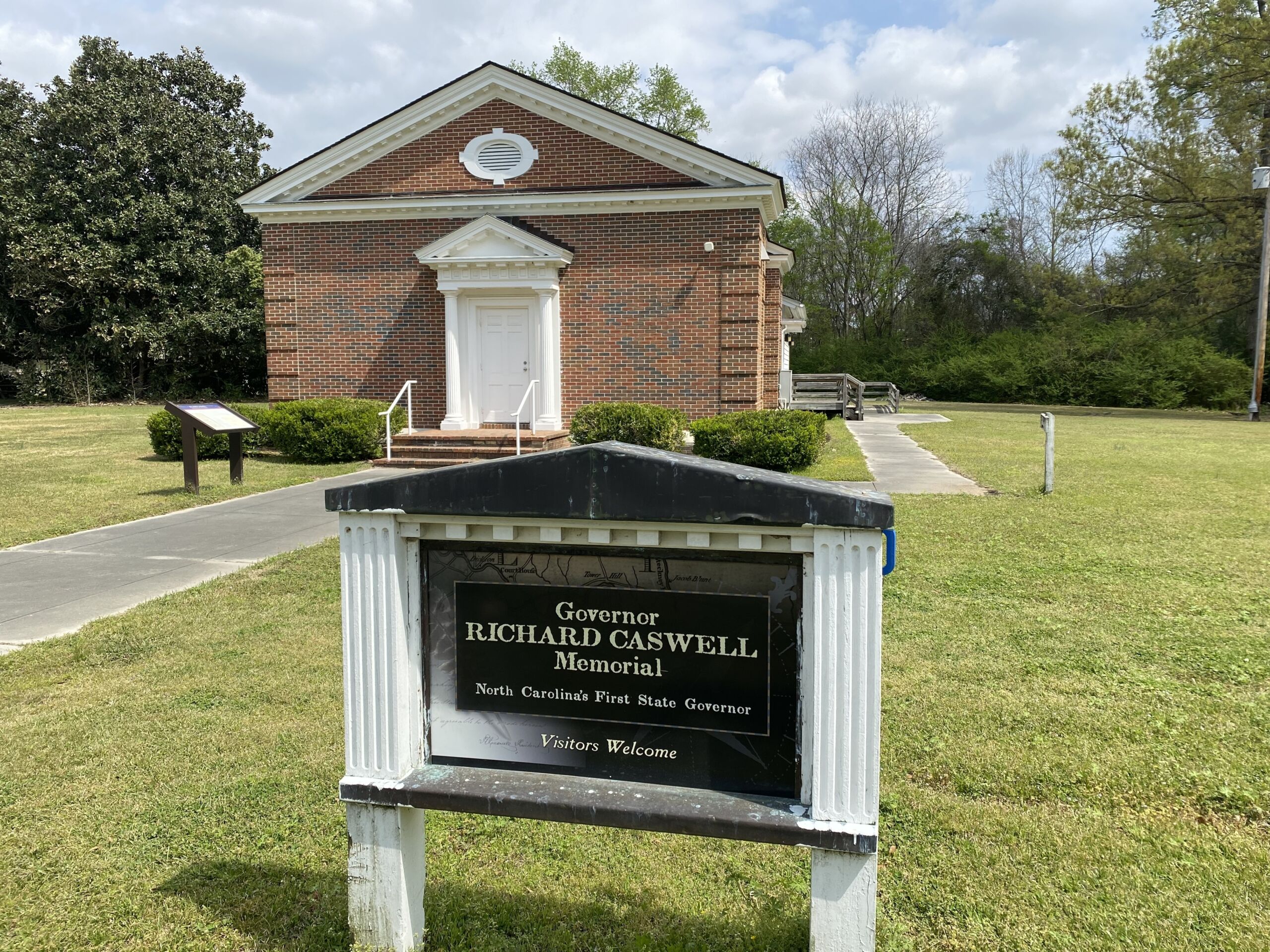
Caswell’s family home was in Kinston, and a memorial and monument stand there today in Caswell’s honor. He lived in a home, called Newington-on-the-Hill, outside of Kinston. Caswell chose his sister-in-law’s home, Harmony Hall, which still stands just east of downtown and is the oldest building still standing in Kinston (then called Kingston), to serve as the de facto state capitol as long as Caswell served as governor during the Revolution.
It is easy to look at the long list of Richard Caswell’s accomplishments as a military and political leader and consider him to be just one of those folks we hear about in history who seem to appear everywhere. He served in every provincial congress. He served in both Continental Congresses.
That doesn’t “just happen.” Leaders like that have an extra drive that pushes them to be on the front lines of whatever endeavor they undertake, and folks around them feel compelled to call on men like Caswell to lead.
We are fortunate to have had Richard Caswell at the forefront of the Revolutionary experience in North Carolina and should give him all due accolades and honor.