Breccan Thies writes for the Federalist about a dissenting US Supreme Court justice’s response to an election-related ruling this week.
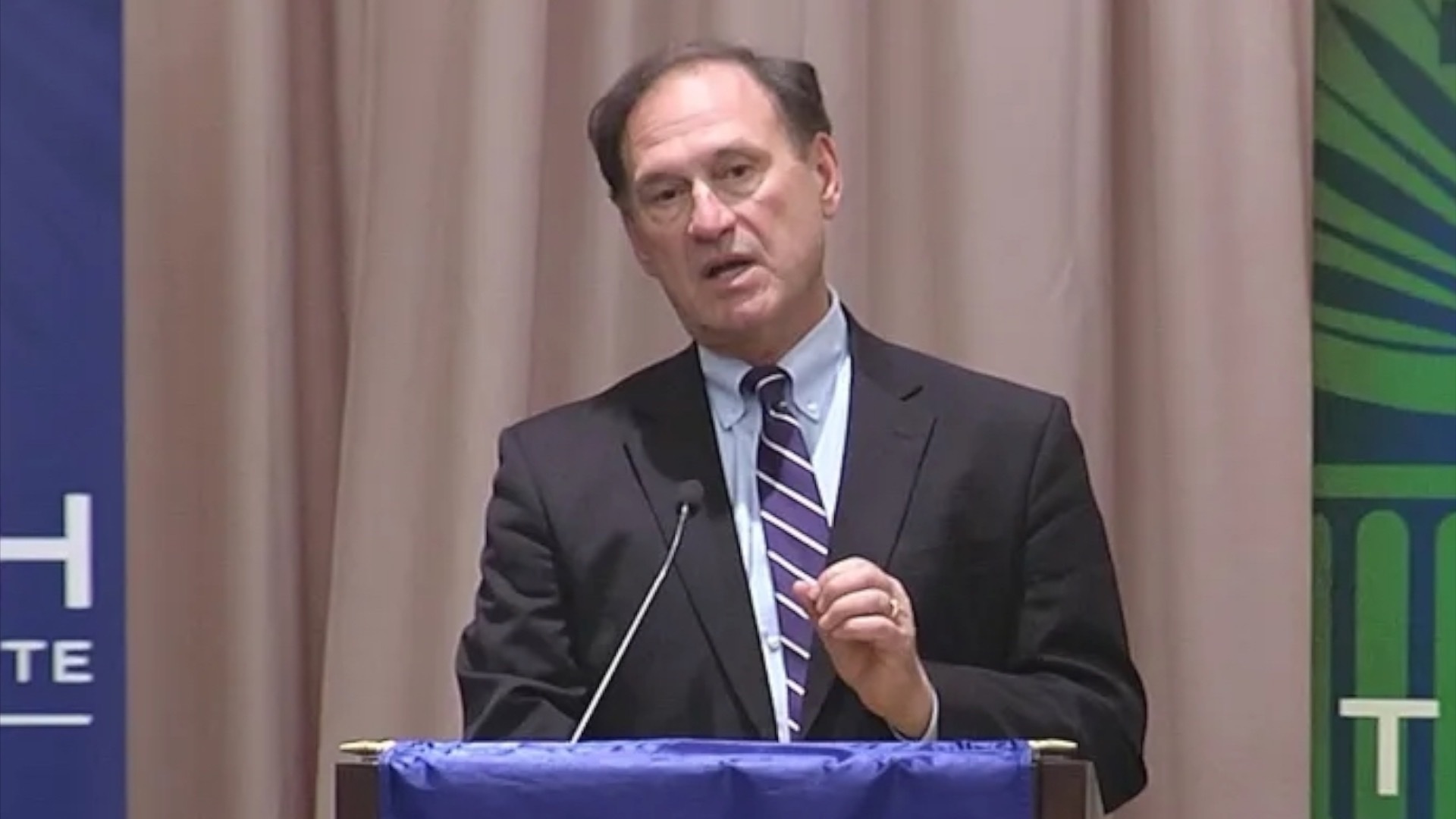
Supreme Court Justice Samuel Alito has authored numerous high-impact majority opinions this term, but the Supreme Court’s ill-advised decision allowing mail-in ballots to be counted days after Election Day gave him the opportunity to nuke that premise from orbit in a dissent.
Monday’s 5-4 decision, in which Chief Justice John Roberts and Justice Amy Coney Barrett joined the three liberals on the court, allowed Mississippi to continue counting ballots received after the federally defined Election Day, offering little by way of defining what an “election” actually is.
Alito took the opportunity to inform the Court’s majority what the term “election” actually means in law, and explain how their decision undermines election integrity and the perceptions that U.S. elections are free and fair.
Plain and simple: “Federal law designates ‘the Tuesday next after the first Monday in November’ as ‘election day,’ 3 U. S. C. §21, and provides that elections for federal office must be held on that date,” Alito wrote. There is not much getting around that, but the majority rejected federal statute, history, and precedent to determine that ballots can trickle in and be counted well after Election Day.
The act of voting is a member of the electorate both choosing his preferred candidates and that vote being submitted to the custody of an election official. That means a ballot needs to be in the hands of an election official before the polls are closed in order for someone to have actually “voted” — and statute is unambiguous as to when that is.
“The Court … concludes that the election-day statutes merely require that each individual cast a vote on or before election day. But if that is all that the election-day statutes require, there is no sense in which the electorate as a whole can be seen as making its choice on election day,” Alito wrote. “Rather, the electorate’s choice would be made piecemeal over an extended period prior to election day, and that prospect is blatantly contrary to what the election-day statutes demand.”