Key Takeaways
- Public employees have a First Amendment right to join or not join a union, and they cannot be required to pay union dues or fees as a condition of employment, as the U.S. Supreme Court made clear in its 2018 Janus v. AFSCME ruling.
- Some public workers are still unaware of this right and do not receive neutral notice about it. Workers also face difficulty separating from a union once they have joined.
- Since the Janus decision, Washington state lawmakers have reinforced preferential union access to public employees through multiple statutes. Other private organizations do not have similar access.
- In the absence of honest state notification of rights surrounding union membership, Washington Policy Center has created a practical resource public employers can use to help increase worker awareness of Janus rights.
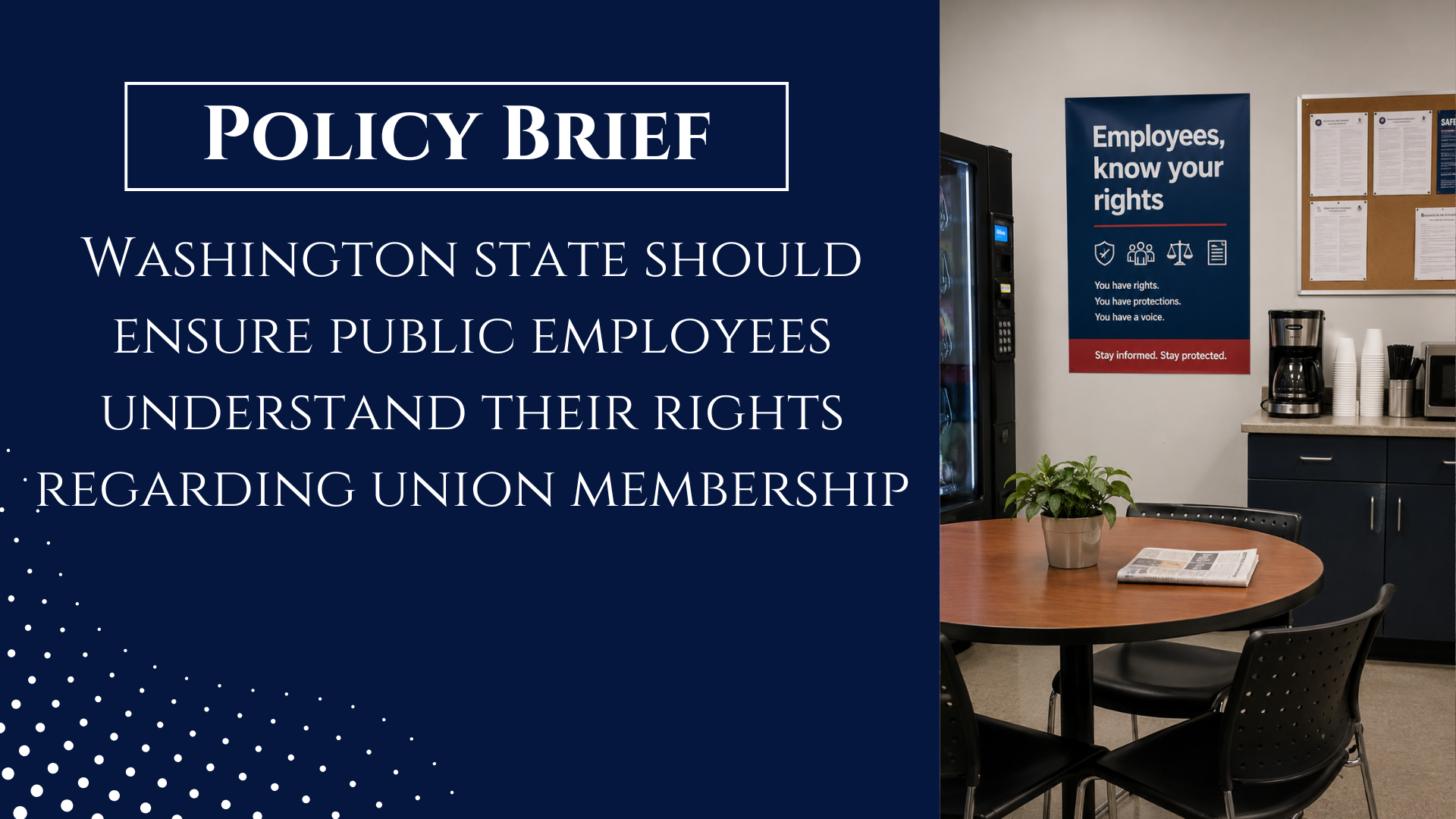
- The state itself should require public employers to notify public employees of this right at the point of hire and during onboarding. Neutral notice should be posted in the workplace.
Introduction
A worker should not be left unaware of a constitutional right when they start a taxpayer-funded job. Notification about this right should be treated with the same import and attention as are notifications about employee meal breaks, overtime and paid leave.
In 2018, the Supreme Court ruled in Janus v. AFSCME that public employees have a First Amendment right to join or not join a union. They also cannot be required to pay union dues or fees as a condition of employment. The U.S. Supreme Court held that public employees must affirmatively consent to subsidizing speech.
Washington state’s Public Employment Relations Commission likewise explains that, after Janus, public employers and unions may not require bargaining-unit employees to pay union dues or agency fees.
That should have triggered a serious awareness effort in Washington state. It did not. Instead, state law emphasizes granting union access to workers and their personal contact information.