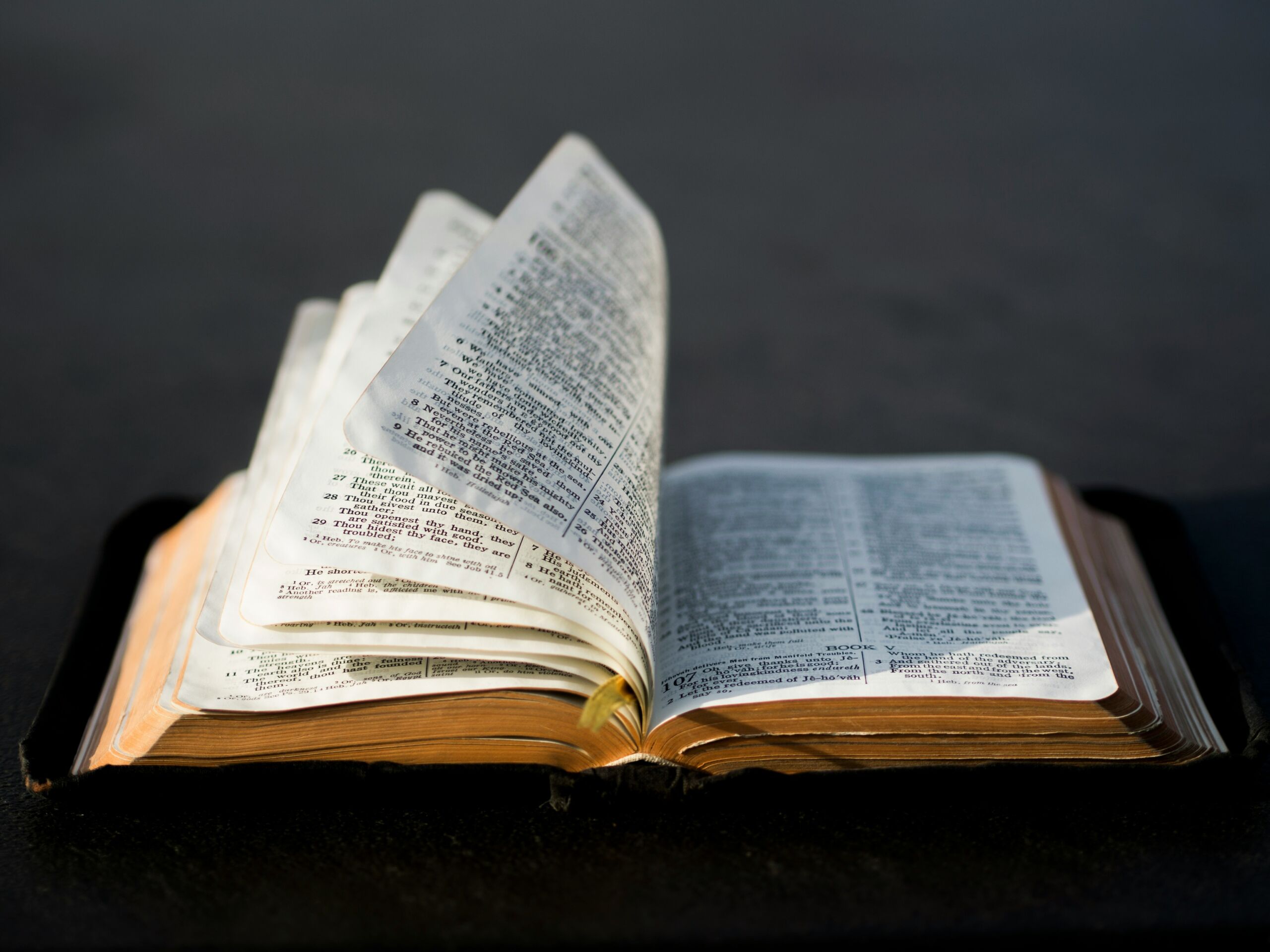
In the wake of the approval of the statewide Required Literary Works list, members of the education cartel have claimed that the decision of nearly two-thirds of the democratically elected members of the State Board of Education should be disregarded because they, the defenders of our current failed system, know best.
This group, which includes the Religious Action Center-Texas, Baptist Joint Committee for Religious Liberty, Texas Freedom Network, and Texas Impact, present themselves as high-minded scholars of literature and the constitution, but they reveal themselves to be mere mouthpieces for the Left.
According to the Texas Freedom Network, ensuring students have an understanding the Bible and the origins and history of the United States makes Texas public schools “Ground Zero in the Christian nationalist war on religious freedom in America.”
What is Christian nationalism, exactly? The Baptist Joint Committee for Religious Liberty explains that, in addition to reading the Bible in school, it is having the Ten Commandments displayed in schools, banning people from countries with high-levels of Muslim terrorists, prioritizing Christians fleeing Muslim persecution, and addressing the campaign of anti-Christian bias perpetrated by the government.
And, of course, if you wish to educate your child in a different way, Texas Impact will lobby to make sure you do not have any education freedom.
After halving the reading required for high school students, these advocates for illiteracy have taken aim at the inclusion of biblical passages in the list. Although all of their arguments are wrongheaded, the cartel’s opposition to these passages is particularly buffoonish for how they misunderstand the nature and purpose of these passages.
The public education cartel has not given up on rolling back the required works list in its entirety. It has already announced its intention to push for the Texas Legislature to restrict the Required Literary Works list to one selection per grade. Legislators should remember, though, why HB 1605 was passed: As Fort Worth ISD teachers testified during the interim Public Education Committee hearings, many districts have abandoned reading entirely. Legislators and SBOE members should assume that a double-digit percentage of students will not read anything more than what is required by law.
The detractors have many clownish arguments against studying Biblical passages, but by far the most frightening aspect of their arguments is how little they value the Bible as a cultural touchstone. The Bible is the single most important book ever written and is absolutely necessary to understand world history, philosophy, art, and culture, especially the history and culture of the United States.
In just the last few decades, a unit on important Biblical passages was a mainstay in high-achieving districts. It still is in those charter and private schools that are kicking the public schools’ butts on educational outcomes. Until very recently, the notion that knowledge of the Bible was mandatory to be both literate and educated was uncontroverted.
To the “freedom from religion” crowd, however, including the ones insisting that they are the real Christians, learning about this influence is merely a matter of private choice.
Whatever value the Bible may have, the detractors say, it is against the U.S. and Texas Constitution to teach these stories because they violate the “separation of Church and state.” Setting aside the apparently irksome fact that this language does not appear in the Constitution, the Supreme Court was quite clear in Abington v. Schempp that studying the Bible is different from leading religious activities:
Nothing we have said here indicates that such study of the Bible or of religion, when presented objectively as part of a secular program of education, may not be effected consistently with the First Amendment.
Similarly, the Texas Attorney General’s Office released an opinion outlining the statutory authority of the SBOE to include aspects of the Bible in TEKS.
The Progressives also appealed to scholarly expertise in the form of Blake Ziegler, the field organizer for the left-wing Religious Action Center of Reform Judaism in Texas. As the self-appointed representatives for Jews in Texas, Ziegler objected to using the King James Version(KJV) of the Bible for the Shepherd’s Psalm and Ecclesiastes and to teaching Lamentations 3 in the Holocaust unit. Mr. Ziegler, however, inadvertently commits the error he accuses the List of doing, which is turning classrooms into Sunday school.
Mr. Ziegler complains that the KJV is not the translation most accurate to the ancient Hebrew, but the KJV was selected because of its relevance to the cultural and literary relevance, not for its theological correctness. As mentioned earlier, the former is an acceptable use of the Bible in the public education system, and the latter is not.
Likewise, Mr. Ziegler bizarrely claims that teaching Lamentations in the same unit as “Night” is tantamount to blaming the Jews for the Holocaust, but he is importing his own religious views into the study of literature. The Book of Lamentations, as the name suggests, laments the exile of the Hebrew people into Babylon and explores the range of emotional responses to this tragedy. The speaker of Lamentations 3 reflects on how God has not answered their prayers before placing his hope in God, that His blessings and justice will return.
Unfortunately, an honest analysis of Lamentations 3 does not allow Mr. Ziegler to disparage the Literary Works list, so he has to reference a completely different part of the book, Lamentations 2, which is not part of the reading. (It’s completely irrelevant, but, for the record, the idea that Lamentations 2 explicitly blames the Hebrews for the Babylonian captivity is an exaggeration.)
In his zeal to denigrate the study of religious texts, Mr. Ziegler has forgotten the purpose and nature of literature.
The case for studying Biblical passages as part of a complete education is so airtight, that the judgement of anyone suggesting otherwise should be questioned. Of course, the opponents of these passages are aware of their great importance to American history of culture. As with the lamentable Social Studies courses we have suffered under for the last decade, the point is to make Texas students ignorant of culture as much as history.