In 2017, 49% of Americans said a four-year college degree was worth the cost, according to NBC News polling. Last year, it was down to 33%.
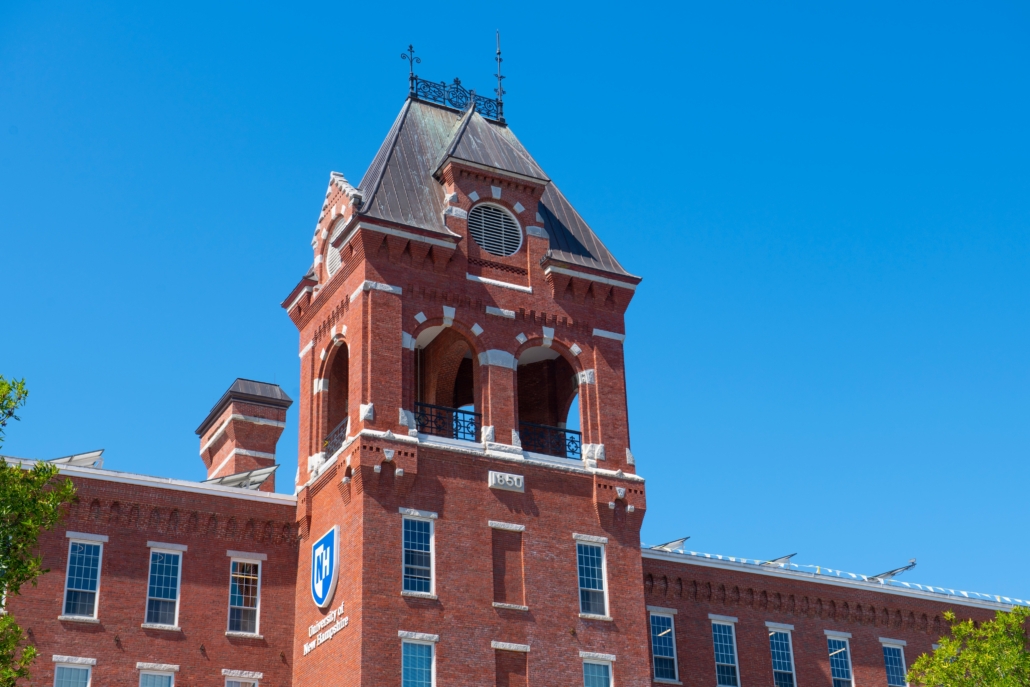
This week, the University of New Hampshire responded to those cost concerns by unveiling a pair of three-year online bachelor’s degrees available through the College of Professional Studies.
These new “applied bachelor’s degrees”offer program completion in 90-credits vs. the traditional four-year bachelor’s, which is at least 120 credits.
UNH follows Plymouth State University, which began offering three-year applied bachelor’s degrees last year.
Private colleges in New Hampshire have begun offering similar options too.
The 90-credit bachelor’s degrees are all called “applied bachelor’s degrees” to comply with a decree from the New England Commission of Higher Education (NECHE), which provides academic accreditation for colleges and universities in the region. It requires that the shorter degrees have a different name than a regular bachelor’s degree.
These non-governmental college accrediting bodies are one reason why American colleges and universities offer such similar academic programs. The agencies’ accrediting standards, which function as highly restrictive regulations, discouraged innovation and helped to create a certain academic uniformity.
When Rhode Island’s Johnson & Wales University announced in 2024 that it would offer the first in-person three-year bachelor’s degree in the United States, it made sure to point out that it had NECHE approval. Still, it subtly called out according agencies for locking in the four-year bachelor’s degree standard.
“In September, the New England Commission for Higher Education granted approval to Johnson & Wales University to offer the 90-96 credit, three-year degrees under the university’s current accreditation,” the university’s press release noted. “For more than a century the standard among accrediting bodies for higher education has been that bachelor’s degrees require a minimum of 120 credit hours of study.”
Accrediting organizations can’t take all the blame for stifling innovation. Tamara Von George, associate vice provost for online learning at UNH’s College of Professional Studies, said university offerings face numerous points of constraint.
“It’s not just accrediting that makes innovation challenging, you have federal regulations, state regulations, financial aid regulations,” she said. Higher education is quite “traditional” when it comes to organization and structure, she added.
Von George credits NECHE with realizing the need for a new type of program and accommodating universities that wanted to innovate.
“Some accreditors weren’t allowing those shorter programs, and NECHE actually stepped up and said we know you’re considering it, here’s some guidance,” she said. “I thought that was pretty progressive for higher education.”
The three-year applied bachelor’s degree, a belated innovation, is breaking out now because accrediting bodies have responded at last to market signals. NECHE authorized three-year bachelor degrees only two years ago.
Those signals have been flashing red at UNH. Enrollment at the Durham campus has fallen by 12% in the last decade, according to university numbers.
That’s the biggest drop among the three northern New England flagship public universities.
The University of Maine’s enrollment has fallen by 10% since 2015.
The University of Vermont’s enrollment is actually up by 12% in that same time.
We’ll never know how those enrollment figures might have looked had the universities been free to respond to market signals more quickly.
What’s encouraging is that they’re responding now, though extremely cautiously.
UNH’s three-year degrees are available only online and only through the College of Professional Studies (formerly Granite State College).
We’ll know more about how innovative UNH wants to be when we see whether three-year degrees begin to pop up in the university’s core undergraduate offerings.
Merrimack College and Suffolk University in Massachusetts are a step ahead of UNH, having launched three-year applied bachelor’s degrees this fall in their core undergraduate programs.
But to illustrate how heavily such innovation is regulated, the Massachusetts Board of Higher Education in June gave those degree options approval only as part of a five-year pilot program.
We can’t expect a wide variety of degree and credential offerings anytime soon if public and private regulators remain so afraid of innovation. And they’re not the only ones.
Even amid falling enrollments and collapsing trust in higher education, there is strong pressure from within academia to block these reforms. The American Association of University Professors and the American Federation of Teachers issued a joint statement in June attacking Massachusetts’ approval of applied bachelor’s degrees.
The approval of these alternative degrees “threatens academic integrity,” the unions claimed. Rather than offer students a cheaper and shorter degree option, governments should increase subsidies for four-year degrees, they argued.
Whether alternative degree programs expand or die will be determined by who wins this power struggle: unions and regulators, or students.