Chelsea Martin
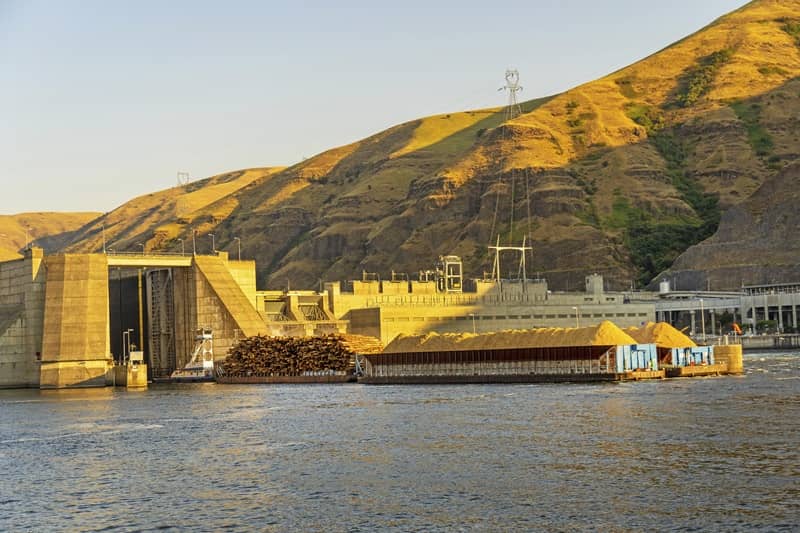
Fifteen million dollars. At least eight publicly funded efforts. All tied to one hypothetical future: a Northwest without the four lower Snake River dams.
That would be remarkable spending in ordinary times. It is astonishing now.
The Pacific Northwest is confronting warnings of a severe shortage of dependable electricity. Washington is also under budget pressure, while families and businesses absorb higher costs for housing, food and energy.
Yet this year, lawmakers appropriated another $800,000 to study how the region could replace electricity and grid services from four functioning federal dams.
A review of state and federal budgets, contracts and agency records identified more than $15.1 million in funding authorized or dedicated across at least eight efforts related to potential breaching, including work on how to replace the electricity, transportation, irrigation, water supply and recreation the dams provide. Even after a $300,000 transportation funding lapse, the documented total remains above $14.8 million, including more than $10.8 million from Washington state accounts.
The spending is scattered across agencies, budget cycles and project names, making its cumulative scale easy to miss. A detailed accounting of the projects, underlying budget documents, agency records and spending caveats is available separately.
No serious infrastructure decision should be made without study. The dams provide electricity and navigation while supporting irrigation, water supply and recreation. If Congress ever seriously considers breaching them, the consequences should be understood.
But due diligence has a limit. At some point, studying the same hypothetical future stops producing answers and starts becomes repetition.
The 2022 Inslee-Murray process concluded breaching was not feasible at the time because the dams’ benefits first had to be replaced or mitigated. Washington then appropriated $2 million for an energy-replacement analysis. When federal policy changes prevented Pacific Northwest National Laboratory from modeling a breaching scenario, it documented the dams’ historical contribution to the grid instead.
Now Washington has appropriated another $800,000 for a new contractor to examine what generation, transmission, storage, energy savings and grid-support services would be required without the dams.
Meanwhile, the Northwest’s actual energy problem is the opposite one.
Hydropower supplies about half of the region’s annual electricity and can quickly increase output when people need it most. During the January 2024 cold snap, the four lower Snake River dams topped 1,000 megawatts at peak every day from Jan. 13-16, helping keep the lights on and homes heated as electricity use hit a record. Together, the four dams can provide about 2,300 megawatts of dependable power during peak periods — precisely the kind of power the Northwest is being warned it will need more of.
A 2026 analysis by Energy and Environmental Economics projected a regional shortfall of about 9 gigawatts of dependable power by 2030 and 14 to 18 gigawatts by 2035. At the upper end, that is roughly the generating capacity of 15 plants the size of Columbia Generating Station, Washington’s only commercial nuclear plant. In other words, the region is being warned it will need vastly more dependable power, not less.
That warning should change how policymakers think about spending scarce public dollars to plan for losing existing hydropower.
Washington’s fiscal condition should, too. The state has already responded to budget pressure with spending cuts and tax increases. Now state forecasters say weaker economic conditions have cut revenue projections by hundreds of millions of dollars.
Fifteen million dollars will not solve a regional power shortage or build a major transmission line. But every budget choice has an opportunity cost. Policymakers should prioritize engineering and permitting, grid modernization, wildfire hardening, substations, transformers, energy efficiency and other infrastructure the Northwest actually needs — not another examination of how to replace infrastructure the region already has.
The public is entitled to ask what remains unanswered. What will the latest study tell us that previous work did not? How much more will be spent before policymakers decide the subject has been sufficiently examined? And why, during an energy crunch and a state budget crunch, is planning for the loss of existing hydropower still commanding scarce public money?
The Northwest does not need another plan for how to replace dependable power it already has. It needs a plan for adding more.
Enough studies. Let’s start solving the shortage.
This article was published in The Spokesman-Review August 19, 2026.
Chelsea Martin is director of government relations and communications for Modern Electric Water Company, a community-owned electric and water utility serving Spokane Valley. A former journalist and legislative staffer, she holds a master’s degree in public policy.