Here are a couple of opportunities to view historic, Revolutionary-era documents in North Carolina in celebration of the 250th anniversary of the Declaration of Independence. We encourage you to take advantage of these opportunities while you still can.
Historic copies of Declaration of Independence on display in Durham
Celebrating America’s Semiquincentennial, the “We the People” initiative by Duke University and Durham County includes three rare prints of the Declaration of Independence from the early 1800s. They will be on display over the next three months from the David M. Rubenstein Americana Collection:
- 1823 “Stone Declaration” — a full-size reproduction engraved by printer William J. Stone and commissioned by John Quincy Adams. It is considered the closest copy to the original Declaration ever created.
- 1818 — Calligrapher Benjamin Owen Taylor hand-copied a broadside reproduction of the Declaration that included facsimiles of the signatures.
- 1819 — Publisher John Binns created a illustrated broadside copy of the Declaration.
The copies have been exhibited at the Durham County Main Library through most of September. They are now on display at the Nasher Museum of Art on the Duke University campus until Jan. 3, 2027.
Halifax Resolves on display in Halifax
A copy of the Halifax Resolves document is on display at the new Halifax State Historic Site Visitors Center until Oct. 6. The Resolves document is typically displayed at the National Archives in Washington, D.C. It has been in North Carolina since April in commemoration of the 250th anniversary of the Declaration of Independence.
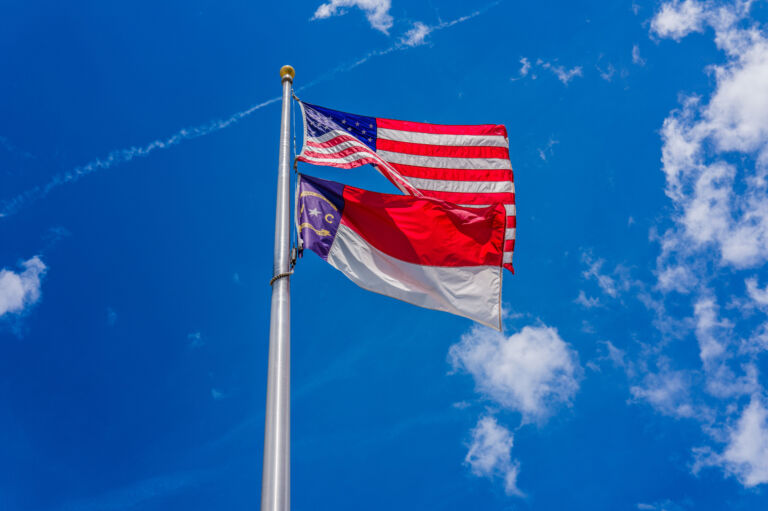
Signed on April 12, 1776, a date emblazoned on the North Carolina state flag, the Halifax Resolves was the first official action by any of the thirteen colonies on the road to independence from England and King George III. It is viewed as an important early step to the drafting of the Declaration of Independence by Thomas Jefferson, John Adams, and other Revolutionary leaders at the Second Continental Congress in Philadelphia in the summer of 1776.
After it was unanimously signed by 83 delegates from across the colony at the 4th Provincial Congress in Halifax, the Resolves was presented to the Second Continental Congress by delegate Joseph Hewes. (Hewes had also been a delegate to the Fourth Provincial Congress!)
The new Visitor Center is a great new addition to the Halifax Historic Site, and we encourage you to visit while the Halifax Resolves is still there.
The post North Carolina Revolutionary opportunities for you to enjoy appeared first on John Locke Foundation.