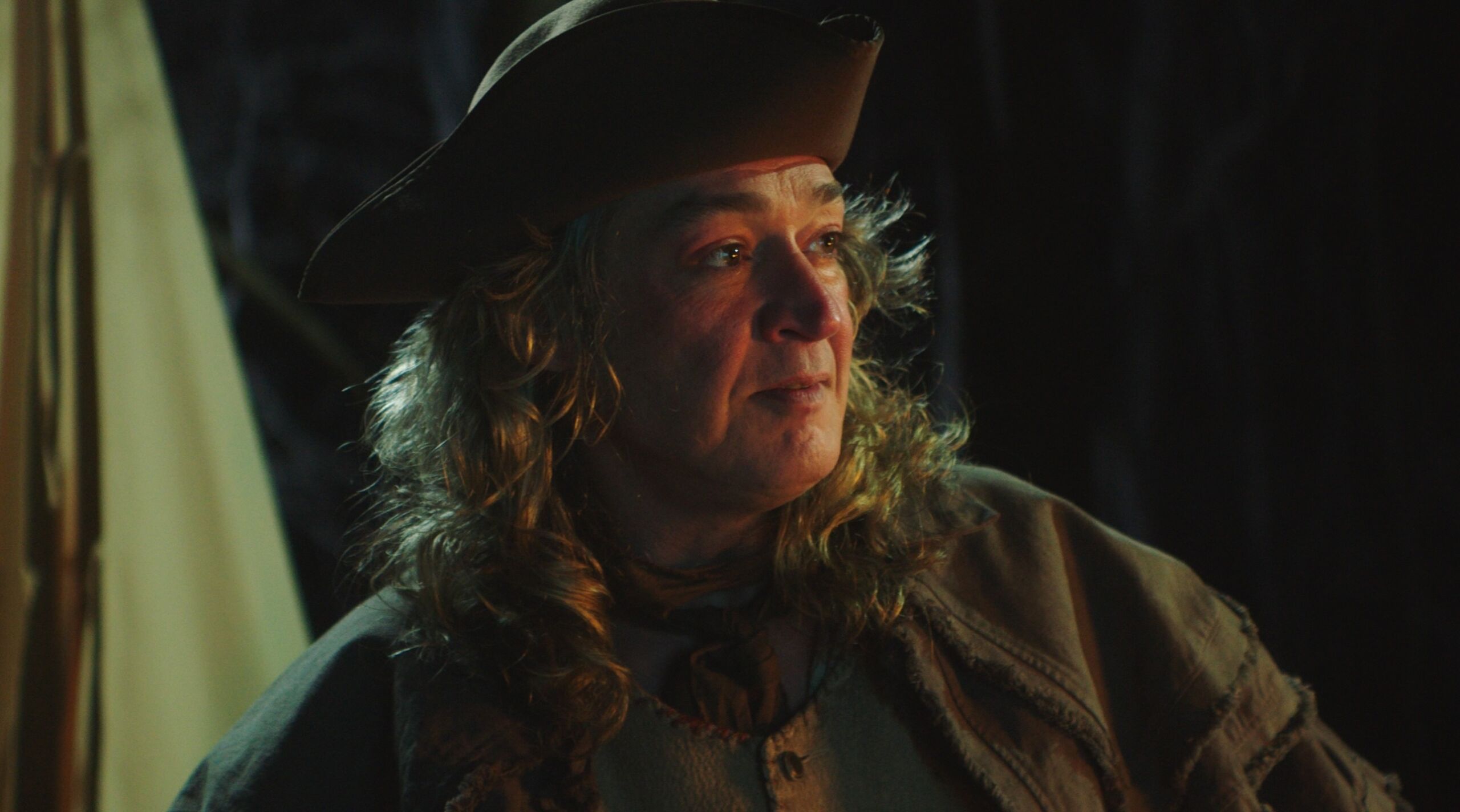
Last Friday was the 250th anniversary of the Battle of Moores Creek Bridge, fought on Feb. 27, 1776. In addition to writing about that crucial battle last year, the John Locke Foundation’s NC250 project has produced a new film highlighting the importance of that battle in the days leading up to the signing of the Declaration of Independence. Reenactments and celebrations of this important fight were held last week at the Pender County battlefield site in southeastern North Carolina.
Let’s talk about the battle and why it was so significant in American history.
The lead-up
As we have said before, the Revolutionary War in North Carolina was not as much a war between Redcoats and Bluecoats lined up in order and charging at each other as it was a civil war. It was largely a struggle between rebellious Patriot militia and Loyalist bands wearing hunting shirts and buckskin, hiding behind trees, and conducting guerilla-style surprise attacks.
After the news of the battles of Lexington and Concord got to North Carolina in the spring of 1775, the colonial assembly stood in support of the Massachusetts Patriots and pressured North Carolina’s Royal Gov. Josiah Martin into packing up and fleeing Tryon Palace. He ended up on a ship in the Cape Fear River where he worked to arrive at a strategy to quell the rebellion in his colony.
Martin’s plan was to rally Loyalist forces to join up with British troops, overwhelm the Patriots, and collectively put down the rebellion. He estimated he could rally 10,000 Loyalist troops, but this proved to be a gross overestimation, and the numbers of militia he thought would be loyal to the Crown simply didn’t show up.
It was the first sign that although there were many colonists loyal to the Crown in the colony who were willing to fight locally, there wasn’t a strong, unified band willing to stand tall and crush the Patriot rebellion.
The battle
Instead of the 10,000 Loyalist fighters that Martin assured the Crown he could produce to join with the British troops sailing from New York, the fighting band that marched from the Cross Creek area around today’s Fayetteville to rendezvous with the British was primarily made up of around 800 Scottish Highlanders.
The thousand-plus band of Patriot militia that engaged and defeated them was a jolt to British hopes of ending the rebellion quickly and easily. On that cold winter night, a little after midnight, the Highlander force arrived at Moores Creek Bridge.
Loyalist Captain John Campbell led his forces forward to cross the bridge with the Scottish cry of “King George and broadswords.” Not only did the Patriots meet them with deadly rifle and cannon fire, but they had also removed many of the planks of the bridge and covered the rest with animal fat and soap to make them slippery. The crossing was an utter disaster for the Loyalists, and those who survived fled in retreat. Patriot commander Richard Caswell’s forces pursued them and captured hundreds.
The significance
The victory emboldened the Patriot cause and led others to call for independence in Charlotte and Halifax in coming months on the road to the Declaration of Independence in Philadelphia.
It discouraged Loyalist recruitment in the region and delayed significant British operations in the South until 1780.
The Battle of Moores Creek Bridge was the first example of how the lack of enthusiasm for rallying around King George III and fighting for the Crown as a Tory would impact the war. I just recently learned of another battle that counted on Loyalists rallying to the call from the Crown. It’s called Pyle’s Defeat. I’ll write more about that next week.
We cannot overstate the importance of the Battle of Moores Creek Bridge and its boost to the American cause. It changed British strategy. It reenergized the Continental Congress in Philadelphia.
It was a major first step on the road to the Revolution!
Click below to watch Locke’s new documentary on the Battle of Moores Creek Bridge.