North Carolina Policy Solutions
North Carolina Education Lottery
Introduction The North Carolina Education Lottery was born in controversy and division, having squeaked through the General Assembly by a narrow, one-vote margin in 2005. In the almost 20 years since the legislation was…
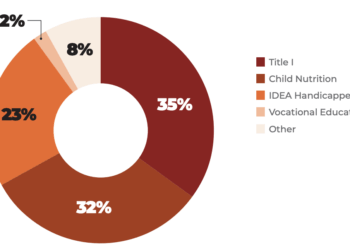
Federal Education Policy
Introduction The United States Constitution does not mention education. From our nation’s infancy, Congress generally adhered to the principle that the federal government had no authority to undertake functions and duties not…
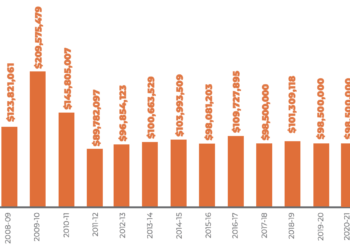
Education Facilities
Introduction The North Carolina State Constitution requires the General Assembly to provide funding for “a general and uniform system of free public schools,” but it also allows the legislature to delegate additional…
Education and the Workforce
Introduction Do North Carolinians need four-year degrees to be successful? According to projections from the U.S. Bureau of Labor Statistics (BLS) and the North Carolina Department of Commerce, employment opportunities may be…
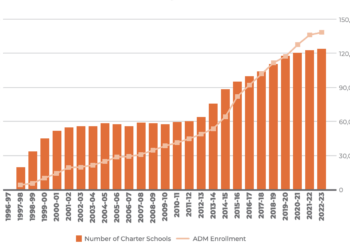
Charter Schools
Introduction The Charter School movement began with the passage of North Carolina’s charter school law, House Bill 955, NC Session Law 1995-731. Charter schools were set up for teachers, parents and pupils to establish…
Transportation Funding
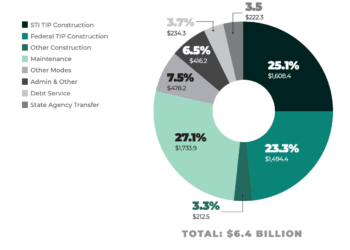
Introduction North Carolina has more than 80,000 miles of state-owned highways, more than any other state besides Texas. Unlike Texas, where state roads are one-fourth of the total 313,000 miles of roads in the state, North…
Tax Reform
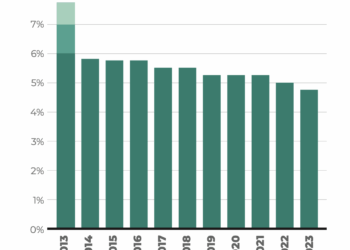
Introduction For many years, economists and tax policy researchers maintained that North Carolina’s tax system needed a major overhaul. The system was a model of hodgepodge tax policy with high marginal rates on personal and…
State Employee Benefits
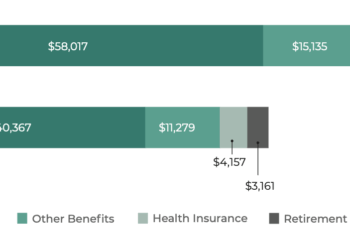
Introduction State government is the largest employer in North Carolina, with more than 320,000 full-time-equivalent positions. State employees have been working for the state for an average of 12 years. Attracting and…
Film Grants
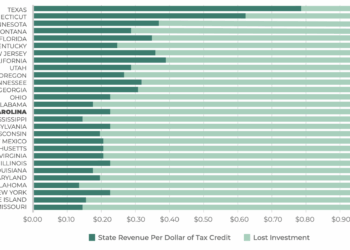
Introduction “Bull Durham,” “Last of the Mohicans,” “Dirty Dancing,” and most other beloved North Carolina films were produced without film production grants or incentives. In fact, they were made years before state officials…
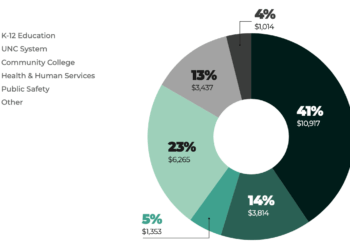
State Spending
Introduction North Carolina has one of the strictest balanced-budget requirements in the country. State law holds the governor responsible for cutting expenditures to avoid a deficit. Republican leadership in the General…
TRENDING