Written by
- In the last decade, Colorado has been the source of a disproportionate number of religious freedom cases because of state policies that do not accommodate religious practices of its citizens.
- The U.S. Supreme Court has twice struck down Colorado actions that burdened religious practices and there are a handful of additional challenges now pending.
- Sutherland Institute is providing amicus support to two ongoing efforts to challenge these types of policies in the context of the state’s universal preschool program.

Colorado has been a rich source of religious freedom cases over the past decade, and two more cases may soon be added to prior groundbreaking decisions. The state would be wise to accommodate the exercise of people of faith and religious organizations in the state and interrupt a string of disreputable Supreme Court losses.
Colorado experienced a significant political realignment in the 2000s. That has, unfortunately, seemed to usher in a period of stinginess in the state’s response to claims from religious citizens to live their faith without undue interference.
The most well-known example is the state’s effort to require a cake decorator, Jack Phillips, to create a cake for a wedding, though doing so would conflict with his religious commitments. In 2018, the U.S. Supreme Court held, 7-2, that the Colorado Civil Rights Commission showed “a clear and impermissible hostility toward the sincere religious beliefs that motivated [Phillips’] objection.” Despite this, the state continued to allow lawsuits against him until a state supreme court decision brought these efforts to an end in 2024.
In 2023, the U.S. Supreme Court ruled in favor of a website designer who also, because of her religious commitments, declined to create websites at odds with her beliefs. This time the Court held 6-3 that compelling speech by threatening the business owner with liability for discrimination would violate the First Amendment right of free speech.
There are other examples as well.
Two pending cases involve Colorado’s decision to provide universal preschool by partnering with private providers to offer the services. The law is clear that states cannot just exclude religious schools from a publicly available benefit, so Colorado is trying something different. It is tying eligibility to participate in the program to requirements that schools do things that might be at odds with their religious missions. For instance, requiring schools to have restroom policies based on gender identity rather than sex or excluding schools that have admission policies that require families to support the beliefs of the school.
Religious schools have challenged these requirements as a burden on their religious exercise.
A religious preschool in Buena Vista has asked the U.S. Court of Appeals for the Tenth Circuit to affirm their ability to participate in the program without abandoning their religious tenets. Sutherland Institute filed an amicus brief in support of their effort. The Institute will also be filing a similar brief with the U.S. Supreme Court in support of a petition to the U.S. Supreme Court filed by a group of Catholic schools.
Sutherland’s submission points out that Colorado’s refusal to accommodate these schools burdens not only the religious exercise of the school but also that of other schools and the families that desire a religious education for their children.
It also explains that using targeted regulations to accomplish the purpose of excluding religious schools does not create a meaningful distinction between Colorado’s policy and the state laws that have been struck down for categorically excluding all religious schools.
Colorado’s policies have burdened religious exercise on a wide range of issues. While the courts should hold that these policies are unconstitutional, the state has a serious responsibility to avoid such conflicts by proactively accommodating the practices of people of faith and religious organizations in the state.
Sutherland Institute policy intern Emily Payne contributed research for this article.

Insights: analysis, research, and informed commentary from Sutherland experts. For elected officials and public policy professionals.
- In the last decade, Colorado has been the source of a disproportionate number of religious freedom cases because of state policies that do not accommodate religious practices of its citizens.
- The U.S. Supreme Court has twice struck down Colorado actions that burdened religious practices and there are a handful of additional challenges now pending.
- Sutherland Institute is providing amicus support to two ongoing efforts to challenge these types of policies in the context of the state’s universal preschool program.
Read More
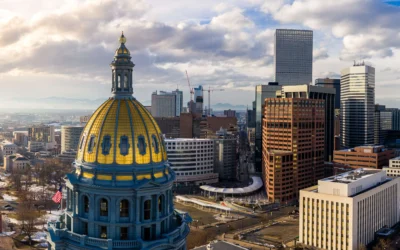
Colorado’s troubling trend on religious liberty
Colorado’s recent policies have repeatedly burdened religious citizens and schools. New court cases may again test the state’s approach to religious freedom.
Sutherland/Y2 survey: Utah voters think elected officials, not judges, should choose congressional maps
By a 63-point margin, Utah voters believe that the policymakers they elect should be making redistricting decisions over judges.
The role of the “state education agency” in today’s education reform
A look at how state education agencies are rising in importance as the Trump administration shifts power from the U.S. Department of Education to the states, and what states must prepare for in a rapidly changing policy landscape.
Connect with Sutherland Institute
Join Our Donor Network
Follow Us
The post Colorado’s troubling trend on religious liberty appeared first on Sutherland Institute.