The company selected to manage an $11 billion Medicaid home-care program discussed the job in detail with top Health Department officials – and submitted a 46-page takeover plan – two weeks before state lawmakers authorized soliciting bids for the $1 billion contract, according to email records obtained by the Empire Center under the Freedom of Information Law.
The records provide further evidence that the Hochul administration was preparing to hire the company, Public Partnerships Limited, without competitive bidding before the Legislature got involved – an effort that officials have refused to publicly acknowledge.
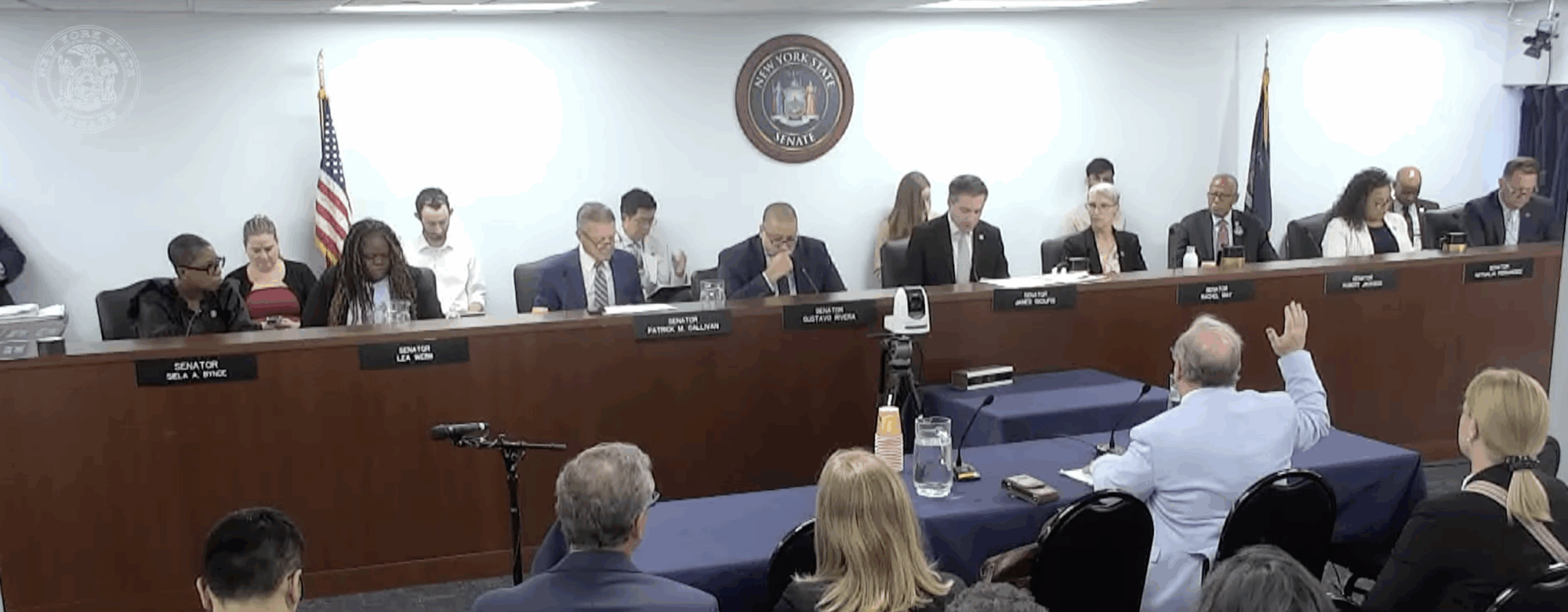
The records also conflict with testimony at a state Senate hearing from both the health commissioner, Dr. James McDonald, and an official of PPL. (The correspondence provided to the Empire Center is available here and here.)
In sworn statements at the hearing, McDonald and PPL’s vice president for government affairs, Patricia Byrnes, denied that the department and the company had discussed the Consumer Directed Personal Assistance Program, or CDPAP, before the state issued its “request for proposals” in June 2024.
“This was a procurement,” McDonald said in response to questioning by Sen. James Skoufis. “My understanding is we followed the procurement rules. The staff know you can’t talk to a prospective bidder ahead of time. Your question was direct: Do I know of anybody who had a conversation? I don’t know of anyone who had a conversation. No knowledge of that.”
The newly released records document a flurry of conversations – from April 2 to April 5, 2024 – involving at least two of the highest-ranking officials in McDonald’s department: Amir Bassiri, director of the state’s $123 billion Medicaid program, and Amanda Lothrop, Medicaid’s chief operating officer.
Byrnes, who is PPL’s vice president for government relations, also said at the hearing that there were “no conversations” between the company and the state before passage of the fiscal 2025 budget in late April 2024. She withdrew that denial in a follow-up letter, acknowledging the company had had “general communications with DOH staff” about CDPAP in late March and early April of that year.
In fact, the records show that the company’s early April communications with the state were concrete and detailed. They included two online meetings, a series of written questions from PPL, answers from the department, and PPL’s management proposal – which gave specifics on dozens of topics, including how the company would hire and train staff, handle claims, protect the security of data, enroll and communicate with CDPAP recipients, and operate its call center.
The department redacted the names of many of the state and company officials mentioned in the email exchanges, making it impossible to know if McDonald or Byrnes were directly involved. Assuming they were not, it’s unclear how they came to testify under oath about the contract without being briefed on this part of its history. (Parts of their hearing testimony are transcribed below.)
The previously undisclosed interactions between the state and PPL add to concern that the consolidation was driven by political deal-making rather than the best interests of the disabled New Yorkers who depend on CDPAP or the taxpayers who foot the bill.
The Hochul administration has framed PPL’s takeover of the program as a strategy for containing waste and saving money. However, the overhaul also paved the way for the politically powerful labor union 1199 SEIU to recruit the program’s hundreds of thousands of caregivers as dues-paying members.
CDPAP is a form of home-based care for Medicaid recipients with disabilities. The patients choose their own caregivers, who can be friends or family members, and Medicaid pays their wages. It has been one of the fastest-growing parts of the Medicaid budget, covering some 280,000 people at a cost of $11 billion as of last year.
Formerly, the state employed hundreds of companies known as “fiscal intermediaries” to handle payroll processing and other CDPAP-related duties. The idea of consolidating the program under a single, statewide contractor emerged late in negotiations over the state budget for fiscal 2025 – with a first news story broaching the idea appearing on March 29, 2024, just before the April 1 start of the fiscal year.
The newly released records indicate that contact between the state and PPL was initiated by Lothrop, who emailed a company official at 8:44 p.m. on April 2 to request a meeting.
“Apologies for the short notice, but time is of the essence as we’re in the middle of our annual budget process (which was supposed to be finished yesterday),” Lothrop wrote. “Would you be able to make time to connect tomorrow? Happy to talk at your convenience.”
PPL agreed to a meeting the next day. That led to a follow-up session on April 4, which included representatives from the governor’s office. At 6 p.m. that evening, PPL sent a list of seven questions, which Lothrop answered less than four hours later, at 9:45 p.m.
The next day, on the evening of April 5, PPL sent its detailed 46-page proposal with a cover letter from the company’s then-CEO, Vince Coppola.
In the final email in the released records, dated April 9, PPL asked the Health Department for updates. The company promised to keep the conversations confidential but warned: “[O]ur lobbyist is starting to hear chatter.”
Two days later, on April 11, the New York Post and the Albany Times Union reported that the state was thinking of hiring PPL as statewide manager of CDPAP without competitive bidding.
In closed-door talks, the governor and legislative leaders agreed on a plan that would require the Health Department to solicit competing proposals, but on limited terms. Among other provisions, applicants had to show that they already had a similar statewide contract in another state, a standard that few companies other than PPL could meet.
On April 19 – two weeks after Lothrop’s initial email to PPL – legislation authorizing the consolidation plan was introduced as a last-minute budget amendment in the Legislature. The bill containing that amendment passed both houses later the same day, leaving virtually no time for public comment on its details.
The Health Department opened bidding in June and in September named PPL as the winner of a five-year contract worth $1 billion. Despite widespread protests from the program’s users and multiple lawsuits seeking to block the transition, PPL began taking over in April 2025.
The terms of PPL’s April proposal differ in some ways from the final contract. For example – given the large scale of CDPAP – the company recommended a staggered transition over 20 months. The final deal called for PPL to re-enroll all 280,000 consumers and 350,000 caregivers on a single day, April 1, 2025, just six months after it was selected as the contractor. A court order delayed the re-enrollment deadline by another four months.
The company also estimated that it could save the state as much as $200 million of the program’s annual administrative costs, which were said to be $500 million. The Hochul administration now says that the overhaul is saving $1.2 billion, although it has not clarified how it arrived at that figure.
The Empire Center requested copies of the state’s early communications with PPL – from both the Health Department and the governor’s office – on Sept. 8, 2025, shortly after Byrnes changed her testimony to acknowledge that those communications existed.
The governor’s office provided a single email, dated April 4, 2024, in which Lothrop set up what is now known to be the second online meeting with the company.
The Health Department released the records to the Empire Center on Feb. 20, more than five months after the center’s request.
It blacked out the names of several Health Department officials and every representative of PPL other than Coppola, the company’s former CEO. The department also redacted large portions of the company’s management proposal, including any reference to how the company would be paid.
The department’s records access office said these redactions were necessary to avoid disclosing trade secrets, compromising the security of information technology, invading anyone’s privacy or endangering anyone’s life and safety. The Empire Center has filed an appeal arguing that the redactions went beyond what was necessary or permissible under the Freedom of Information Law.
A response to that appeal is due later this month.
Sen. Skoufis: Did you have any conversations with PPL prior to the [request for proposals] going out?
Commissioner McDonald: No.
Q: Did anyone on your team have conversations with PPL prior to the RFP going out?
A: I don’t know. I have no way to know that.
Q: I’d imagine you’d be aware if someone on your team was talking to a prospective bidder on this massive contract, wouldn’t you?
A: There’s over 5,000 people who work at the New York State Department of Health. You asked an honest question …
Q: Middle management’s not going to pick up the phone and call PPL’s CEO. This would be someone at the highest levels of DOH, presumably, if a conversation did take place.
A: This was a procurement. My understanding is we followed the procurement rules. The staff know you can’t talk to a prospective bidder ahead of time. Your question was direct: Do I know of anybody who had a conversation? I don’t know of anyone who had a conversation. No knowledge of that.
Sen. Skoufis: When was PPL’s first conversation with the Department of Health or the executive branch last year?
PPL Vice President Byrnes: Can you be more specific as to what you are talking about with regards to that?
Q: The executive budget process begins with the introduction of budget bills in January. The consolidation of FIs didn’t really – at least to our knowledge – begin in earnest until April. So when was the first outreach made to PPL? When was the first communication between your company and state government on this matter?
A: For the purposes of the RFP process we did not have communication with the DOH or the governor’s office.
Q: That wasn’t my question. Not necessarily specific to the RFP process, when was the first communication between your company, your executives, and state government officials about consolidating fiscal intermediaries in New York.
A: There was no conversations. We were just following the legislative process.
Q: So you’re telling me you and your peers at PPL – the CEO down to you, down to every other employee at the firm – did not have one single phone call, email, text, any conversation, prior to enactment of the budget in May?
A: Correct.
Q: Okay. Were you aware that PPL was – as I mentioned earlier to the commissioner – in a bill draft, was actually named in a no-bid proposal to consolidate fiscal intermediaries? You were completely unaware that that was happening?
A: Correct.
Q: That’s astonishing.