
With the midterm primary season kicking off, we need to face an uncomfortable fact: Gen Z is losing faith in voting. AP-NORC polling data shows that young Americans are the least likely to see voting as important, reflecting a generation shaped by political polarization. The polling data revealed that those ages 18 to 19 were the least likely to believe that voting is extremely important at 36% compared to 64% of those ages 45 to 59.
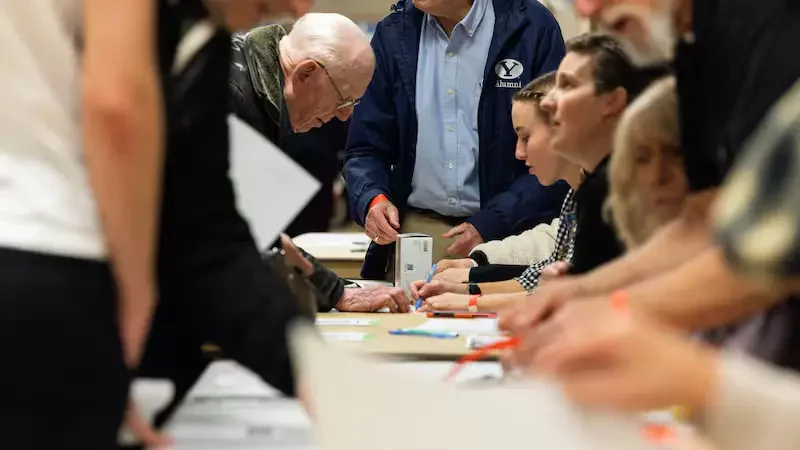
The data is concerning, but it is not surprising. Apathy towards voting and distrust of the election process have become common among Gen Z. Evidence of this can be seen at the polls. Despite Utah’s need for poll workers, Gen Z doesn’t turn out. Former US Election Assistance Commissioner Donald Palmer stated that “the vast majority of poll workers in 2024 were over the age of 40, with nearly 60% ages 61 and older” in a Utah News Dispatch report.
Though the stats on Gen Z’s election habits may be dismal, the outlook is more positive regarding their support for democratic principles. A 2025 study found that 81% of young Americans “agree or strongly agree on the importance of having elected leaders chosen in free and fair elections.”
Gen Zers’ doubts about the importance of their vote are real, but this is not the time to sit back and fall into apathy. If Gen Z were to step up and get involved in the election process, they would not only build trust but also help solve a growing problem: the lack of qualified election officials.
Qualified election administrators are in short supply, yet election administration as a career path is rarely discussed. Most students who want to work in politics or public policy are completely unaware that election administration could be a career for them. This needs to change, and Gen Z, aged 14 to 29, is the generation to start with.
Educational programs in high school and college that introduce students to the field of election administration remain surprisingly rare. That’s a missed opportunity. Not only for students seeking meaningful public service careers, but for the long-term strength of our elections.
There are some existing programs, such as the Student Election Judge Program in Colorado, which allows high school students to serve at polling places, giving them hands-on experience in how elections are conducted. At the collegiate level, Weber State University offers the Olene Walker VOTE Certification, which equips future election administrators with six rigorous courses before they become certified. But educational programs like these are the exception, not the rule.
If we want Gen Z to step up and help restore and expand the pool of election workers and officials, they must receive adequate investment. We cannot expect Gen Z to engage in the electoral process if they are never invited to participate in the work itself. If we want to increase trust in institutions among young Americans, they must have the opportunity to help operate them.
That means presenting election administration not as an afterthought, but as a viable, honorable, and impactful career path. When Gen Z is equipped with real training, real responsibility, and real opportunity, we strengthen both the generation’s future and the future of our country’s elections. The next generation can’t simply inherit democratic systems; they must be prepared and inspired to lead them.