Shawn Fleetwood writes for the Federalist about an interesting exchange at the nation’s highest court.
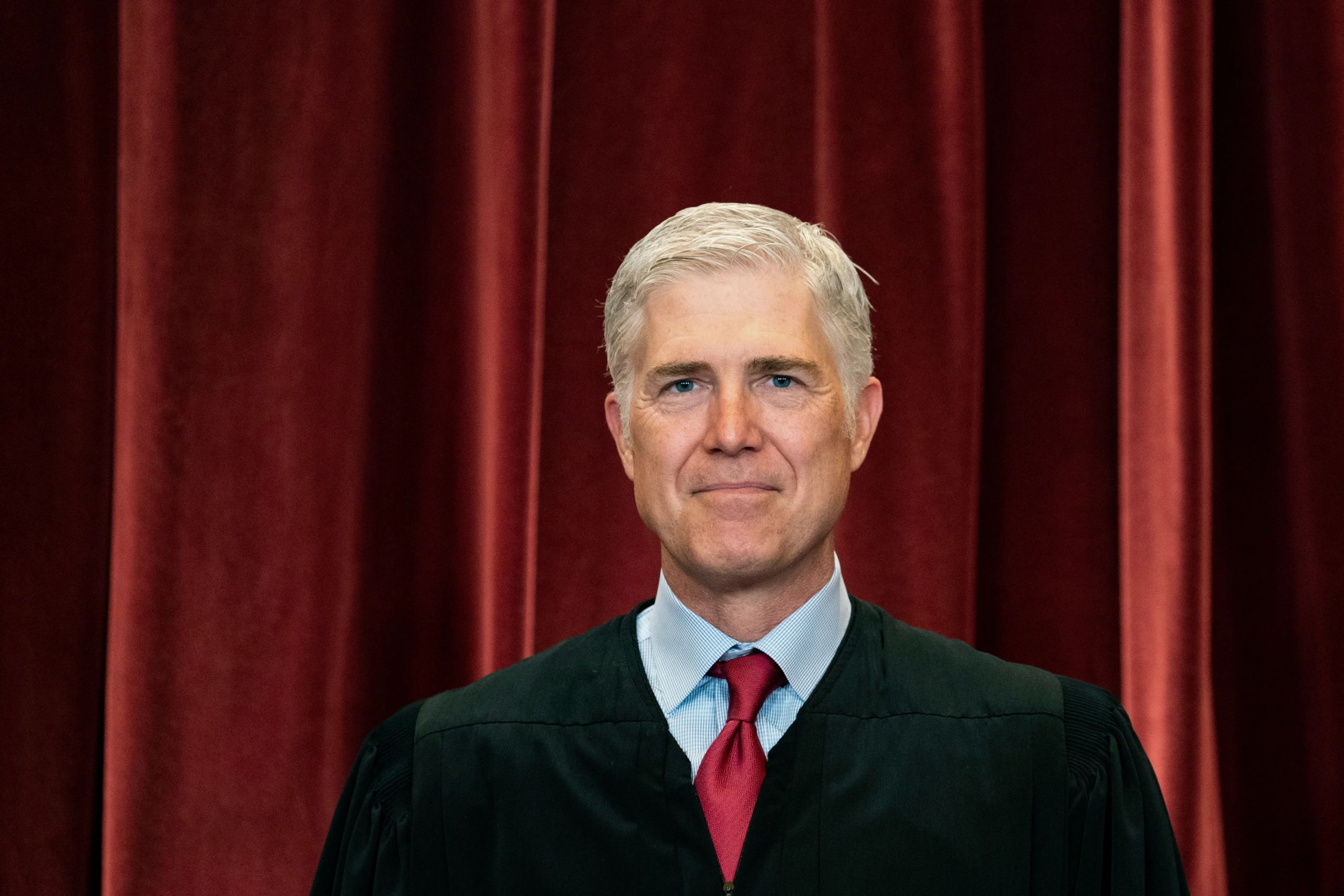
Associate Justice Neil Gorsuch dismantled a lawyer’s illogical arguments about a president’s executive power during a high-stakes Supreme Court hearing on Monday.
The moment came during oral arguments for Trump v. Slaughter, a case centered around President Trump’s firing of Rebecca Slaughter, a Democrat member of the Federal Trade Commission. As The Federalist previously reported, the high court will weigh the constitutionality of statutory limitations on a president’s ability to remove members of so-called “independent agencies” and whether to overturn longstanding precedent established in its 1935 Humphrey’s Executor v. U.S. decision.
During his questioning of Slaughter’s counsel, Amit Agarwal, Gorsuch sought to get clarity on the defendant’s arguments surrounding a president’s “conclusive and preclusive power[s].” In a straightforward manner, the Trump appointee asked Agarwal, “You agree, I assume, the president is vested with all the executive power?”
While Agarwal initially signaled his agreement with Gorsuch, he seemingly backtracked on fully standing behind his answer in a subsequent back and forth with the justice. …
… Seemingly reeling from the justice’s questions, Agarwal plainly said that a president “can’t break the law for sure.” He then apparently attempted to wiggle out of the tough probing by raising the question of whether a president must “be vested with statutory authority to actually enforce, directly enforce” the law but was cut off by Gorsuch, who noted, “I’m not asking whether he has to bring the indictment — I’m asking whether he has a duty to faithfully execute the laws.” …
… Seemingly not convinced by Agarwal’s arguments, Gorsuch attempted to further pin down how far Slaughter’s attorney believes these statutory limitations on the president’s removal authority should go under his theory. After a short exchange on presidential authority, the Trump appointee “put [his] cards on the table” and suggested that Agarwal’s illogical arguments appear to stem from an unspoken belief that Humphrey’s Executor “was poorly reasoned.”
“I’m wondering … — I’ll put my cards on the table — maybe it’s a recognition that Humphrey’s Executor was poorly reasoned and that there is no such thing in our constitutional order as a fourth branch of government that’s quasi-judicial and quasi-legislative.”