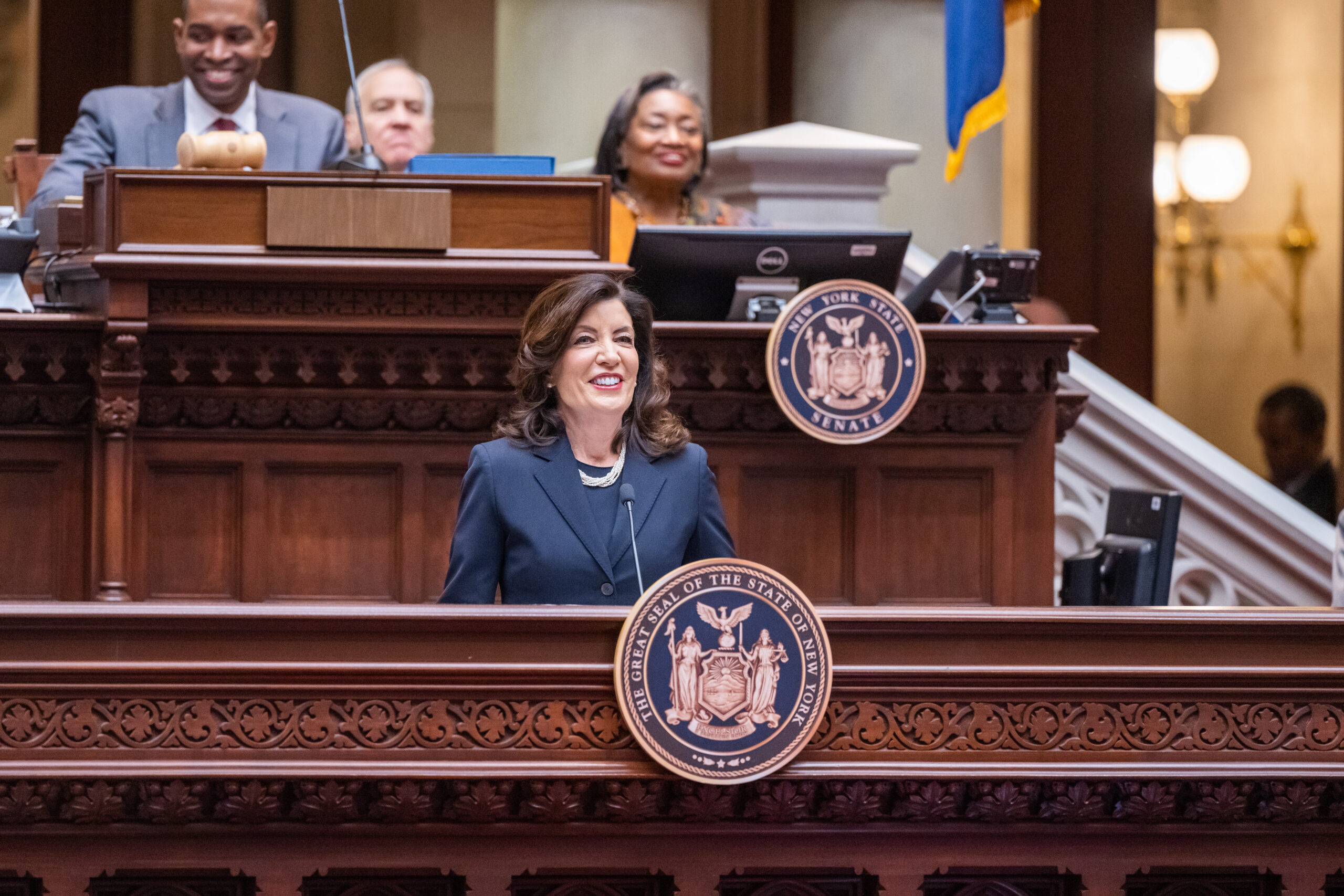
For the fourth year in a row, Gov. Kathy Hochul has used the word “unsustainable” to describe her own Medicaid budget.
Give her credit for honesty — but not sound fiscal management.
Over the four annual budgets on her watch, the state’s share of Medicaid costs has soared by 60%, or roughly five times inflation.
Her latest proposal would add another 10%.
With federal aid included, total Medicaid spending in the next fiscal year would be $28 billion higher than when Hochul took over — and that’s before the Legislature makes its inevitable additions.
So what are those billions buying for the people of New York?
It’s not more coverage: Medicaid enrollment is coming down, as it should be in the post-pandemic period.
Nor is the quality of care noticeably improving: The average federal rating for New York hospitals remains stuck in the basement at 2.5 of 5 stars, making the state 48th among the 50.
What Hochul is mostly buying is political peace: The more tax dollars she pours into Medicaid, the less election-year blowback she can expect from the deep-pocketed health-care lobby and its legion of allies in Albany.
Of course, that means cutting corners on one of her most important duties as governor, which is to manage the sprawling Medicaid program for the maximum benefit of patients and taxpayers.
Instead, she’s prioritizing the interests of the health-care industrial complex, which means higher fees, bigger subsidies and less accountability.
This year’s proposal includes $1.5 billion to cover fee boosts for hospitals and nursing homes and another $1 billion for health-care capital grants.
Hochul is claiming her spending hikes are needed to make up for cuts in federal health funding, but that argument won’t wash.
For one thing, the changes enacted in President Donald Trump’s One Big Beautiful Bill Act merely slowed the growth of Medicaid spending, rather than cutting it in absolute terms.
Plus, some of its key provisions — including a work requirement for able-bodied recipients — don’t take effect right away.
For now, New York’s federal Medicaid funding is expected to go up, not down, in the next fiscal year, by $3 billion or 5%.
About the Author