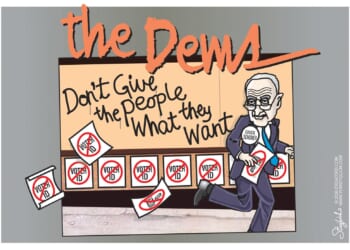
People ask me how they can weigh in on bills that we write about during the legislative session. For some, it keeps them from resorting to throwing shoes at the TV.
First, a quick refresher: Bills in Washington state, which represent a policy proposal or idea for a law, are introduced in either the House or the Senate. Some get public hearings. Fewer survive executive session (where committees vote). Fewer still reach the floor for a vote by the full chamber. If a bill clears that hurdle, it crosses over to the other chamber and runs the same obstacle course again. If it survives that, it lands on the governor’s desk to be signed into law — or vetoed (which happens, but not as often as advocates on either side might hope).
Schoolhouse Rock taught me to sing about bills. But the “I’m Just a Bill” video did not teach me the practical part: How regular people can tell lawmakers, “Yes, please,” “Absolutely not,” or “I’m concerned — here’s why.”
So let me pick up where Schoolhouse Rock leaves off — in Washington state, at least.
Step 1: Find the bill
Start with the bill’s information page on the Legislature’s website and search by bill number and biennium here:
https://app.leg.wa.gov/billsummary/?BillNumber=&Year=2025&Initiative=false
Enter the bill number and the biennium it’s being proposed in.
Once you’re on the bill’s individual bill page, look on the right side for the participation tools.
Step 2: Choose how you want to weigh in
The state gives you a few different ways to speak up — and they do different things.
Option A: “Comment on this bill” (message your district legislators)
This is the simplest and smallest-reach option. You can send a comment that goes to your own legislators (the ones who represent your district). You’ll verify your legislative district, choose a position and write a short message.
This option usually appears even if the bill is not scheduled for a hearing — because it isn’t tied to a meeting. It’s the “tell your lawmakers what you think” lane.
Option B: “Position noted for the record” (committee sign-in)
This is different from commenting. This is where you sign in for a specific committee hearing and choose a postion, PRO/CON or OTHER, so your position is included in the committee record for that agenda item.
Important: If the bill is not scheduled for a hearing, you typically can’t do committee sign-in yet — because there’s nothing to sign in for. Committee sign-in is attached to a specific meeting and agenda item.
Key detail: Committee sign-in closes one hour before the hearing starts. If you try five minutes before, the door is locked.
Option C: Testify (live) — in person or remotely
If you want to testify, you sign up through the same committee sign-in system. You can testify in person or remotely when the committee allows it.
Three things to know up front:
-
Registration closes one hour before the hearing.
-
Remote participants receive a unique Zoom link and instructions they’ll need for the hearing.
-
Committees run on time limits. Signing up doesn’t guarantee you’ll be called to speak, but it does put you in the queue.
Option D: Submit written testimony
If you can’t (or don’t want to) testify live, written testimony is an option, although some lawmakers tell me there isn’t time to read everything. Still, it’s a strong option, and it gives lawmakers more information if they are seeking it.
Unlike the limited timeframe associated with live testimony, you can provide written submissions before and up to 24 hours after the start of the hearing. You can also provide both live testimony and written to get the best return on your time investment. And since live testimony is often limited to just one minute, a written submission is a good way to include details and link to supporting information.
Step 3: Track the bill (so you don’t miss the moment)
Bill pages also let you subscribe for notifications that tell you when a bill is scheduled for a hearing or moves to a new stage. That matters. In Olympia, timing is everything — and the best opportunities to weigh in are often tied to a specific committee agenda.
Final Schoolhouse-type thoughts
People on all sides of an issue are encouraged to weigh in — not because lawmakers “follow the crowd,” but because participation helps them gauge attention, unintended consequences and real-world impact. It’s a good way to make your opinion known — and a better option than throwing shoes at the TV when you hear a proposal you don’t like.
Schoolhouse Rock gave us a melody. The state’s participation tools give you a microphone — but only if you grab it before submission windows close and the “bill” starts singing without you.