Gov. Josh Stein recently celebrated what his Commerce Secretary described as a “record-setting year for job creation” in North Carolina, citing tens of thousands of job announcements statewide. But announcements aren’t jobs — and the long-term results of the state’s Job Development Investment Grant (JDIG) program make that distinction clear.
The JDIG program may be setting records in press releases, but not in performance
As companies promise more positions than ever, the state’s own data show that actual job creation has barely increased, while most JDIG projects ultimately fail. The JDIG program may be setting records in press releases, but not in performance.
JDIG’s poor track record
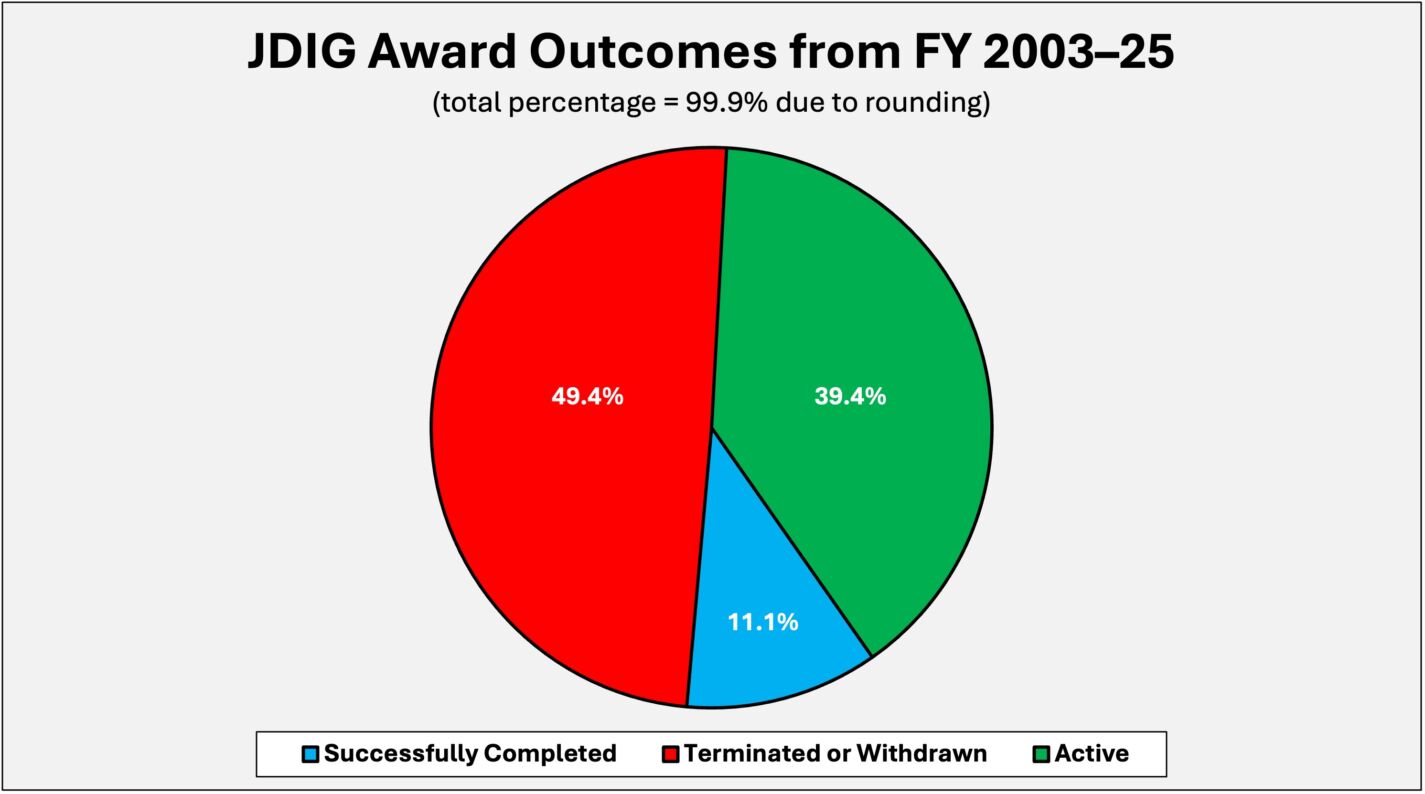
North Carolina’s recently released Economic Development Grant Report for fiscal year (FY) 2025 indicates that since the JDIG program was created in FY 2003, 449 JDIG agreements have been awarded. Of those, 177 remain active, 50 have been completed successfully, and 222 have been terminated or withdrawn. In other words, nearly half — 49.4 percent — of all JDIG projects have already failed.
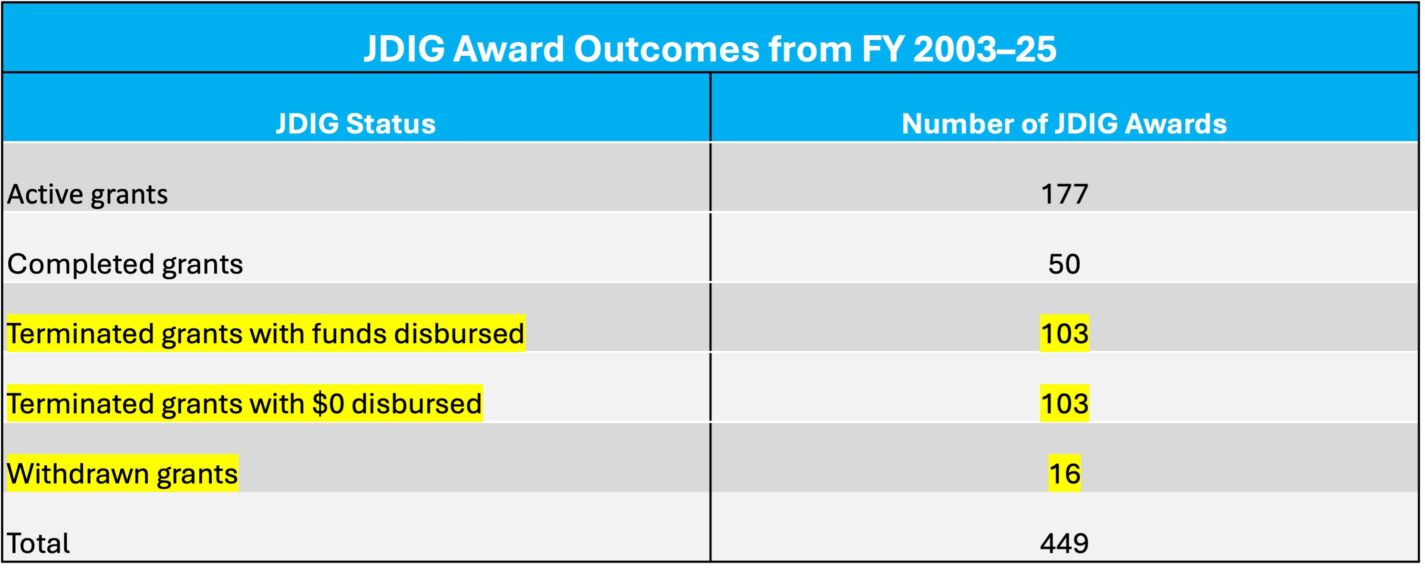
The picture grows even more concerning when examining only the projects that have reached an endpoint. Of the 272 non-active JDIG agreements, only 50 have been successfully completed. The remaining 222 — more than four out of five — were terminated or withdrawn.
This represents an 81.6 percent failure rate among concluded projects. No credible economic development strategy should have an 18.4 percent success rate.
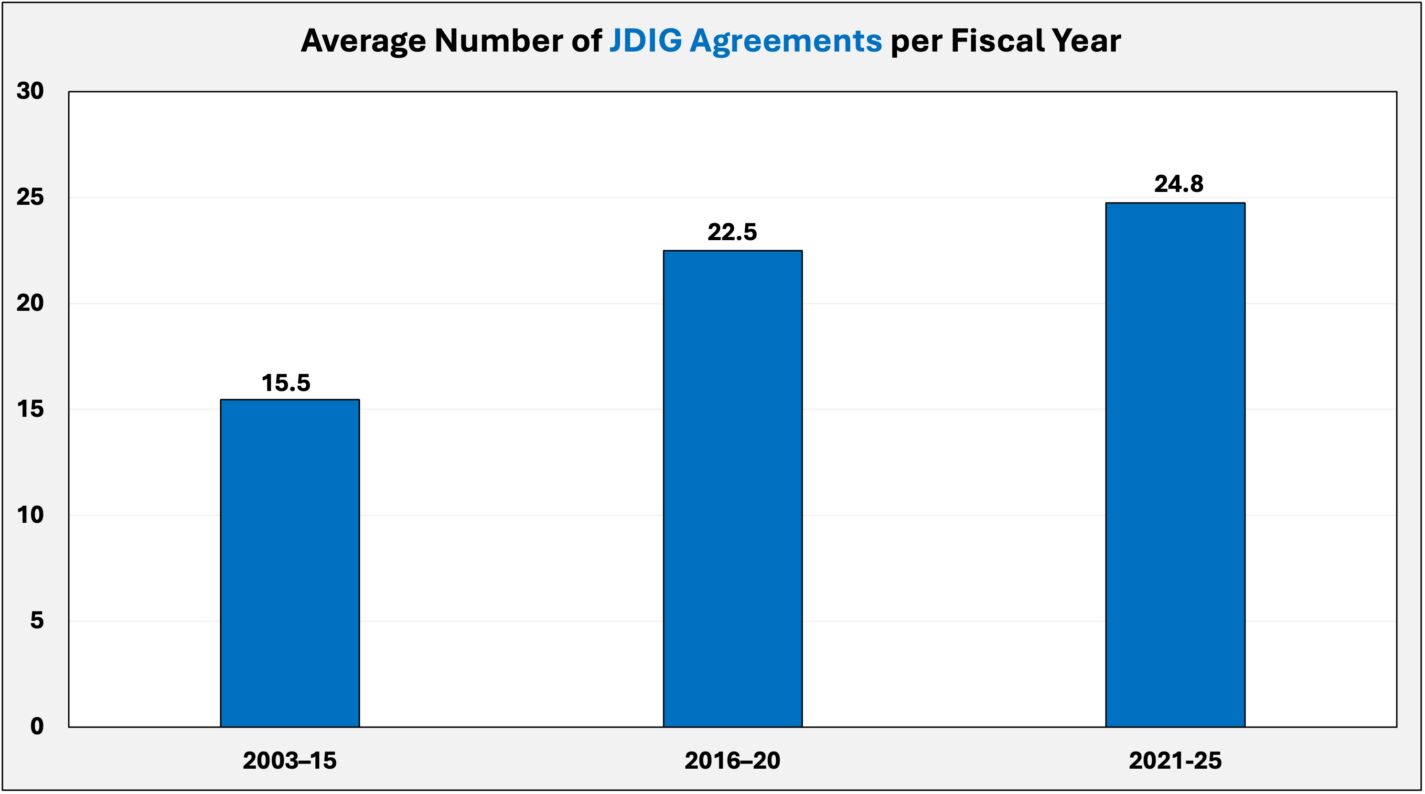
The JDIG program itself has grown significantly over time. North Carolina approved an average of 15.5 JDIG agreements per year from FY 2003–2015. The average climbed to 22.5 agreements from FY 2016–2020 and rose again to 24.8 agreements from FY 2021–2025.
As the program has expanded, so have the state’s financial commitments. From FY 2015 to FY 2025, the remaining potential liabilities to participating companies grew from $624 million to more than $3.1 billion, substantially increasing North Carolina’s long-term financial exposure.
Jobs announced versus jobs created
If JDIG were an effective driver of job growth, we would expect job creation to rise alongside job announcements. But the data tell a different story.
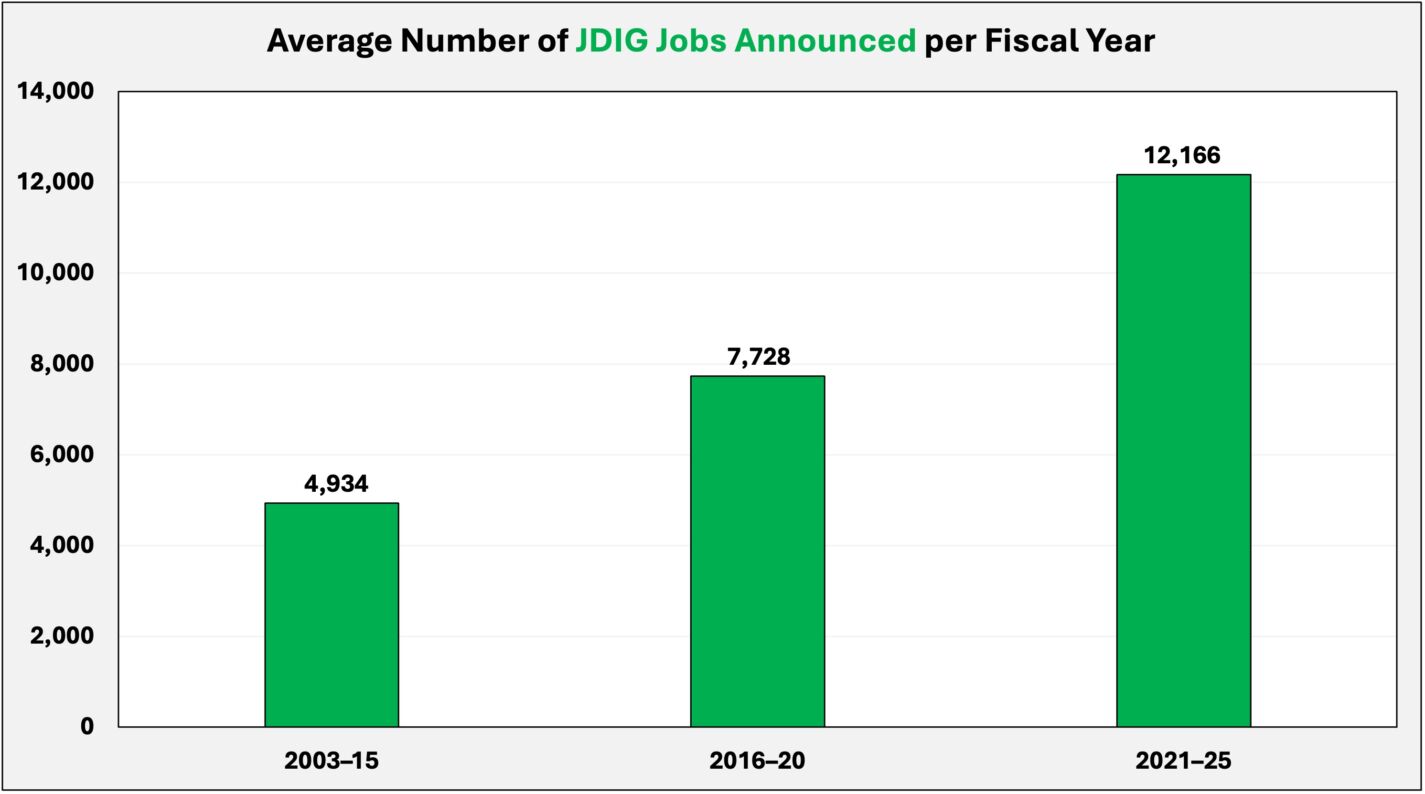
JDIG job announcements have steadily accelerated over time. From FY 2003–2015, JDIG agreements announced an average of 4,934 jobs per year. The average rose to 7,728 jobs from FY 2016–2020 and then surged to 12,166 jobs from FY 2021–2025.
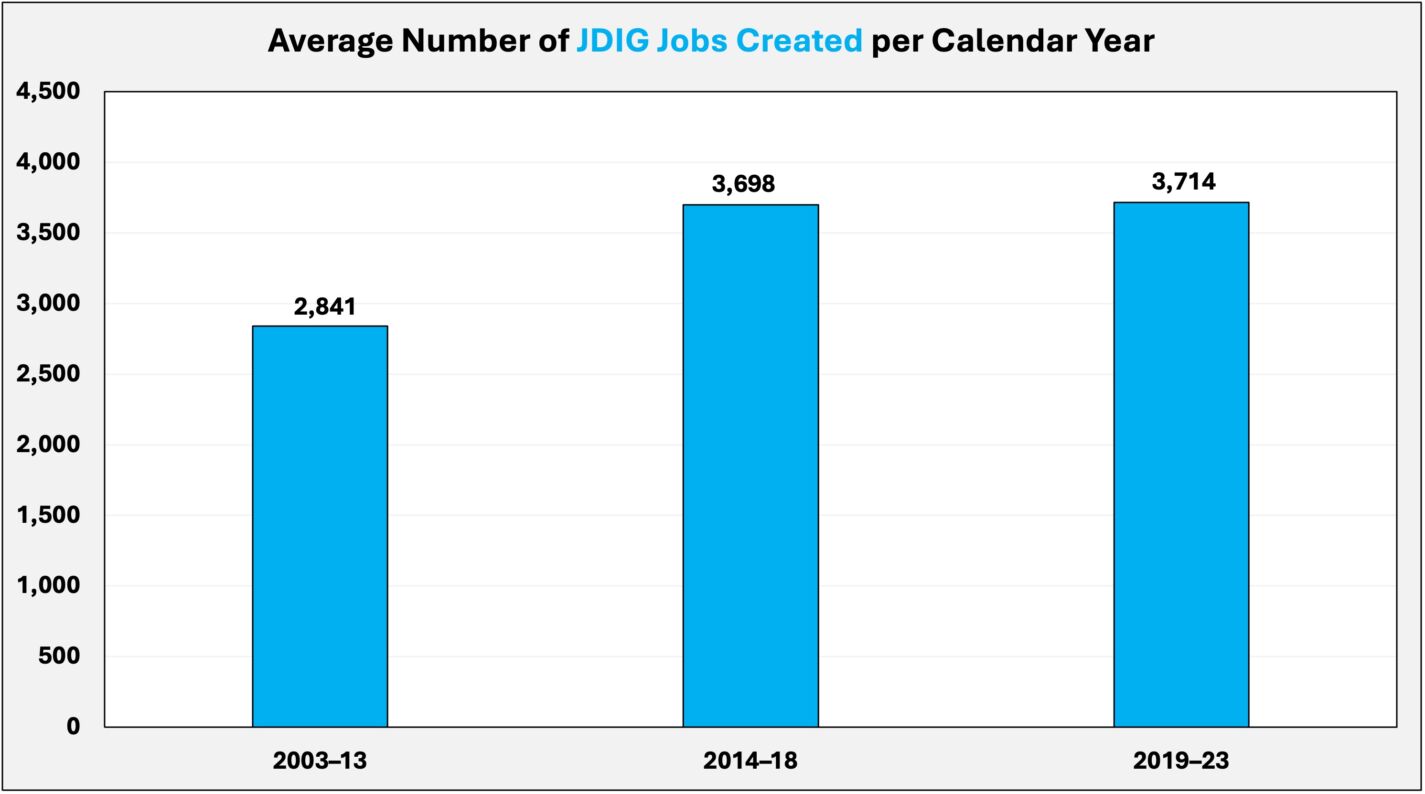
Unfortunately, actual job creation has not followed the same trajectory. From calendar years 2003–2013, JDIG projects created an average of 2,841 jobs per year. The average increased to 3,698 jobs from 2014–2018 and rose only marginally again to 3,714 jobs from 2019–2023.
In other words, while job announcements have more than doubled over time, the number of jobs actually created has barely budged. Although job creation necessarily lags behind job announcements, the widening gap cannot be explained solely by timing.
Instead, it reflects the growing share of JDIG agreements that ultimately fail to reach completion.
Failed agreements are on the rise
The explanation for the gap between jobs announced and jobs created appears in JDIG’s termination and withdrawal trends. The first terminated JDIG agreement occurred in FY 2006, and failures have become more common as the program has expanded.
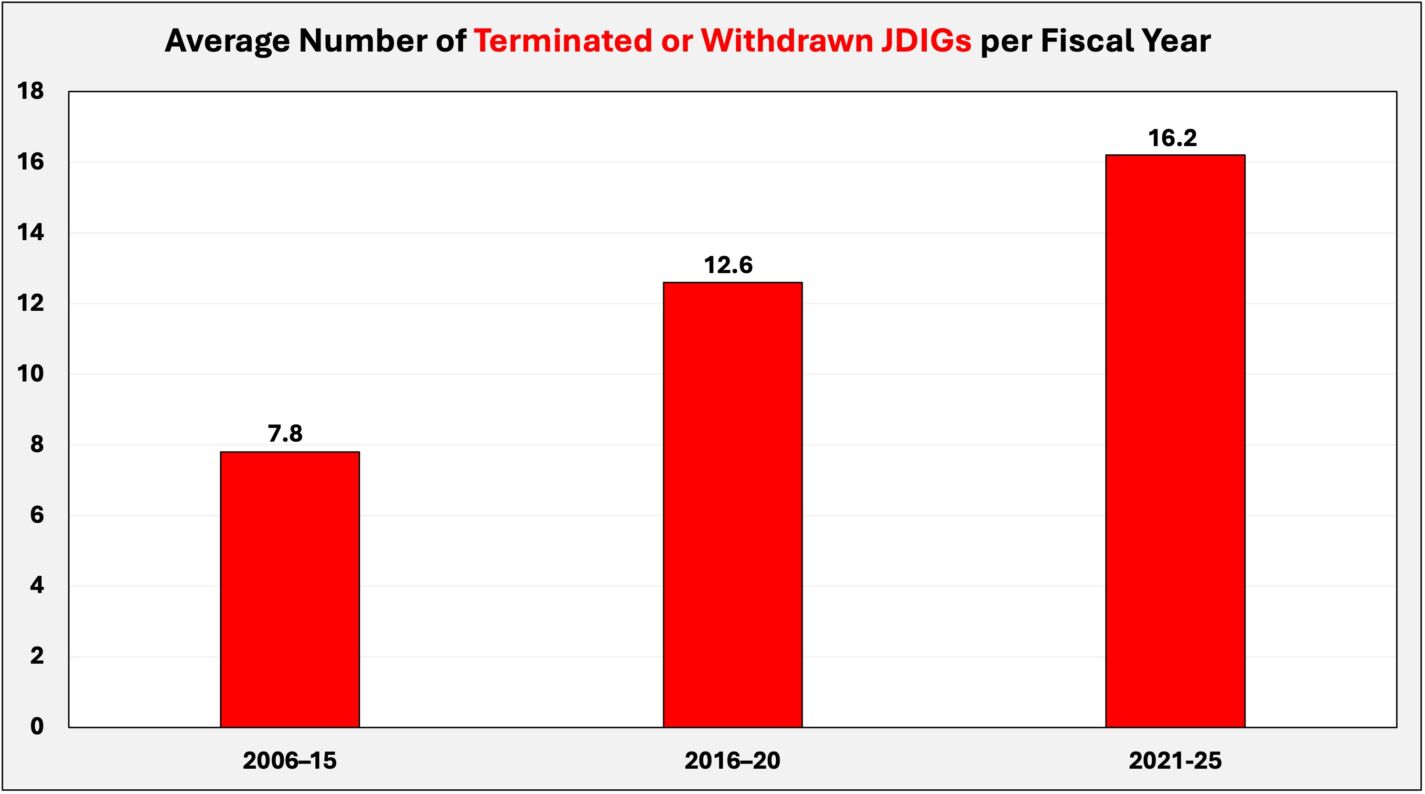
From FY 2006–2015, JDIG averaged 7.8 terminated or withdrawn agreements per year. That figure rose to 12.6 from FY 2016–2020 and climbed again to 16.2 from FY 2021–2025.
More job announcements have not translated into more successful projects or more jobs for North Carolinians. Instead, as JDIG has scaled up, it has produced a growing number of failed agreements.
What actually drives job growth
The gap between policymakers’ rhetoric and JDIG’s results also obscures an important truth: North Carolina’s economic strength has come from broad, pro-growth reforms, not from selective subsidies.
Over the past decade, legislators lowered the personal income tax rate, initiated a phaseout of the corporate income tax, and simplified the franchise tax. These reforms improved the state’s business climate for every employer, not just those receiving incentive deals.
Misattributing what drives job creation carries policy consequences. By crediting job growth to JDIG, policymakers downplay the role of broad-based tax reforms. This false narrative helps explain why the Governor touts JDIG while seeking to halt the scheduled phaseout of North Carolina’s corporate income tax rate.
Closing thoughts
Examining growth between the earliest and most recent periods in the data, the long-run trends are clear. As JDIG expanded, the average number of jobs announced per year increased by 147 percent. Actual job creation, however, grew by only 31 percent. Meanwhile, the average number of terminated or withdrawn agreements more than doubled, rising by 108 percent.
The state may be experiencing a record year for job announcements, but JDIG’s data show a program that struggles to convert those announcements into results.
Announcements generate headlines, but they do not drive prosperity. JDIG’s track record reveals a program built on promises rather than performance. If North Carolina wants lasting economic growth, it should continue strengthening the structural reforms that have already proven effective — not doubling down on corporate handouts that rarely deliver.