What does Julius Caesar have to do with North Carolina’s state seal and the Halifax Resolves?
The Halifax State Historic Site will soon be celebrating the 250th anniversary of the April 12, 1776, signing of the Halifax Resolves. Representatives from the site announced that they had put up a “Liberty Pole” as part of their festivities in celebration of the esteemed event.
The picture showed a tall, skinny, and bare tree pole with a red piece of cloth on top. I was greatly intrigued. Having read about Liberty Poles but never actually seen one, I read further and discovered that the concept goes back 2,000 years. (I know some may have wondered whether a Liberty Pole was an early form of a Festivus Pole as described on the TV show “Seinfeld.” Alas, a Liberty Pole was where 18th century Patriots gathered to air a different type of grievance against King George III.)
Before Julius Caesar, Rome was a representative republic ruled by a Roman Senate. After Caesar declared himself dictator of Rome in 44 BC, however, the Roman Republic ended. Angry senators gathered and assassinated Caesar on March 15, 44 BC — the Ides of March.
Forever after that, the image of a blood-tipped sword or spear held high has represented opposing tyranny and standing up for freedom. In Rome, freed slaves wore red skullcaps to signify their newfound liberty. These two images melded together to become a symbol of freedom. For centuries, when the oppressed had had enough, they used the Liberty Pole — or in our colonial times, sometimes a Liberty Tree — to gather together and rally for freedom.
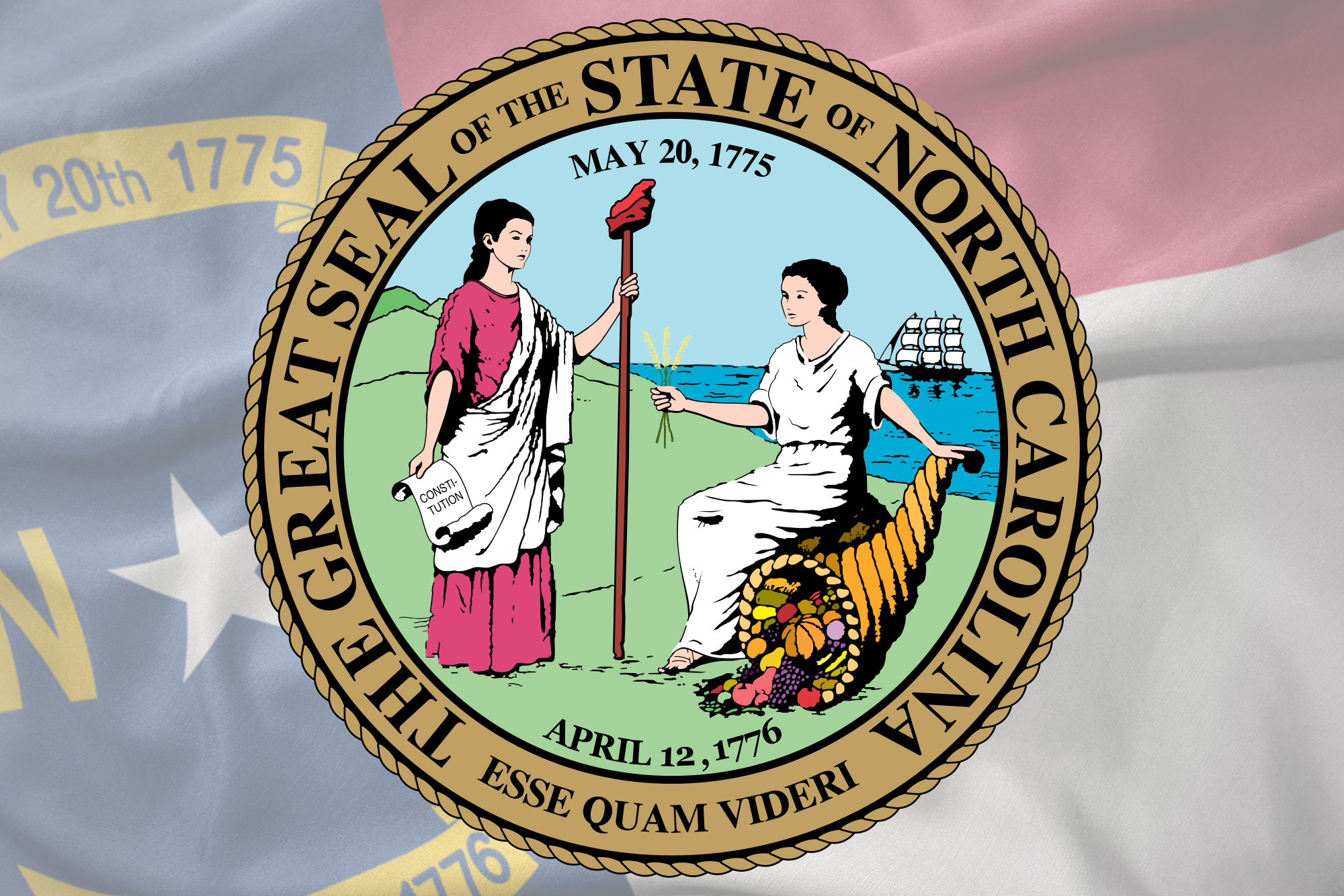
The Great Seal of the State of North Carolina
Despite seeing North Carolina’s state seal often throughout the years, I never realized that it prominently features a Liberty Pole held by Lady Liberty. On her right is a lady sitting by a cornucopia of fruits and vegetables. The seated woman represents Plenty — economic growth and goodness — while Lady Liberty holding her pole represents freedom.
During the days leading up to the Revolution, Liberty Poles were displayed at courthouses in various counties across the state. In Currituck County, for example, the story of a Liberty Pole that ended up as the sill for an old house is still told to this day.
In Halifax County, a Liberty Pole stood near the old courthouse where the 83 delegates to the Fourth Provincial Congress voted to adopt the Halifax Resolves and declare their intentions for “independency” from Great Britain.
To celebrate North Carolina’s role in the march to independence on July 4, 1776, consider attending the festivities going on in Halifax, North Carolina, on April 10–12.
There will be plenty of things to see and hear, including exhibits, fifes and drums, musket demonstrations, historic houses and buildings, music and dancing, and even the unveiling of the new visitor center.
Also, we just received news that the actual copy of the Halifax Resolves housed at the National Archives in Washington, D.C., will be on temporary display starting April 10 at the new visitor center in Halifax — a wonderful thing.