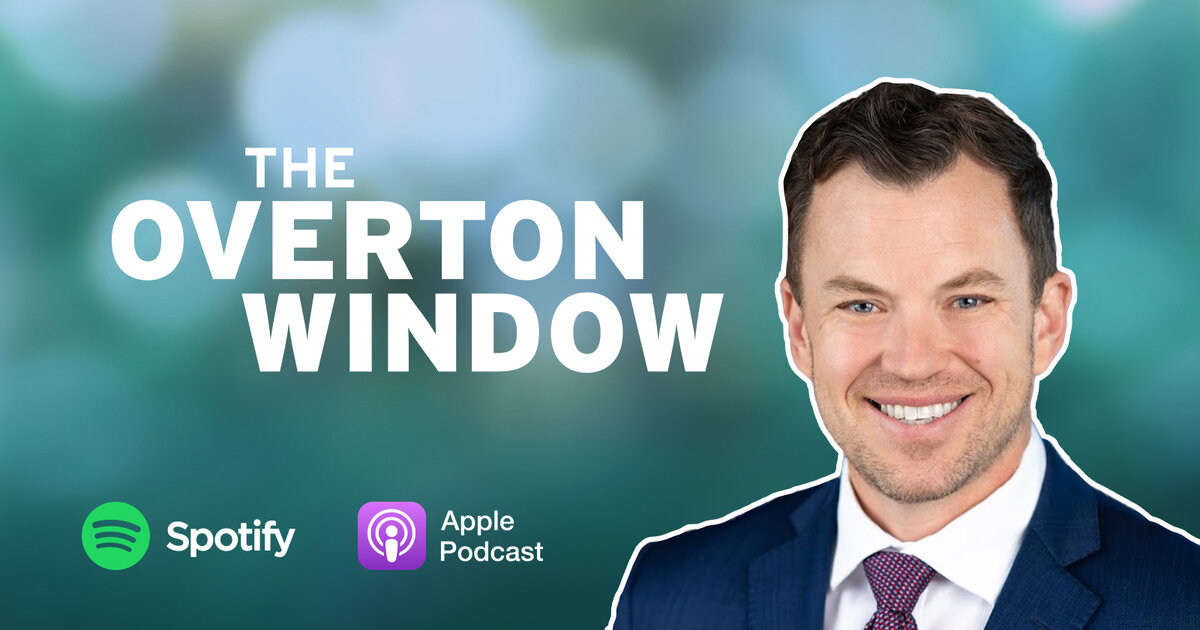
Unions simply don’t operate the way they used to. Instead of prioritizing compensation and conditions for the American workers, many large unions are entrenched in political movements outside the interest of the workers whose paychecks fund their operations. Gene Hamilton joined The Overton Window Podcast to discuss what his organization is doing about it.
Hamilton is a senior advisor with the Coalition to Protect American Workers, a new labor policy advocacy organization. He explains recent polling that shows a striking contrast between support for workers themselves and support for union leadership. “Support for the American worker is actually quite popular. On the flip side, support for union leadership… is really not that great.” He clarifies, “What we’re talking about is a widespread recognition that workers matter, workers’ wages matter, people want Americans to have a better quality of life.”
Yet union practices often fail to reflect this principle. Hamilton describes “a lot of coercive games and mechanics — trying to get workers to join unions or to game the system, to do things other than use secret ballots to decide whether or not somebody wants to be a member of a union.”
He also pointed to a shift in union priorities over time. “When it comes to who’s looking out for the American worker, there is a big difference in the messaging and the rhetoric that’s coming out of the leadership of some of these big unions today… juxtaposed against the rhetoric that was coming out of them from, say, 30 years ago.”
On the issue of illegal immigration, he says, “Large unions for a long time… took a strong stance and said, ‘Look, we just want to make sure that we’re standing up for our members.’ Or ‘We want to make sure that the flood of labor supply is not coming in and undercutting wages.’”
Today, that advocacy is largely absent.
“If you look around America today, you’ll recognize that in fact, it doesn’t seem that any of the large unions are speaking out against anything or that they raised any kind of noise whatsoever over the last four years,” he says.
Looking ahead, Hamilton sees an opportunity to modernize labor protections. There are adjustments that can be made to existing laws that enforce leadership oversight and respond to the issues impacting workers. For example, “How can we make sure that we use modern tools and technology, AI robotics, all these things to make the American worker more productive, to have a larger economy, to make things even better for everybody?”
The Coalition to Protect American Workers is in the business of informing American workers on the reality of labor policy. “We want to make sure that they have the tools and information available to make educated decisions about what’s right for them in their workplace.” He continues, “To make sure that that relationship between the employer and the employee is a healthy one that is not contaminated by union leadership trying to advance their own agendas.”
Hamilton believes many unions “have lost their way… and instead move to kind of a subscription model where that empowers the union leadership to then use that money… for their own political purposes for their friends.”
Contributions over recent election cycles underscore the point: “At least two of the major unions out there gave 99, over 99 % of their political contributions to the Democratic candidate for the president.” It’s unlikely that 99% of their members were in support of the candidate that their dues are backing.
Hamilton expresses the organization’s interest in illuminating bipartisan recognition for the American worker. It comes down to “really recognizing and reaffirming that the Republican Party and conservatives across the board are the party of the worker, of the working American.”
Members’ dues come with a responsibility. “You have a fiduciary responsibility… to be accountable to people when you’re taking money out of their paychecks to use it to enhance the conditions and the benefits for those workers.”
Unions exist to serve workers, not political agendas. Whether they return to that mission will determine the future of labor in America.
Listen to the complete conversation on The Overton Window Podcast.