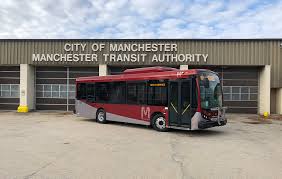
The Manchester Transit Authority (MTA) has dramatically expanded its bus routes and coverage area over the last dozen years, pushing operating costs higher. Yet as costs and coverage soared, ridership sank. As the mayor and aldermen search for savings in a stressed city budget, the MTA is an agency that could be scrutinized for possible spending reductions.
Despite a 71% increase in total miles driven and a 273% increase in total square miles covered, MTA bus ridership fell by 22.3% from 2013–2024, local and federal records show. During that same time, city taxpayer spending on the MTA increased by 50.6% above the rate of inflation.
Over the last 12 years, city bus ridership peaked in 2015 at 500,575, data from the MTA reported to the Federal Transit Administration show.

While ridership fell, the amount of money spent on Manchester public transportation increased significantly. From 2013–2024, the MTA’s total operating expenses rose from $3,613,280 to $6,845,451, an increase of more than $3.2 million, or 89.5%, in nominal dollars. After adjusting for inflation,* the increase is still more than $2.2 million in real dollars, or 47.7%.
*The inflation calculation uses Personal Consumption Expenditure (PCE) indices from January 2013 and January 2024.

This steep rise in spending includes a 130.7% increase, or 79.8% in inflation-adjusted (real) dollars, in funds from the federal government and a 93.2% increase, or 50.6% in real dollars, in local government spending.

Meanwhile, Manchester public transportation has become less profitable, as fare revenues have dropped 24.3% since 2013, or 41% in real dollars.
In 2013, the MTA’s cost per rider was $7.93. The lowest point it reached was $7.51 in 2016. Since then, the cost per rider has skyrocketed, hitting a peak of $25.96 in 2021 before falling to $19.34 in 2024, more than $11 more per rider than 12 years earlier. All told, the last 12 years saw a jump of 143.9% in Manchester’s cost per rider in nominal dollars and 90.1% in real dollars.

The huge increase in cost per rider was not just a matter of falling passenger numbers. As ridership fell during the past decade, the MTA aggressively increased service.
Since 2013, total miles driven by MTA buses have increased by 71.4%, going from 536,627 total miles in 2013 to 919,710 total miles in 2024. Total hours driven experienced a similar increase, jumping 55.9% from 46,159 total hours in 2013 to 71,939 total hours in 2024.
The MTA’s service area population and total square miles covered have expanded too.
From 2013–2019, the MTA served 135,366 residents and covered 63 square miles. Since the 2020 census, the MTA has been serving 248,263 residents and covering 235 square miles, increases of 83.4% and 273%, respectively.
The MTA plans to return to upwards of 400,000 annual passengers. But the current numbers and trends show a public service that yields a poor return on taxpayer spending.
The poor financial picture is not due solely to the COVID-19 pandemic, as the problems began years earlier. MTA ridership fell 10.2% during the pre-pandemic years of 2013–2019 and 18.2% from its 2015 peak to 2019.
The numbers strongly suggest that the MTA is hauling in more taxpayer dollars than what is required for public transportation in the region. City leaders could find some budget savings by paring back MTA services to pre-pandemic levels, eliminating or curtailing underused routes, and seeking ways to enhance revenues.